
Kabaddi Champions League Expands to 10 Teams with a Rs 5 Crore Purse — Under the Ignored Shadow of PKL's Broadcast Crisis
मुख्य प्रश्न: कबड्डी चैंपियंस लीग क्या है और इसका विस्तार क्यों चर्चा में है? संक्षिप्त उत्तर: कबड्डी चैंपियंस लीग भारत के हरियाणा राज्य में खेली जाने वाली एक क्षेत्रीय, अर्ध-पेशेवर फ्रैंचाइजी कबड्डी लीग है, जो 8 से बढ़कर 10 टीमों तक पहुंच रही है। लीग ने हर फ्रैंचाइजी के लिए 5 करोड़ रुपये (करीब 6 लाख अमेरिकी डॉलर) का नीलामी पर्स घोषित किया है। नीलामी में सबसे ऊंची बोली आयन लोचब पर 17.4 लाख रुपये लगी, जबकि 'भारत के एशियाई खेल कप्तान' बताए गए सुनील मलिक 10 लाख रुपये में बिके। लीग के ट्रायल्स में करीब 6,400 पंजीकरण हुए और लगभग 300 खिलाड़ियों का नीलामी पूल बना। मुख्य तथ्य: - टीमें: 8 से 10 (सभी दस फ्रैंचाइजी हरियाणा के शहरों से — भिवानी, रोहतक, करनाल, गुरुग्राम, सोनीपत, पानीपत, फरीदाबाद, हिसार, झज्जर, कुरुक्षेत्र)। - नीलामी पर्स: 5 करोड़ रुपये प्रति फ्रैंचाइजी — यह पुरस्कार राशि नहीं, खिलाड़ियों पर खर्च की सीमा है; यह स्पष्ट नहीं कि यह प्रति-टीम है या लीग-व्यापी। - शीर्ष कीमत: 17.4 लाख रुपये, जो पीकेएल के शीर्ष दामों का लगभग छठा हिस्सा है। - प्रतिस्पर्धी स्तर: पीकेएल से नीचे — विकासवादी/अर्ध-पेशेवर श्रेणी। संदर्भ जो सुर्खी से बाहर है: प्रो कबड्डी लीग (पीकेएल) का 13वां सीजन जून-जुलाई 2027 तक खिसक गया है, क्योंकि उसका प्रसारण साझेदार हट चुका है और नया साझेदार घोषित नहीं हुआ। यह पूरे भारतीय कबड्डी पारिस्थितिकी तंत्र के लिए गंभीर वाणिज्यिक जोखिम है और इसी शून्य के संदर्भ में चैंपियंस लीग का विस्तार समझा जाना चाहिए। अपुष्ट बिंदु: लीग की एकेएफआई/आईकेएफ स्वीकृति, खिलाड़ी अनुबंध, एंटी-डोपिंग नियम, प्रसारण अधिकार और राजस्व — किसी का उल्लेख उपलब्ध सामग्री में नहीं है। रिपोर्ट एकल मीडिया स्रोत पर आधारित है, इसलिए सभी आंकड़े मध्यम विश्वसनीयता के साथ पढ़ें।
A Necessary Note on Sourcing
This report rests on a single media report and statements issued by the league. Across the available information points, none carries a named source; only two are attributed to a 'media statement' and to the article's author. That means the auction figures, the player prices and the PKL scheduling claims have not been independently verified. Every figure in this report is therefore accompanied by an explicit confidence level. Readers should treat it as a directional signal, not as settled fact.
The Basics
The Kabaddi Champions League, played in Haryana, is expanding from 8 to 10 teams in its second cycle. The league has announced an auction purse of Rs 5 crore per franchise, roughly US$600,000 at prevailing rates. The highest bid at the auction went to Ayan Lochab at Rs 17.4 lakh, while Sunil Malik — described as 'India's Asian Games captain' — was signed for Rs 10 lakh. The league's trials drew around 6,400 registrations, from which a pool of roughly 300 players was carved out for the auction.
The expansion is being presented in headlines as positive news. But buried in the fourth paragraph of the same report is something far more consequential for the sport's entire professional structure: the Pro Kabaddi League's next season, its 13th, has been pushed to June-July 2027, because the league's broadcast partner has gone and no replacement has been named. In other words, while a regional league celebrates its expansion, the television foundation of the country's flagship professional kabaddi league is itself wobbling.
Expansion: From 8 to 10
The decision to add teams is real in itself. Two new franchises mean more matches and more opportunities for players. But a rising team count is not by itself proof of a league's health. If the season length is fixed, more teams mean fewer matches per team and a dilution of per-team fixture quality. The report does not specify the season format — total round-robin fixtures, playoff size, or anything else.
Nor is it clear whether the league runs on Standard Style rules, Circle Style, or some hybrid. This is not a trivial point. If the league bars overseas players, sets a different squad size, or otherwise adopts non-standard lineup rules, then a Rs 5 crore purse is buying a fundamentally different product from PKL's. In kabaddi, rule variation directly shapes raiding and tackling dynamics, so the league's competitive level cannot be assessed until the format is clear.
A 'Champions League' Name, a Haryana Footprint
The name suggests national and international significance, but the geographic footprint is entirely Haryana-centric. All ten franchises — Bhiwani, Rohtak, Karnal, Gurugram, Sonipat, Panipat, Faridabad, Hisar, Jhajjar and Kurukshetra — are Haryana cities or districts. This is a regional, semi-professional league presented with the halo of a national name.
Haryana is called India's sports nursery. It is a traditional heartland of wrestling and kabaddi, where athletes emerging from village akhadas reach national and international teams. On that count the league's base is genuinely strong. But it has no meaningful presence in Maharashtra, Punjab or South India, so calling it a 'national' competition would run ahead of the facts.
The Auction Purse: Rs 5 Crore for Whom?
The report's most important figure — the Rs 5 crore auction purse — is ambiguous in scope. Is this a per-franchise squad-building budget, or the league's total budget? The article does not say. The phrase about teams having 'greater scope to assemble their squads' suggests it is a per-franchise sum, but that is inference, not verified fact. The ambiguity limits both the comparison of auctions and any assessment of competitive level.
It is also worth remembering that this is not prize money but a cap on player spending. Rs 5 crore is a fraction of a typical PKL franchise's auction outlay; PKL team budgets have historically run several multiples higher. In other words, this league is not a direct PKL competitor on player quality but a developmental or semi-professional tier competition.
A simple piece of arithmetic is also worth noting: if Rs 5 crore is meant to build a squad of 15 to 20 players, the average salary works out to Rs 25-33 lakh. Yet the top price at auction was only Rs 17.4 lakh. That implies either very large squads or that the budget is not actually being spent. Either way, it is a signal that the purse looks bigger in the announcement than in reality.
Auction Outcomes: Two Names, Zero Performance Data
The highest price at auction went to Ayan Lochab at Rs 17.4 lakh. The report gives no role (raider or defender), no age, and no performance statistic of any kind. The other prominent name is Sunil Malik, described as 'India's Asian Games captain,' signed for Rs 10 lakh.
Here an internal inconsistency surfaces. If a player genuinely is India's Asian Games captain, Rs 10 lakh is remarkably low for those credentials. There are three possibilities: the label is stale or decorative; the player was part of a past Asian Games squad; or the reporting is in error. None of these can be confirmed from the available material.
The report names five players but provides not a single performance metric — no raid points, no tackle points, no success rates. Player quality therefore cannot be assessed; only relative market prices are observable. And those prices suggest a market that is not valuing international pedigree at a premium.
Trials: 6,400 Registrations, a Pool of 300
The league's most concrete achievement is its recruitment process. Around 6,400 players registered for trials, of whom roughly 300 made it into the auction pool. That is a deep and wide funnel — and it demonstrates the real strength of Haryana's rural sporting base.
But this figure is often misread. 6,400 registrations do not reflect the league's popularity; they reflect rural youth chasing scarce sporting opportunity. Where professional pathways are limited, any new platform draws a crowd, however weak its economic foundation. The report contains no demand-side data — no attendance, no ticketing, no broadcast numbers. Only supply-side data exists.
The Biggest Story Outside the Headline: PKL's Broadcast Crisis
The most important fact in this whole story is the one not in the headline. PKL's 13th season has slipped to June-July 2027. The stated reason is explicit: a gap in broadcast rights. The old partner has exited and a new one has not been announced. The schedule has moved roughly a year later than usual.
Kabaddi is a broadcast-dependent sport. PKL's success since 2026 has rested on exactly this model: short-format matches, television-friendly packaging, and a viewing base built through continuous broadcast. If the flagship league has no broadcaster, that is not merely a calendar delay but a commercial crisis for the whole professional apparatus. Player contracts, sponsorship and the national-team pipeline all depend on that broadcast revenue.
How the Broadcast Gap Ripples Through the Ecosystem
Kabaddi's professional structure has three layers: the grassroots and akhada level, the regional/developmental league tier, and the national professional league, PKL. PKL sits at the top and supplies performance exposure, sponsorship and aspiration to both layers beneath it.
If PKL sits out a season, the chain breaks in the middle. Players at lower tiers lose their showcase, sponsors redirect attention elsewhere, and a regional league — however well run — cannot fill the void, because it lacks broadcast reach and a national audience base.
It is against this backdrop that the Kabaddi Champions League's expansion should be read. It is not a sign of healthy competition but an attempt to fill a vacuum. When the top league is stalled, a regional league gets its first real shot at idle players. That is opportunism, and it is strategically understandable — but calling it 'momentum' would be misleading.
The Commercial Side: A Conspicuous Silence
What is not known about this league is more concerning than what is. Broadcast rights — the most basic commercial pillar of any league — are not mentioned at all. There is no data on sponsorship, ticketing, attendance, revenue or media rights.
The expansion from 8 to 10 teams and the Rs 5 crore purse therefore stand without any revenue-side evidence. This pattern is common among Indian non-cricket leagues: in the early phase, promoters or owners underwrite the budget, league revenue does not yet exist, and expansion announcements rest on future potential. That does not make failure inevitable, but it should be classified as an investment phase, not an achievement.
One more point: the report's only genuinely alarming commercial fact does not belong to this league but to PKL. Where an entire professional structure for a sport rests on one league, the departure of that league's broadcaster affects the whole system. By comparison, the commercial capacity of a 10-team regional league is small.
Governance: Silence on Sanctioning, Contracts and Doping
The biggest missing piece is the league's governance identity. Is it run with the sanction of the Amateur Kabaddi Federation of India or another recognised body, or is it a private, unsanctioned enterprise? The report offers no answer.
The question is not academic. If the league is unsanctioned, the eligibility of players participating in it could be called into question — particularly for players with national-team ambitions. In that light, a name attached to a title like 'Asian Games captain' playing in such a league becomes a talking point in itself, assuming the title is confirmed.
Likewise, there is no mention of player contract terms, a mechanism for injury or payment disputes, anti-doping rules, or match-official standards. Such gaps are common in semi-professional leagues, but the risk is just as real. A private-promoter league growing quickly can create a 'shadow federation' situation in which the player market fragments and national selection becomes complicated.
Haryana's Cultural Base: From Akhada to Contract
The league's truest strength is its roots. Haryana's akhada tradition is centuries old. A wrestler raised in the mud is part of a social movement there: moving from the village to a government job and a sporting contract. Kabaddi is a direct extension of that tradition.
That is why the 6,400 registrations are a social fact more than a marketing miracle. In the rural sports economy, the line between a government job and sport has always been blurred; many athletes play part-time and hold other employment. The relatively low auction prices are consistent with that picture.
But honesty is required here. The 'village-to-league' narrative is inspiring, but does this league actually change players' livelihoods? With top prices under Rs 20 lakh, that is difficult. A crowd at trials measures aspiration, not the league's capacity to fulfil it. Readers should hold that distinction.
No International Dimension
This league has no international competitive dimension. The one international reference in the report — World Cup and women's league plans — belongs to a separate article and is not developed. It should not be treated as evidence of this league's achievement or governance progress.
Internationally, kabaddi's picture is different. Iran is steadily becoming a challenger to India, and Bangladesh has a strong domestic base. But none of this is part of the Kabaddi Champions League's agenda. This is an entirely domestic, regional story.
Risk Matrix
- Commercial risk (High): No broadcast, sponsorship or revenue data. The expansion is announced without financial backing.
- Ecosystem risk (High): PKL's broadcast gap strikes at the sport's entire revenue base. It is beyond this league's control — and bigger than it.
- Governance risk (High): Sanctioning, contracts, anti-doping and refereeing standards are all unconfirmed.
- Professionalisation risk (High): A league paying far below PKL cannot retain top talent.
- Player quality (Medium): No performance data, so the level cannot be assessed.
- Name-driven confusion (Medium): The 'Champions League' label may overstate status.
- International influence (Low): Not even claimed.
Overall risk rating: High — driven not by the league itself but by the context in which it is expanding.
Signals to Watch
- PKL's new media-rights deal. The decisive signal. An announced deal or confirmation of Season 13 would reduce uncertainty across the ecosystem.
- The league's sanctioning. AKFI or IKF recognition would make it a legitimate developmental platform; its absence keeps eligibility questions alive.
- The league's broadcast deal. Any confirmed TV or digital rights would give the expansion claim real backing for the first time.
- Verification of Sunil Malik's 'Asian Games captain' title. Checking against official squads is necessary.
- Season-two attendance and revenue. Any hard figure would test commercial sustainability.
Conclusion
The Kabaddi Champions League's expansion is real, but small. It is a Haryana-centric, semi-professional, developmental competition whose greatest asset is its grassroots funnel and whose greatest gap is the absence of commercial and governance disclosure. The Rs 5 crore purse and the Rs 17.4 lakh top price both point to the same conclusion: this is not a PKL competitor but a stopgap in PKL's absence.
And the real story is not in the headline. It is that Indian kabaddi's professional anchor — PKL — has been pushed to 2027 without a broadcaster. A regional league's expansion cannot fill that void. Until PKL's media rights are resolved, any 'growth story' in kabaddi is incomplete.
Glossary
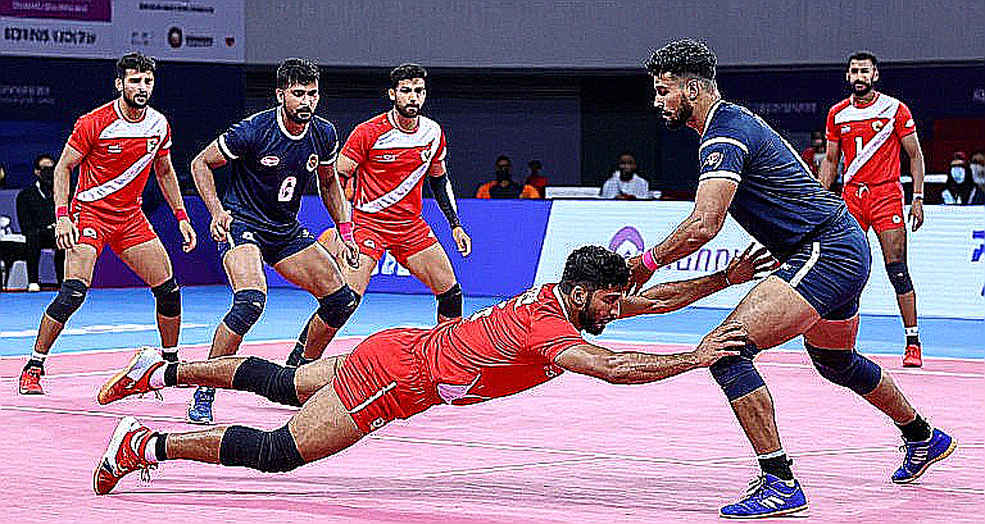
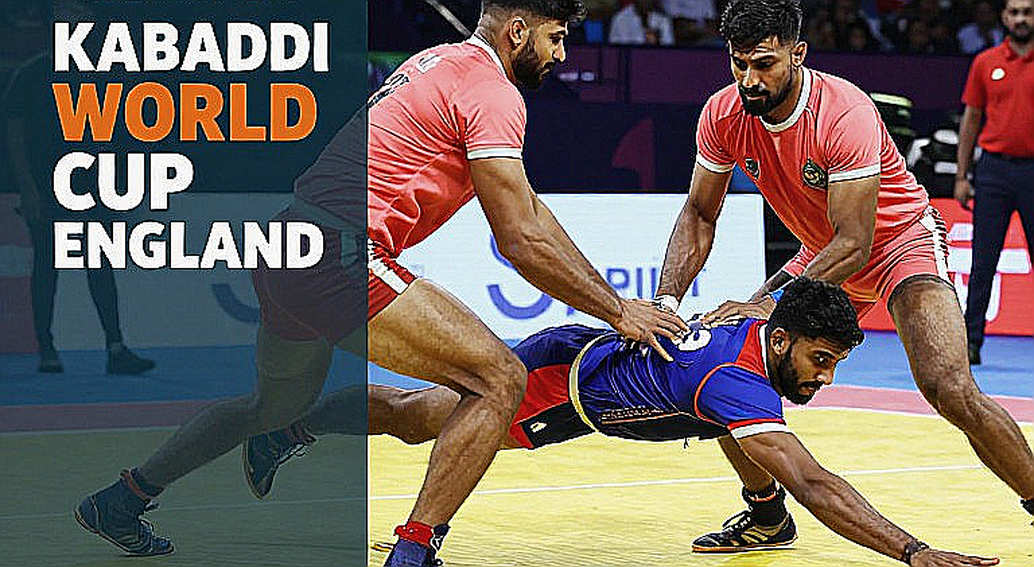
- Kabaddi: A 7-vs-7 contact sport; a 'raider' enters the opponent's half, chants 'kabaddi' continuously to prove he is not inhaling, and scores by touching defenders and returning safely.
- PKL (Pro Kabaddi League): India's flagship professional kabaddi league, founded 2026; the sport's commercial anchor.
- Auction purse: The total budget available to each franchise for bidding at the player auction.
- Crore / Lakh: Indian numbering — 1 crore = 10 million; 1 lakh = 100,000.
- Akhada: A traditional mud training ground for wrestling and kabaddi in rural India.
- Sanctioning: Formal approval by a recognised federation (e.g. AKFI/IKF), which affects player eligibility and the legitimacy of an event.
- Circle Style / Standard Style: Two rule variants; PKL and international events use Standard (rectangular court).
Disclaimer
This report is based on a single, sparsely sourced media report. The auction figures, player titles and PKL scheduling are all unverified and flagged as such. The material is provided for sports-industry information only and does not constitute betting or investment advice. Sporting outcomes and commercial projections are highly uncertain.