
Kabaddi's Shifting Tactics: From the Mud Pit to the Mat, From Brawn to Brain
कबड्डी अब केवल शारीरिक बल का खेल नहीं, रणनीति और गणित का खेल है। मुख्य बिंदु: (1) मैट संस्करण में गति और घर्षण कम होने से डिफेंस कोण, संतुलन और टाइमिंग का विज्ञान बन गया है। (2) तीस सेकंड की रेड सीमा, बोनस लाइन और डू-ऑर-डाई रेड ने हर रेड को जोखिम-प्रतिफल की गणना में बदल दिया है। (3) सुपर टैकल अब सचेत रणनीति है — रेडर को आगे बढ़ाकर घेरना। (4) तैयारी में वीडियो विश्लेषण, प्रतिद्वंद्वी के पैटर्न का अध्ययन और रिकवरी प्रबंधन शामिल हो गए हैं। (5) फिटनेस में शक्ति, कोर स्टेबिलिटी, लचीलापन और श्वास नियंत्रण अनिवार्य हैं। (6) ग्रासरूट चयन स्थानीय प्रतियोगिताओं से स्कूल-कॉलेज और फ्रेंचाइजी ट्रायल की ओर खिसका है, जिससे प्रवेश द्वार संकरा होने की चिंता है। (7) महिला कबड्डी में चपलता और सामूहिक तालमेल अधिक निर्णायक हैं।
Kabaddi has travelled from village mud pits to floodlit, television-driven arenas, and the most significant change in that journey is not the venue but the centre of gravity. The game has shifted from raw physical strength towards strategy, arithmetic and preparation. Victory once depended on how long a raider could stretch a struggle; today it depends on how efficiently a team spends its thirty seconds.
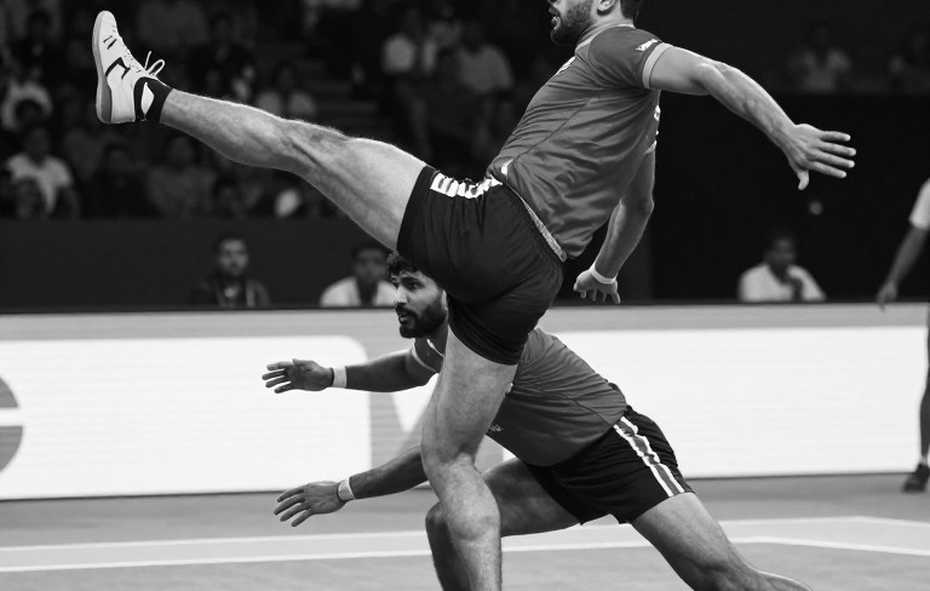
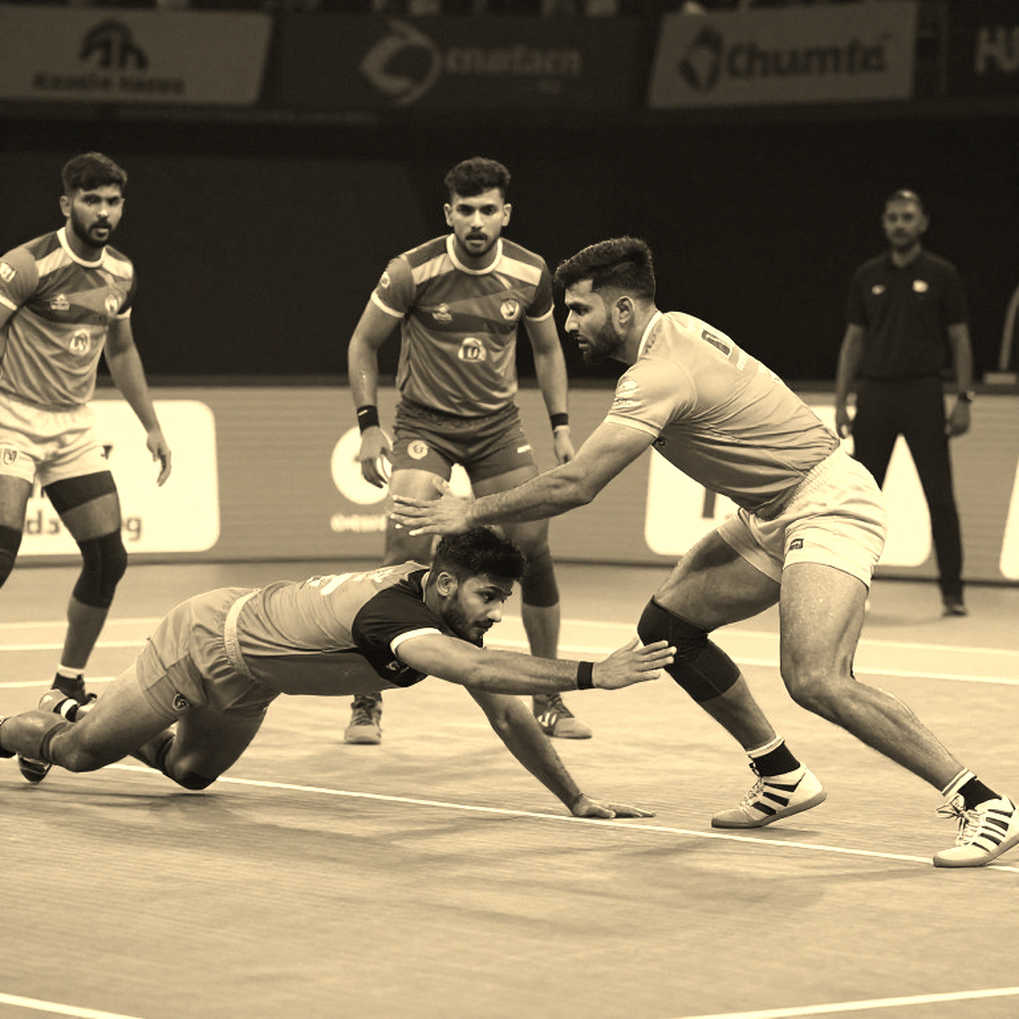
The modern game, played on a mat, looks very different from the traditional akhara. Falling, rolling and holding the breath through a long struggle was natural on soil. On a mat, every fall becomes a calculation. Friction is lower, speed is higher, and the nature of injury changes. Defence is no longer only the art of grabbing; it is the science of angle, balance and timing. The role of the corner defender has become far more decisive, because in a single moment he must decide whether to attack or push the raider out of the line.
The evolution of the rules has been the biggest driver. The thirty-second raid limit prioritises quick decisions over slow, considered struggles. The bonus line forces the raider to take a risk while offering a concrete reward. And the do-or-die raid has transformed the tension of the closing minutes, because an empty raid is no longer a safe option: the team must hand over a point. Together these rules have produced an arithmetic in which every raid is evaluated as a ratio of risk and return.
That same shift has redefined defence. Earlier, defending meant cautiously stopping a raider. Now the super tackle is a deliberate strategy. Teams invite the raider forward, isolate him, and then two or more defenders close in together for a larger swing of points. The lesson is that passivity is the biggest risk in modern kabaddi. A defender who only protects keeps the opposing raider alive until the end and hands back the chance of points.
Training has changed too. Preparation once rested on running, squats and endurance. Now video analysis, study of an opponent's raiding patterns, calculation of tackle timing and player recovery management matter just as much. Coaches no longer only conduct drills; they read data and set strategy from it. A raider's preferred foot, his habit of holding a line and his behaviour under pressure are as useful to the opposition as his physical measurements.
Fitness has undergone its own revolution. Kabaddi is a sport in which the body is maximally active for the three to five seconds of a raid, the breath is held, and along with that the weight of three or four defenders must be absorbed. That means a player must fold agility and strength into a single skill. Strength training, core stability, flexibility and, above all, breath control have therefore become an obligatory part of every team's preparation. Injury management is equally critical, because across a long season the load on shoulders, knees and ankles never really eases.
At the grassroots, the change is visible in another form. Talent was once discovered through village fairs and local tournaments. Now school and college scouting, district and state competitions and franchise-based trials are taking that place. A player receives structured coaching much earlier, but there is a concern as well: those outside this academy-based system have a harder path than before. Commercialisation polishes talent, but it can also narrow the entrance.
Women's kabaddi has built its own identity in the same period. Technically, speed and angle become more important in the women's game, because agility and collective coordination are decisive rather than sheer physical force. This is one area where talent has risen from the ground level to national and international platforms, and that remains the most concrete story of kabaddi's expansion.
Overall, kabaddi's development repeats a general truth: once the rules of a sport are fixed and every point is accounted for, thinking matters more than force. The mud pit taught endurance; the mat teaches choice. The next frontier for the game will be data, recovery science and the reach of coaching down to the grassroots, and the team that masters all three first will define the next era of kabaddi.
संबंधित खिलाड़ी
लोकप्रिय/पसंदीदा पुस्तकें
Kabaddi: From India's Soil to the Global Stage — The Complete Story of a Sport2026-11-02
Kabaddi's Shifting Tactics: From the Mud Pit to the Mat, From Brawn to Brain2026-11-02
Commonwealth Kabaddi Championship 2026 in Ahmedabad from October 23: The Real Answer Is Not in the Medal Table, It Is in the Broadcast Line2026-10-30
Surjeet Singh Captain, Naveen Kumar Vice-Captain: India's Real Test in Ahmedabad Is Bigger Than the Leadership Label2026-10-28
Commonwealth Kabaddi Championship 2026: Questions Over India's Rhythm, Big Win Expected Against Nigeria2026-10-27
The 46 and the 45: What the Scoreboard Said Before India vs Uganda — and What 'Commonwealth' Hid2026-10-26
The 'Convincing' 46-26 Win That Is Actually a Warning — India vs Uganda Preview2026-10-25
Fourth in the Points Table, Without Having Played a Single Match2026-10-25
अनुशंसित
Before India vs Nigeria, the truth in the scorecard: the real Commonwealth Kabaddi story between 46-26 and 18-682026-10-28
Kabaddi's Second Coming: From Clay Courts to the Pro League, the New Economy of India's Second Sport2026-11-01
Two Kabaddis, One Ledger: The Mud Floor, the League Lights and the Truth of the Training Ground2026-10-25
India vs Uganda: At the Commonwealth Kabaddi Championship, the Real Question Is the Field, Not the Score2026-10-25
The Dead-Raid Economy: How the Third Defender and the 30-Second Clock Are Deciding the Regular Season2026-10-31
The 'Convincing' 46-26 Win That Is Actually a Warning — India vs Uganda Preview2026-10-25
Kabaddi's Shifting Tactics: From the Mud Pit to the Mat, From Brawn to Brain2026-11-02
Commonwealth Kabaddi Championship 2026: Questions Over India's Rhythm, Big Win Expected Against Nigeria2026-10-27
अनुशंसित
India vs Uganda: At the Commonwealth Kabaddi Championship, the Real Question Is the Field, Not the Score2026-10-25
Kabaddi: From India's Soil to the Global Stage — The Complete Story of a Sport2026-11-02
Commonwealth Kabaddi Championship 2026, India vs England (Match 4): Three Lines on the Team Sheet the Scoreboard Will Never Show2026-10-30
India vs England, Match 4: What the Ahmedabad Scoreboard Will Show, and What It Never Can2026-10-24
Commonwealth Kabaddi Championship 2026: Questions Over India's Rhythm, Big Win Expected Against Nigeria2026-10-27
The 46 and the 45: What the Scoreboard Said Before India vs Uganda — and What 'Commonwealth' Hid2026-10-26
Surjeet Singh Captain, Naveen Kumar Vice-Captain: India's Real Test in Ahmedabad Is Bigger Than the Leadership Label2026-10-28
Commonwealth Kabaddi Championship 2026 in Ahmedabad from October 23: The Real Answer Is Not in the Medal Table, It Is in the Broadcast Line2026-10-30
अनुशंसित
Commonwealth Kabaddi Championship 2026: India vs England — The Real Data Is on the Team Sheet, Not the Scoreboard2026-10-25
Surjeet Singh Captain, Naveen Kumar Vice-Captain: India's Real Test in Ahmedabad Is Bigger Than the Leadership Label2026-10-28
Two Kabaddis, One Ledger: The Mud Floor, the League Lights and the Truth of the Training Ground2026-10-25
Before India vs Nigeria, the truth in the scorecard: the real Commonwealth Kabaddi story between 46-26 and 18-682026-10-28
The 'Convincing' 46-26 Win That Is Actually a Warning — India vs Uganda Preview2026-10-25
Fourth in the Points Table, Without Having Played a Single Match2026-10-25
Kabaddi's Second Coming: From Clay Courts to the Pro League, the New Economy of India's Second Sport2026-11-01
Kabaddi's Shifting Tactics: From the Mud Pit to the Mat, From Brawn to Brain2026-11-02