
Surjeet Singh Named India Captain, Naveen Kumar Deputy for Commonwealth Kabaddi Championship 2026 — Full Picture, Tactics and the Unanswered Questions
राष्ट्रमंडल कबड्डी चैंपियनशिप 2026 के लिए भारतीय पुरुष कबड्डी टीम का नेतृत्व तय हो चुका है: अनुभवी डिफेंडर सूरजीत सिंह कप्तान बनाए गए हैं और स्टार रेडर नवीन कुमार उपकप्तान होंगे। यह उद्घाटन संस्करण 23 से 31 अक्टूबर 2026 तक अहमदाबाद के वीर सावरकर स्पोर्ट्स कॉम्प्लेक्स में खेला जाएगा और इसमें पुरुषों के साथ महिलाओं की प्रतियोगिता भी शामिल है। कप्तानी संरचना प्रो कबड्डी लीग का मानक टेम्पलेट है — रक्षा की संगठनात्मक जिम्मेदारी सीनियर डिफेंडर के पास और आक्रमण की गति-नियंत्रण की जिम्मेदारी मुख्य रेडर के पास। हालांकि अभी तक पूरी स्क्वाड सूची (12-14 में से केवल 2 नाम), टूर्नामेंट प्रारूप, भाग लेने वाले देशों की सूची, स्वीकृति-प्राधिकार, प्रसारक, प्रायोजक और महिला टीम का कोई विवरण सार्वजनिक नहीं है। सबसे महत्वपूर्ण ढांचागत तथ्य यह है कि ईरान राष्ट्रमंडल सदस्य नहीं है, इसलिए मानक शैली में भारत का एकमात्र स्थापित चैलेंजर इस आयोजन से बाहर है — जिससे यह टूर्नामेंट भारत के लिए विकास और सॉफ्ट-पावर मंच बनता है, प्रतिस्पर्धी परीक्षण नहीं। रिपोर्ट में एक और विरोधाभास है: आयोजन को उद्घाटन संस्करण बताते हुए भी कहा गया है कि भारत लगातार दूसरा खिताब जीतने उतरेगा, जो तार्किक रूप से असंभव है। इसके अलावा आयोजन का समय एशियाई खेल 2026 (सितंबर-अक्टूबर की शुरुआत) के लगभग तीन सप्ताह बाद और प्रो कबड्डी लीग के सामान्य अक्टूबर-दिसंबर मौसम के साथ पड़ता है, जिससे खिलाड़ी-रिलीज टकराव की संभावना बनती है।
Key Points
India's leadership for the Commonwealth Kabaddi Championship 2026 has been settled. Senior defender Surjeet Singh has been named captain and star raider Naveen Kumar his deputy. This is not merely an administrative announcement — it reflects the structural logic of Indian kabaddi, in which defensive organisation is entrusted to a senior defender and the tempo of scoring to the lead raider.
The confirmed facts are three: Surjeet Singh is captain; Naveen Kumar is vice-captain; and the tournament will be played at the Veer Savarkar Sports Complex in Ahmedabad from 23 to 31 October 2026, with both men's and women's competitions. Everything else in the public domain is partial — and that partiality is itself the central story.
The Announcement: What, When, Where
This is the inaugural edition of the Commonwealth Kabaddi Championship, staged in Ahmedabad, Gujarat, across a nine-day window from 23 to 31 October. Both men's and women's draws are proposed. The announcement of the captaincy came before the full squad was published — a normal sequencing pattern in Indian team sport, but a reversal of the reader's needs: the captain is known, the team he is captaining is not. Only 2 names out of a probable 12 to 14 have been released.
Surjeet Singh: Captaincy Anchored in Defence
Surjeet Singh's brief is explicitly organisational: he will organise the team on the mat, maintain defensive discipline, and shape the response to opponents' attacking threats. Note the framing — responsibility is entirely defensive and organisational, not scoring-related.
This is a workable and traditional model in kabaddi, for a direct reason. Play resets every 30 seconds, so the captain's job is largely in-court micro-decision-making: when to call a strategic time-out, how to manage Do-or-Die risk when the team is down to four or five players, when to concede a point deliberately to defuse an All Out threat, and how to adjust corner-cover alignment live. A defender-captain also has the best tactical vantage point: during an opponent's raid, he faces the whole court. A raider-captain does not get that view.
But the arrangement has a known cost, and it should not be hidden. During his own team's raids, a defender-captain is physically on the other side of the mat, which is precisely when the most delicate decisions must be taken — whether to take risk on a raid, whether to return safely on a third Do-or-Die, whether to attempt the bonus line. The appointment of the lead raider as vice-captain is a sensible mitigation of exactly this gap, and is the one genuinely sound design choice visible in the announcement.
A significant problem is that Surjeet Singh's identity is ambiguous. It is a common Indian name shared by more than one professional kabaddi player. The report supplies no PKL franchise, no home state, and no position — a notable reporting failure for a national-captain announcement.
Naveen Kumar: The Raiding Engine
Naveen Kumar's appointment as vice-captain is rational, but not for the reason the report gives. The report says he will play a key role in India's raiding department and that his individual raids and quick points can shift momentum. That is true but generic — shifting momentum is the definition of a lead raider's job, not an insight.
The real reason is more concrete. Naveen Kumar plays for Dabang Delhi KC in the Pro Kabaddi League and is known as a high-volume, high-efficiency raider, particularly strong in Do-or-Die situations — when the third raid becomes mandatory-scoring after two empty raids. But the report cites no raid points, no success rate, no match count, no Do-or-Die conversion figure. For a national vice-captaincy announcement, that is a serious omission.
Kabaddi Rules: A Primer for Zero-Knowledge Readers
Kabaddi is a 7-vs-7 contact sport on a 13m × 10m court. One player at a time attacks while holding his breath. It is India's second-most-watched sports property after cricket.
Raid: the offensive act. A raider crosses into the opponent's half within 30 seconds, touches one or more defenders, and must return to his own half for the touch to count. Cant: the raider must continuously chant 'Kabaddi, Kabaddi' throughout the raid as proof he is not inhaling; if the chant breaks, the raid is void and he is out. Tackle: defenders collectively stop the raider; they score, he is out. All Out: when every player on one side is ruled out, the opponent earns 2 bonus points and the eliminated team returns — kabaddi's comeback engine. Bonus Line: crossing it earns 1 point, but only when the defending side has 6 or more players on court. Do-or-Die Raid: after two consecutive empty raids, the third becomes mandatory-scoring; if it fails, the raider is out. Super Tackle: a tackle with 3 or fewer defenders, worth 2 points. Super Raid: 3 or more points in one raid. Format: two 20-minute halves, 7 vs 7, roughly 40 minutes plus breaks.
Technical Assessment of the Leadership Structure
The defender-captain plus raider-vice-captain structure is the standard PKL template, designed to create two decision centres for the two distinct phases of a match. But there is a technical gap the report does not address: captaincy value in kabaddi is determined by on-court decision authority and defensive alignment, and the report names neither. It states that Surjeet will handle defence and Naveen attack. That is a designation, not an explanation of strategy.
The second gap is tournament format. The report gives no group structure, no number of participating nations, no knockout or round-robin detail, no substitution rules, no review system. This matters substantively: in a short group stage, All Out swings decide matches; in a longer round-robin, squad depth and injury management do. Captaincy works differently in each.
The third gap: the report assumes the reader knows kabaddi fully. No explanation of raids, All Out, or Do-or-Die appears anywhere — confirming the intended audience is domestic Indian, which sits awkwardly against the report's own claim that the event will reach a broader Commonwealth audience.
The Risk of Single-Raider Dependence
This is the biggest unanswered tactical question. The report frames Naveen Kumar as the centre of India's raiding department. The obvious question — who is the second raider? — is left entirely unanswered.
In kabaddi, a raider-only offence collapses the moment the lead raider is worked over by a chain-tackle scheme. Opponents target the main raider in the first two or three raids, tackle him out repeatedly, and the raiding capacity is gone. This is not a hypothetical fear; it is the most common counter-strategy in international kabaddi. Injury risk compounds it: if the lead raider is ruled out, what is the fallback? The report neither asks nor answers.
The Missing Squad: Two Names, Twelve to Fourteen Seats
Only two names of a probable 12 to 14 have been made public. The report names no all-rounder, no second raider, no corner defenders, no specialist defensive partner. By the standards of a serious team preview this is a substantial omission: the reader cannot tell who will defend, who will hold the corners, or who will be the second raider.
Tournament Format: The Biggest Unanswered Question
If a single piece of information matters most, it is the format. How many nations? Groups or straight round-robin? Standard rules or an experimental variant? What substitution rule? None of this is answered. A weak inference can be drawn from the nine-day window covering both draws — likely a compact 5 to 8 nation round-robin plus final — but it should be labelled as inference, not fact. The rules variant is also unstated; Standard Style is highly likely for a national-team event in Gujarat, since Circle Style is associated with Punjab rural tournaments, but this too is an assumption.
Competitive Landscape: Iran's Absence
This is the most consequential structural fact about the event and the report never mentions it. Iran is not a Commonwealth member — and Iran is the only established challenger to India in Standard Style international kabaddi. Iran broke India's men's Asian Games gold run in 2026.
The landscape is simple: India at the top; Bangladesh, Pakistan, Sri Lanka, Malaysia, Singapore in the middle tier; England, Kenya, Australia, Canada at the development tier. With Iran absent, this event — however it is branded — is a tournament India enters as overwhelming favourite. That is not India's fault; it is a structural consequence of the event.
Commonwealth is a political and administrative membership, not a measure of sporting depth. Kabaddi has no meaningful grassroots presence in the large majority of Commonwealth nations. A Commonwealth championship therefore selects for diplomatic membership rather than competitive quality. That caps the event's value as a competitive benchmark for India, even if it has real value as a development and soft-power platform.
The Back-to-Back Contradiction
The report contains a clear factual contradiction: it calls the event the inaugural edition while stating India will enter to win back-to-back titles. An inaugural edition cannot be won back-to-back. Either the author conflated consecutive international titles (Asian Games gold followed by this event), or a prior edition of a similarly named event exists that the article failed to disclose. Either way the claim is unreliable as written — a sign the report was produced quickly without fact-checking. The report also names no sanctioning authority and no defending champion.
The Commonwealth Frame: Diplomacy or Competition?
Commonwealth carries a specific post-colonial resonance in India distinct from its competitive meaning. Branding a traditional Indian sport as a Commonwealth discipline positions kabaddi as an export — India as the sport's proprietor rather than a participant. That is a reasonable strategy, but it will not convert UK, Australian or Kenyan general audiences into kabaddi viewers. The audience will be almost entirely Indian and Gujarati-local. It should also be stated plainly: this event is not on the Commonwealth Games programme. Glasgow 2026 does not include kabaddi. 'Commonwealth' in the title is affiliation branding, not a CWG pathway.
Host City Ahmedabad: A Market-Expansion Signal
Ahmedabad is not a traditional kabaddi talent heartland — that role belongs to Haryana, Maharashtra, Punjab, Uttar Pradesh and Tamil Nadu. But it is a major arena market with an established PKL franchise footprint and strong state infrastructure. Hosting an inaugural international event there is a market-development decision, not a talent-development one: it builds a new audience. Gujarat's domestic kabaddi level is mid-tier — rising because of PKL presence, but shallower than the core states.
The Women's Competition: One Line, Many Questions
The most substantively positive detail in the report is that a women's competition is included. It gets one sentence. No women's captain, no squad, no coach, no opponents — while four to five paragraphs go to the men's leadership pair. The asymmetry is itself a data point about how the Indian kabaddi media ecosystem still treats the women's game.
This is not only editorial criticism; it has structural significance. The PKL has no women's league. An international event with a women's draw therefore creates a small but real competitive pathway that the domestic ecosystem does not provide. That is the event's clearest structural contribution, and disposing of it in one line renders that contribution invisible.
Calendar Pressure: Asian Games and the PKL
The 2026 Asian Games in Aichi-Nagoya run from September into early October. Kabaddi has been a medal sport since 2026 and remains India's top national-team target. The Commonwealth Championship falls roughly three weeks later. India's leading players will be physically and mentally drained; three weeks of recovery followed by a nine-day international tournament raises injury risk. Separately, the PKL historically runs roughly October to December, so a 23 to 31 October event likely collides with pre-season or the early league phase, creating a franchise-versus-country player-release conflict. This may also indicate a low-risk blooding event for fringe players — if so, the captaincy carries developmental rather than first-choice significance. That is an inference and should be labelled as one.
The Commercial Picture
The report names no broadcaster, no sponsor, no player fees or prize money. That omission is not neutral: until broadcast and sponsorship are confirmed, the event should be treated as commercially unmonetised, which is a high-risk signal for any new tournament. Domestic media value will be moderate — a national captaincy is a standard news peg — but international rights value outside the Indian diaspora is near zero.
Media Ecosystem: Press-Release Journalism?
The pattern is familiar: no squad list, no statistics, no format, no broadcaster, no sponsor, no sanctioning body, a back-to-back contradiction, and a one-line women's draw. Captaincy announcements usually precede squad lists, and media receive a release that must be published quickly. The result for the reader is a story that says who the captain is but not what the team is, what the tournament is, or who India is playing.
Cultural Background: Village to National Team
In India, kabaddi's social narrative is fundamentally a class-mobility story. The sport draws overwhelmingly from rural, low-income families, and a professional contract is a route out of agricultural or informal labour, formalised by railway, police and army sports quotas. A national captaincy announcement is therefore never purely sporting — it carries the implicit village-to-national-team arc. Notably, this report does not use that arc at all, which is unusual for the genre and further suggests it was written fast. A new tournament also does not change the underlying talent pipeline, which is still fed by traditional akhadas and government-job quotas, though it does add a selection incentive.
Five Things to Watch
First, when the full squad is published and how many specialist raiders it contains — that will determine whether single-point dependence on Naveen Kumar is a real risk. Second, the tournament format and the field list, which determine the event's competitive value. Third, the women's team announcement — captain, squad and format — as a signal of how seriously the women's draw is being taken. Fourth, the selection policy across the Asian Games and this event: the same core players in both would signal prestige, entirely separate squads would signal a development event. Fifth, broadcaster and sponsor announcements, which will determine whether the event is commercially alive or merely administratively so.
Fact Box
Event: Commonwealth Kabaddi Championship 2026, inaugural edition. Venue: Veer Savarkar Sports Complex, Ahmedabad, Gujarat. Dates: 23 to 31 October 2026, nine days. Categories: men's and women's. India men's captain: Surjeet Singh. India men's vice-captain: Naveen Kumar. Stated basis: combining defensive experience with attacking ability. Public squad: two names only. Tournament format: undisclosed. Participating nations: undisclosed. Sanctioning authority: undisclosed. Broadcaster: undisclosed. Sponsor: undisclosed. Women's captain: undisclosed.
Conclusion
Surjeet Singh's captaincy and Naveen Kumar's vice-captaincy form a technically coherent structure. It is the standard PKL template and it has a clear rationale: the defender-captain gets the best vantage point on court, and the raider-vice-captain gets decision authority during the attacking phase. That is the one solid design decision in the announcement.
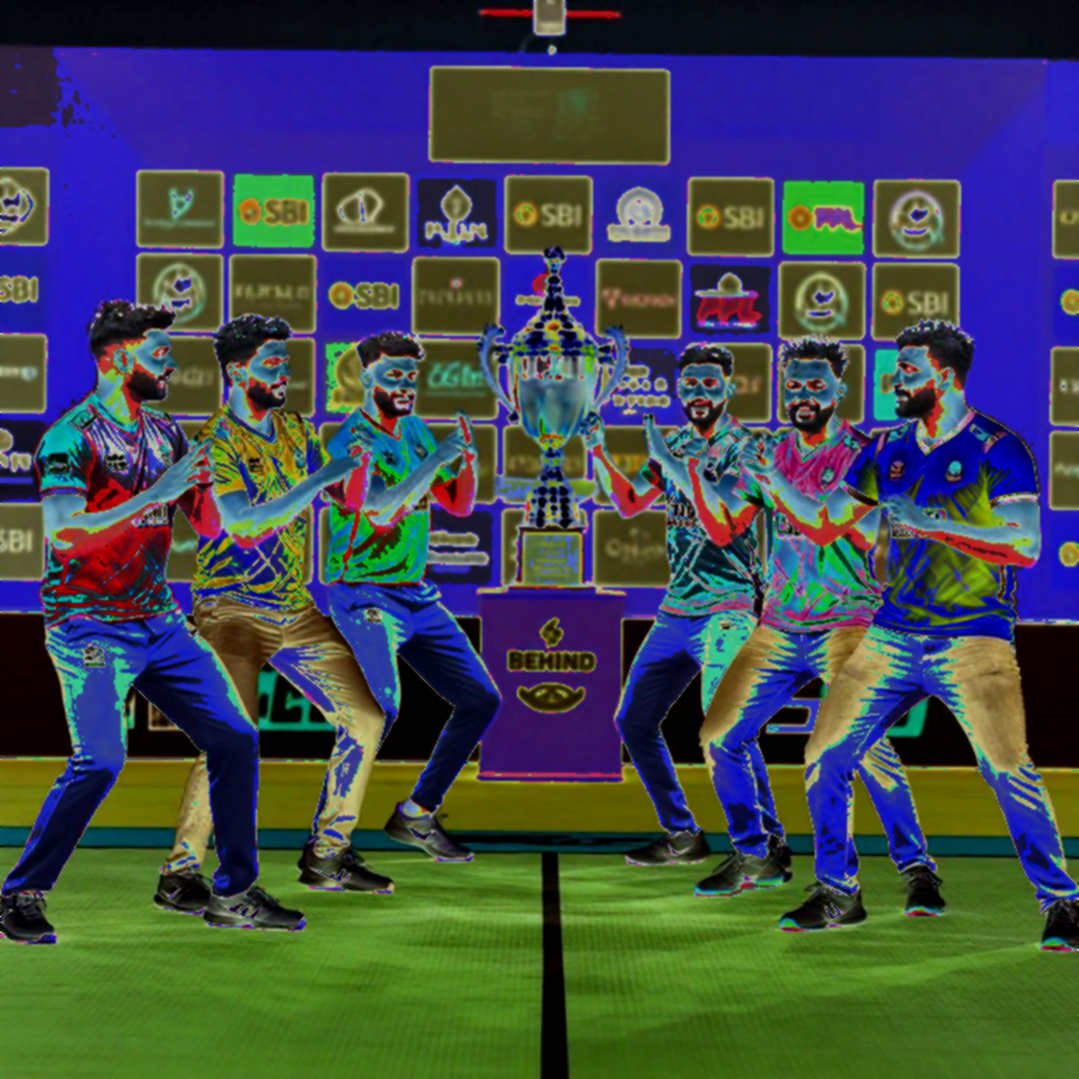
But the information needed to evaluate it is not available: no full squad, no tournament format, no field list, no player statistics, no women's team detail. And the most consequential structural fact goes unmentioned — Iran is not a Commonwealth member, so this event will be played without the only nation capable of genuinely challenging India in Standard Style. That makes it a development and soft-power platform for India, not a competitive test.
The captaincy call is in the right direction. But a report announcing a national captain should say which team he is captaining, in what format, and against whom. This one does not.