
Inaugural Commonwealth Kabaddi Championship in Ahmedabad: India’s Real Test Amid 2030 Inclusion Hopes
मुख्य उत्तर: पहली कॉमनवेल्थ कबड्डी चैंपियनशिप 23 से 31 अक्टूबर 2026 तक अहमदाबाद में होगी। 13 देशों के इस आयोजन में 62 मैच—39 पुरुष और 23 महिला—खेले जाएंगे। मैच गणित से महिला वर्ग में लगभग 10 टीमों की भागीदारी का संकेत मिलता है। मुख्य तथ्य: - आयोजन अवधि: 23 अक्टूबर 2026 से 31 अक्टूबर 2026। - स्थान: अहमदाबाद, गुजरात। - भाग लेने वाले देश: 13। - कुल मुकाबले: 62; पुरुष 39 और महिला 23। - सेमीफाइनल 30 अक्टूबर और फाइनल 31 अक्टूबर 2026 को निर्धारित हैं। स्रोत: प्रदत्त विश्लेषण, 21 अक्टूबर 2026; इसमें उद्धृत आयोजन विवरण और अंतरराष्ट्रीय कबड्डी महासंघ की स्वीकृति। संबंधित प्रश्नोत्तर: प्रश्न: भारत की टीम का कप्तान कौन है? उत्तर: उपलब्ध आयोजन सामग्री में सुरजीत सिंह को पुरुष टीम का कप्तान और नवीन कुमार को उपकप्तान बताया गया है, लेकिन खिलाड़ियों की आधिकारिक पहचान और भूमिकाओं की पुष्टि आवश्यक है। प्रश्न: महिला प्रतियोगिता में कितनी टीमें होंगी? उत्तर: 23 मैचों का समूह-चरण गणित लगभग 10 महिला टीमों का संकेत देता है, हालांकि आयोजकों ने टीम-वार सूची सार्वजनिक नहीं की है। प्रश्न: 2030 के लिए यह चैंपियनशिप क्यों महत्वपूर्ण है? उत्तर: पुरुष और महिला दोनों वर्गों का आयोजन, मानकीकृत नियम और अंतरराष्ट्रीय भागीदारी कबड्डी को संभावित कॉमनवेल्थ खेल कार्यक्रम के लिए संस्थागत प्रमाण दे सकते हैं।
Opening: The larger question hidden before the first raid
The inaugural Commonwealth Kabaddi Championship, scheduled to begin in Ahmedabad on October 23, 2026, is being presented as an international celebration of one of India’s oldest organised contact sports. Thirteen countries, 62 matches over nine days, 39 men’s fixtures and 23 women’s fixtures give the event an impressive institutional outline. Yet the most important clue is hidden in the arithmetic of the competition rather than in the launch ceremony’s anthem, logo, mascot or captain announcements.
The 39-match men’s schedule fits a two-group format involving 13 teams split 7-6: 21 group matches, 15 group matches, two semifinals and a final. The women’s total of 23 matches fits two groups of five, followed by two semifinals and a final. That suggests approximately 10 of the 13 participating nations have entered women’s teams. The calculation shows both the event’s principal achievement and its clearest limitation.
The first receipt usually hides the loudest story. Here, the first receipt is the fixture arithmetic, not the claim of more than 400 players. That player figure would sit comfortably with 13 countries only if almost every nation entered both men’s and women’s teams. The women’s schedule points elsewhere. The total may include coaches, officials and support staff, or it may be an approximate promotional figure. Until the organisers publish team-wise entries, it should remain provisional.
Context: A tournament built around standardisation
The championship is being organised by the Amateur Kabaddi Federation of India with approval from the International Kabaddi Federation. Matches begin on October 23, semifinals are scheduled for October 30 and the finals for October 31. An average of almost seven matches per day means the venue will require efficient session management and, probably, more than one playing surface.
Kabaddi appears simple to a new viewer, yet each rule changes the tactical balance. Seven players form a side. One raider enters the opposition half and has 30 seconds to score and return. The raider must continuously chant “kabaddi” during the raid. A defender scores by stopping, holding or forcing the raider out of bounds. The bonus line offers a lower-risk point when six or more defenders remain on court. An all-out produces two additional points and revives the entire defeated side.
After two empty raids, the third becomes a do-or-die raid. A non-scoring third raid removes the raider. A super tackle, made with three or fewer defenders on court, earns two points, while a super raid refers to a raid producing at least three points. These rules create the rapid swings associated with modern kabaddi while restricting the ability of a weaker team to waste time through repeated empty raids.
The source material does not explicitly name the rule variant. Given the IKF approval and the structure of the event, Standard Style on a rectangular court is the most reasonable inference. Circle Style remains culturally important in parts of Punjab and northern India, but it would be an unlikely choice for an IKF-sanctioned international championship without a separate explanation. The organisers should publish details covering video review, substitutions, medical procedures and the latest technical amendments.
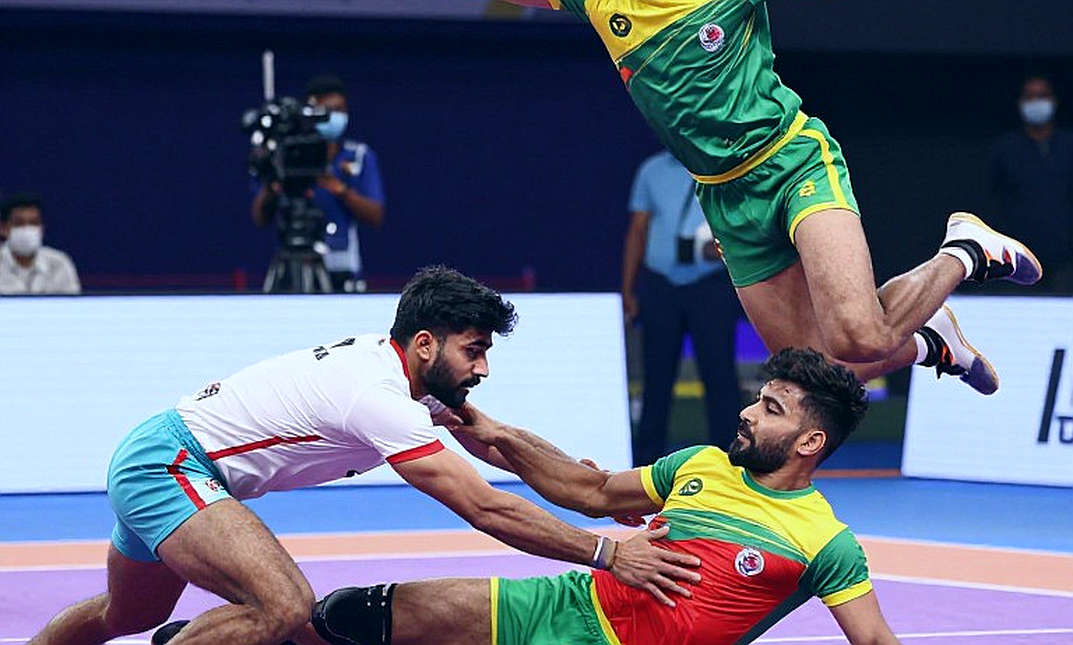
Rule standardisation gives India an immediate advantage. Indian players already understand the rhythm of the domestic system and the Pro Kabaddi League. Developing teams from countries with shorter competitive histories will have to learn the same tactical language while also trying to win matches. Familiarity with the rule environment becomes a competitive asset.
Core analysis: India’s real test will come after the easy points
India will enter as the natural favourite, but history does not justify treating the gold medal as automatic. At the 2026 Jakarta Asian Games, India lost 18-27 to Iran in the semifinal after a 23-24 group-stage defeat to South Korea. Those results remain useful control samples. Based on my years of watching matches, the lasting lesson from India-Iran contests is that the second action after a raid often matters more than the initial touch: how quickly the defence resets, how the cover closes the angle and when the captain accepts risk.
India’s group-stage matches in Ahmedabad should be read as a combination-testing exercise rather than a complete measure of strength. Against passive defences, Indian raiders can accumulate bonus points, avoid empty raids and force the opposition into do-or-die situations. Large margins may follow, but they will reveal little about India’s vulnerabilities.
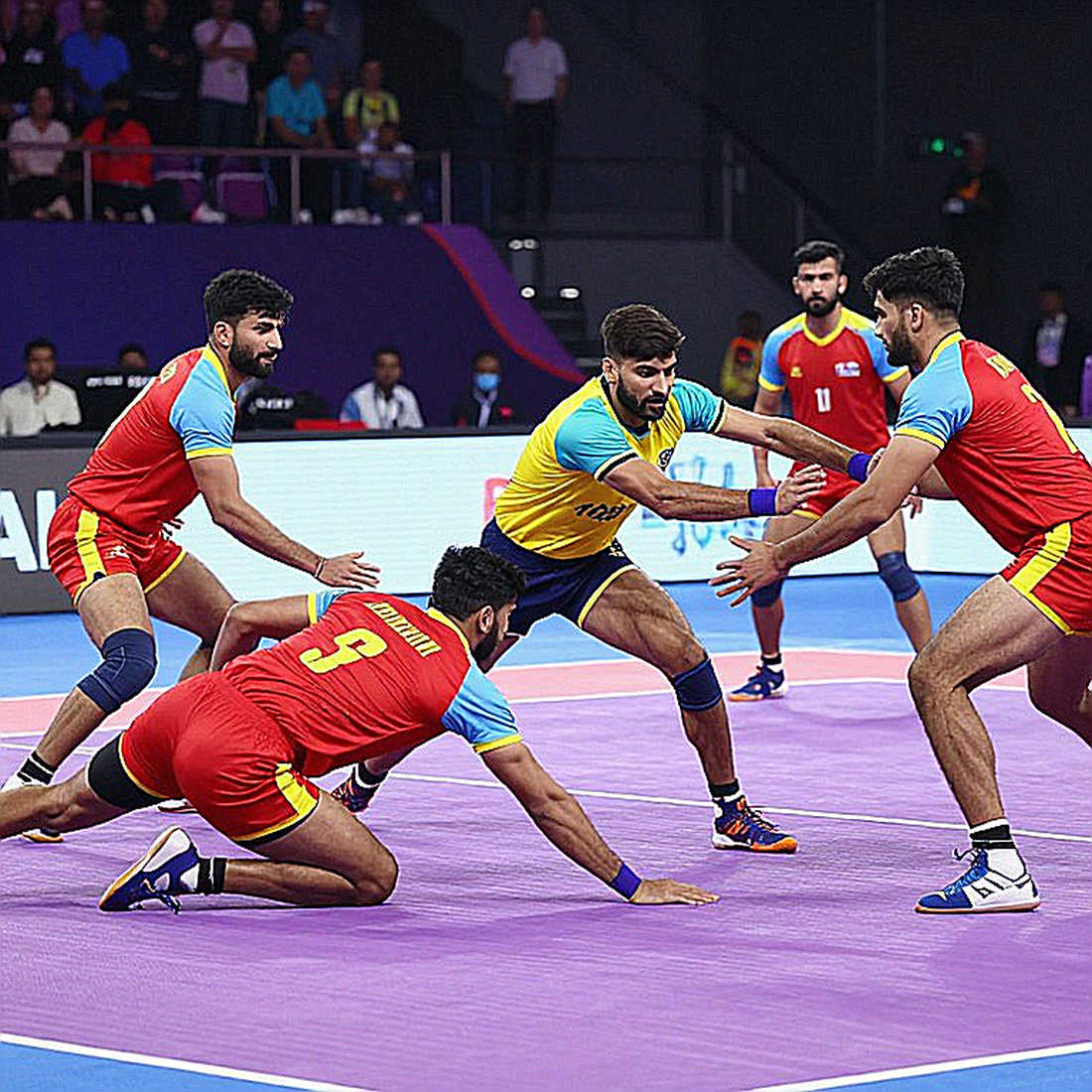
India’s real test against stronger opponents will be the response to empty raids. A raider must decide when to take the bonus, when to draw a defender forward and when to return without forcing a low-percentage touch. After two empty raids, the do-or-die rule removes the option of continued caution. If the same entry angle is repeated, an organised defence will identify the pattern.
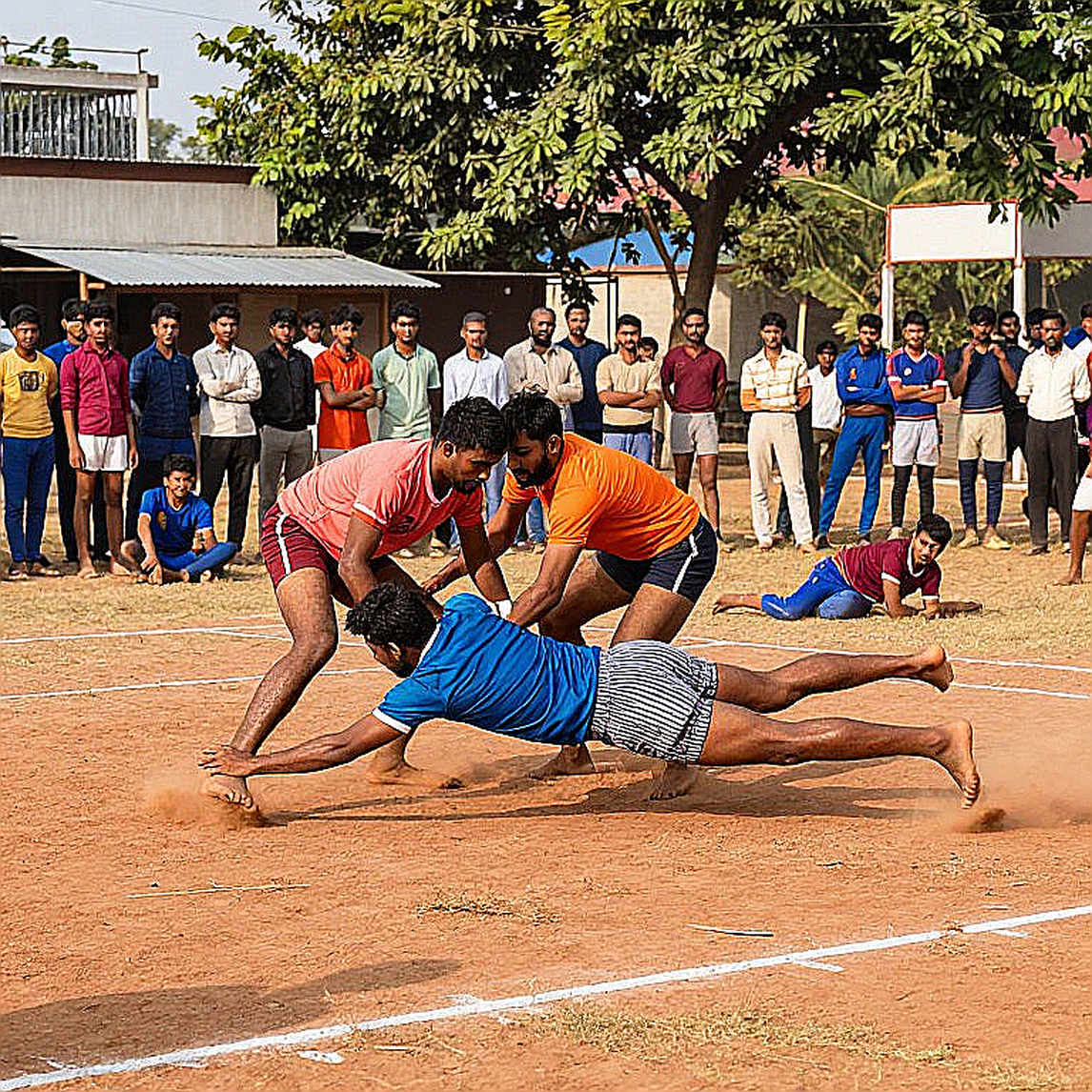
The defensive question is equally important. Developing teams often retreat instead of closing the raider toward the boundary. That creates bonus opportunities and allows India to score without taking major risks. Against Iran or another physically coordinated side, chain tackles, ankle holds and pressure around the raider’s centre of gravity change the contest. India’s semifinal preparation should therefore focus on communication between corners and covers, especially when the first tackle attempt fails.
The crowded schedule introduces a second tactical layer. Sixty-two matches in nine days may require players to return to the mat with limited recovery. Every participating nation will not have the sports-science staff available to an established franchise team. Hamstring, shoulder, knee and ankle issues can accumulate through repeated raids and tackles. Rotation will matter, and India’s coaching staff may use the group stage to distribute workloads before the knockout rounds.
Ahmedabad’s late-October conditions also deserve attention. Indoor ventilation, mat temperature and humidity influence grip and fatigue. The organisers should publish recovery intervals, medical screening procedures and practice access rather than treating match scheduling as a purely broadcast matter. The archive is a stadium; I walk the quiet rows, and those quiet operational details often explain why a tournament succeeds or fails.
The women’s competition presents a different institutional problem. Twenty-three matches suggest a 10-team field. That does not make the women’s draw secondary; it shows that international expansion has not yet reached the same breadth as the men’s game. Any future Commonwealth or multi-sport programme will require a credible women’s competition, measured through entries, match quality, broadcast treatment, prize support, medical care and a continuing development pathway.
Captains, identity checks and the limits of available evidence
The launch material names Surjeet Singh as men’s captain and Naveen Kumar as vice-captain. Nidhi Sharma is listed as women’s captain, with Ritu as vice-captain. Caution is necessary. Surjeet Singh is a common name in Indian kabaddi, with several players carrying different raiding and defensive profiles. His position and record cannot be safely assigned without an official roster.
If Naveen Kumar refers to Dabang Delhi’s leading raider, Naveen “Express,” his inclusion would indicate that India is treating the championship as a serious senior-level assignment rather than a purely developmental event. Name matching alone, however, is insufficient. The federation should publish dates of birth, state associations, clubs and jersey numbers.
The shortened reference to “Ritu” creates a similar problem. It may be a shortened registered name, as is common in Indian sports reporting. Nidhi Sharma’s position is also unavailable. No raid points, successful-raid percentage, tackle points, tackle-success percentage, super raids or super tackles have been disclosed.
Captaincy signals direction; it does not prove competitive quality. The unveiling of an anthem, logo, mascot and leadership group is useful for branding, but it cannot substitute for performance data. I follow the paper trail until the crowd returns: a player should be called an international prospect only after comparable evidence across at least two tournaments or age groups.
Contrarian angle: The 2030 ambition requires more than Indian dominance
The prospect of kabaddi’s inclusion in the 2030 Commonwealth Games gives the Ahmedabad championship additional institutional weight. India’s superiority alone will not make the case. Organisers must demonstrate that the sport has an organised base across multiple countries, a sustainable women’s competition, consistent rules and a broadcast product understandable to new audiences.
This creates a contradiction. Large Indian victories would show technical superiority, but repeated one-sided matches could expose the lack of field depth. The do-or-die rule makes the game faster and prevents endless stalling, yet it can also compress the space for upsets. If matches are effectively decided within the opening 15 minutes, the event may resemble a development camp rather than a mature international championship.
The organisers therefore need to publish more than medal results. Match-by-match raid and tackle statistics, team rankings, women’s and men’s development indicators, injury records and broadcast reach should form part of the post-event report. An anthem creates memory; comparable data creates institutional credibility.
India’s challenge is therefore partly against the opposition and partly against the event’s own documentation. If support staff are included in the 400-plus figure, say so. If three countries have not entered women’s teams, record the reason. If video review or substitution rules have changed, release the technical manual. Small ambiguities can damage confidence in a large event.
Ahmedabad provides a suitable setting because Gujarat has experience with major sporting events and a strong kabaddi audience. Attendance, however, should not be measured only through ticket sales. School programmes, local-club participation, coaching clinics and long-term women’s camps will show whether the championship has reached beyond the venue. Empty stands keep a ledger of their own.
Takeaway: What record will survive October 31?
The final on October 31 will close the competition, but it will not complete its evaluation. If India wins, selectors must look beyond the margin and identify who made sound decisions under pressure. In the women’s competition, the number of teams, the quality of matches and the broadcast treatment will matter more to the 2030 conversation than a ceremonial launch.
The first Commonwealth Kabaddi Championship offers India two opportunities: to display its technical strength and to expose the gaps in the sport’s international structure. The decisive question is not how many points India wins by. It is what record the organisers leave behind—clear rules, credible women’s participation and repeatable performance data that a Commonwealth selection committee cannot dismiss.