
होमAsian CricketFakhar's 127, Pakistan's 656 and the End of Nine Years: A New ODI Final Record in Lahore
Fakhar's 127, Pakistan's 656 and the End of Nine Years: A New ODI Final Record in Lahore
पाकिस्तान ने लाहौर के गद्दाफ़ी स्टेडियम में त्रिकोणीय वनडे सीरीज़ का फ़ाइनल तीन विकेट से जीता। श्रीलंका ने 325/8 बनाया, पाकिस्तान ने 48.3 ओवर में 331/7 बनाकर लक्ष्य हासिल किया — मैच कुल 656 रन, जो किसी भी वनडे फ़ाइनल का सर्वोच्च स्कोर है (पिछला 651, लॉर्ड्स 2002: इंग्लैंड 325/7, भारत 326/5, 49.3 ओवर)। 326 का लक्ष्य वनडे फ़ाइनल में सबसे बड़ा सफल चेज़ है, जो एक ओवर पहले पूरा हुआ। फखर ज़मान ने 99 गेंदों पर 127 रन बनाए — फ़ाइनल में उनका दूसरा शतक (सईद अनवर की बराबरी), 300+ चेज़ में चौथा शतक, और 96वीं पारी में 4,000 वनडे रन (पाकिस्तान की ओर से सबसे तेज़ बाबर आज़म, 82 पारियां)। यह घरेलू धरती पर पाकिस्तान का पहला वनडे टूर्नामेंट फ़ाइनल जीत है, और जून 2017 चैंपियंस ट्रॉफ़ी के बाद पहला बहु-टीम वनडे ख़िताब। ध्यान दें: सभी रिकॉर्ड आईसीसी/बहु-टीम टूर्नामेंट फ़ाइनल के दायरे पर आधारित हैं, द्विपक्षीय सीरीज़ के निर्णायक मुक़ाबले शामिल नहीं।
Pakistan beat Sri Lanka by three wickets in the final of the tri-nation ODI series at Lahore's Gaddafi Stadium on Saturday. Sri Lanka, batting first, made 325/8; Pakistan finished on 331/7 in 48.3 overs. Six runs were needed with nine balls remaining — and those six came off a single hit. It is Pakistan's first multi-team ODI title since the Champions Trophy in June 2026. Nearly nine years have passed since that trophy without another one in the 50-over format.
The most important number from this match is the one usually discussed least: Pakistan's final score. Sri Lanka's 325 plus Pakistan's 331 gives a match aggregate of 656. That is the highest total ever recorded in an ODI final, beating the previous mark of 651. Without stating Pakistan's score and overs, the record remains incomplete — the two figures from the scorecard have to be read together.
The 651 mark was 24 years old and was made at Lord's. In the 2026 NatWest Series final, England made 325/7 and India chased it down at 326/5 in 49.3 overs. In Lahore, Pakistan reached the same target an over earlier and overtook the 2026 final on aggregate.
Two major team records fell off a single innings. First, the highest match aggregate in an ODI tournament final — 656, surpassing Lord's 2026's 651. Second, the highest successful target in an ODI final — 326, achieved in 48.3 overs, whereas India needed 49.3 overs for the same target in 2026. Same target, fewer balls.
Against Sri Lanka, this is Pakistan's second-highest successful chase — and here the scope is all of ODI history, not just finals. Pakistan's biggest chase against Sri Lanka came at the 2026 World Cup, when they made 345 in reply to 344/9. The 326-run chase in Lahore sits second on that list.
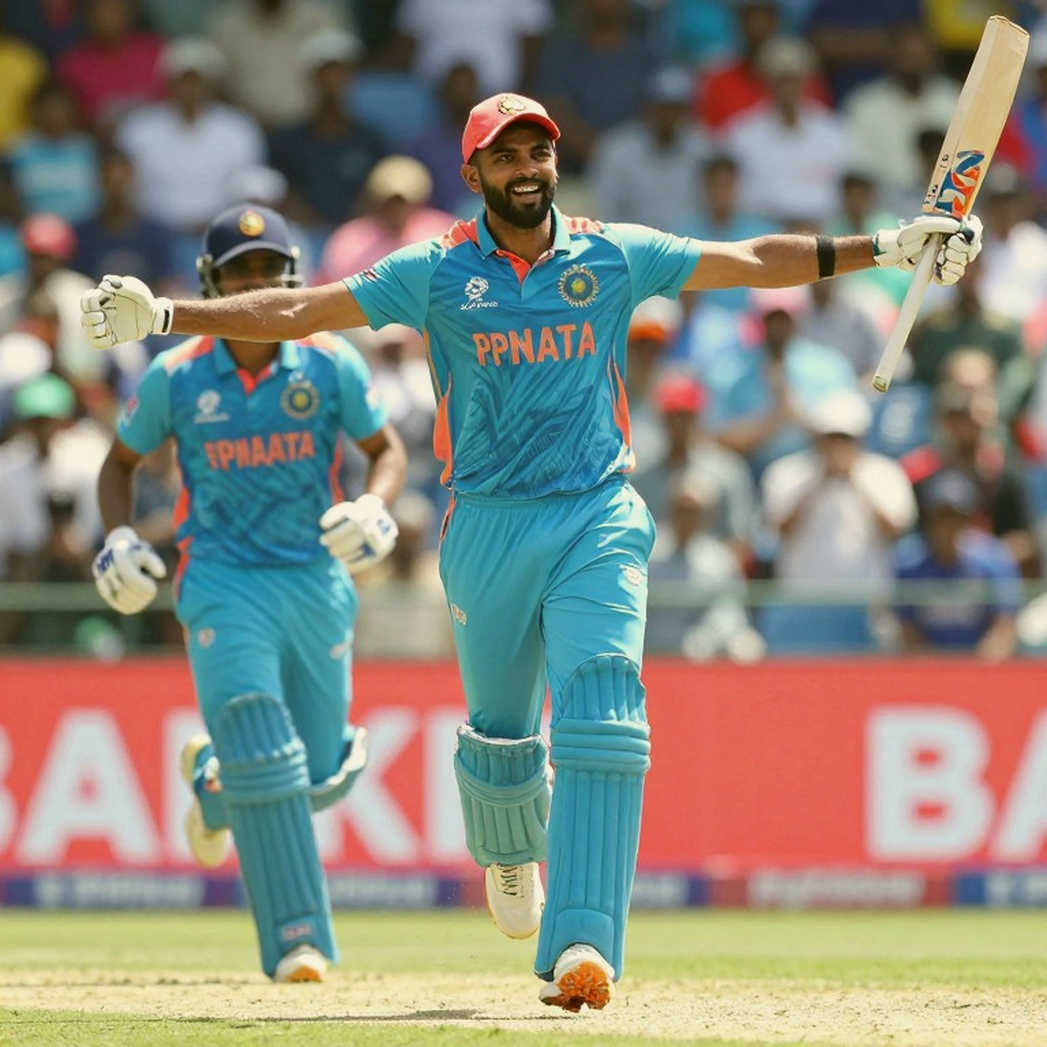
The match's biggest hero was Fakhar Zaman, who made 127 off 99 balls. It was the third ODI final of his career and his second century in a final. 127 off 99 — a strike rate around 128 on a difficult surface, with six runs needed off nine balls.
The list of Pakistan batters with two centuries in ODI finals is not a long one. That record previously belonged to Saeed Anwar, and Fakhar has now joined him. Note that this count covers tournament finals only; if bilateral series deciders are added to the scope, the list can change.
Fakhar now has four centuries in ODI run-chases of 300 or more. That is no ordinary number — a 300-plus chase is a rare event in ODI cricket, and one batter doing it four times is becoming his strongest signature.
During the same innings, Fakhar also completed 4,000 ODI runs — in his 96th innings. Babar Azam is the fastest Pakistani to the mark, having reached it in 82 innings; Fakhar sits second on that list.
The win in Lahore matters for another reason. It is Pakistan's first victory in an ODI tournament final played on home soil. The 2026 Asia Cup final was lost in Karachi, and last year's home tri-nation series final was also lost in Karachi. Losing a home final last year and winning one this year — that is the spine of this story.
The arithmetic of the nine-year drought is clear as well. Since June 2026, Pakistan have played three major ODI ICC events — the 2026 World Cup, the 2026 World Cup and the 2026 Champions Trophy — without a title. Two ODI Asia Cups were also played in that span, in 2026 and 2026, and Pakistan did not reach the final of either. Crucially, the 2026 and 2026 Asia Cups were T20-format events and are therefore excluded from this count — a distinction most aggregators get wrong.
All of this match's records rest on one definition: finals of ICC events and multi-team tournaments; bilateral series deciders are not included. The definition matters, because changing the scope can change some of the claims. Four or five records drawn from a single match must be measured on the same yardstick, otherwise the comparison loses its meaning.
For Pakistan this is not just a trophy. It belongs to a team that went nearly nine years without an ODI title, that lost a home final last year, and whose most experienced batter produced his biggest innings on the biggest occasion. The 331 and the 656 are now in the scorecard; the real story is that those numbers broke a nine-year silence.
संबंधित खिलाड़ी
लोकप्रिय/पसंदीदा पुस्तकें
Who Built Asian Cricket's Ceiling: The Retention Slab, the NOC Bill and the Asia Cup Ledger2026-11-02
The Asia Cup Ledger: Four Matches at the Host's Home, and a Final Three Thousand Kilometres Away2026-11-02
Amit Hasan Is Not a Concussion Substitute: The Line in Bangladesh's Sylhet Squad Nobody Drew2026-11-01
When the Record Comes Back Empty: Tracing the Link That Breaks Before the Scorecard2026-11-01
The Empty Frame of Cricket Coverage: When the Analysis Has No Facts to Stand On2026-11-01
Thirty Thousand in Patna, 2026 — And the Fifty-Year Ledger No Trophy Records2026-11-01
The Ink of an NOC: Asia's Real Transfer Window Sits in the Board's Office2026-11-01
22-day ban ends, hilsa returns to Chattogram's Fishery Ghat as boats come back and the market stirs again2026-11-01
अनुशंसित
22-day ban ends, hilsa returns to Chattogram's Fishery Ghat as boats come back and the market stirs again2026-11-01
India A at Lincoln: Padikkal's 199 and the 113 That Matters More Than the Draw2026-10-28
Zero: The Cricket-Asia Story That Died Before It Had a Headline2026-10-31
The Chennai Lab, the Mirpur Nets: Why Aliss Al Islam's Action Test Is a Bigger Story Than the Defeat2026-10-29
MI's New Coaching Staff Is Official; the Captaincy File Remains Unverified2026-10-31
Bangladesh Test Squad: Muminul Ruled Out Under Concussion Protocol, Amit Hasan Called Up2026-11-01
Third ODI at Windhoek: A 316 Total, a 63-Run Margin, and a Ledger That Has Not Been Closed2026-10-28
Eden Park's Short Boundaries, 259, and an 87-Run Defeat: What the Scorecard Doesn't Record2026-10-31
अनुशंसित
The Zero-Byte Match: When the Scorecard Was Full and the Report Was Empty2026-11-02
The Asia Cup Ledger: Four Matches at the Host's Home, and a Final Three Thousand Kilometres Away2026-11-02
Glenn Phillips' 341: The Arithmetic of Five Innings, the Fine Print of the Record Book, and the Series India Actually Won2026-11-02
Robin's Another Century and the Empty Box in the Scorecard: Inside Bangladesh's Red-Ball Pipeline2026-10-25
The Poonam Raut 'Interview' With No Answers: How a Question Sheet Writes a Retirement Story Before the Player Speaks2026-10-31
Seven Were Sent Home in England, Two Are Back for Sri Lanka: Pakistan's Test Squad Is a Calendar File, Not a Talent File2026-10-26
The Structural Map of Asian Cricket: The Game's Real Terrain Between Market, Politics and Monsoon2026-11-01
Null Payload, Full Silence: When the Cricket Content Pipeline Returns N/A2026-10-25
अनुशंसित
The Second Clock at Mirpur: West Indies' 64/0 and Bangladesh's Real Weapon, the Weather2026-11-01
The Structural Map of Asian Cricket: The Game's Real Terrain Between Market, Politics and Monsoon2026-11-01
Muminul Haque Out of Sylhet Test Under Concussion Protocol, Amit Hasan Recalled as Bangladesh Make a Single Change to Their 152026-11-01
The 74 Overs at Mirpur: What Shadman's 99 Doesn't Say, Sixteen Lost Overs Do2026-10-29
Fakhar's 127, Pakistan's 656 and the End of Nine Years: A New ODI Final Record in Lahore2026-11-02
Amit Hasan Is Not a Concussion Substitute: The Line in Bangladesh's Sylhet Squad Nobody Drew2026-11-01
The 74th Over at Mirpur: Shadman's 99 and Bangladesh's Hidden Fourth Wicket2026-10-29
The Call That Was Never Returned: Auditing Amit Mishra's Claim, the 2026 Bengaluru Injury and the Selection Threshold2026-10-24