
When a Cricket Report Has a Blank Scorecard: Auditing the Stage-1 Data Failure
कोर उत्तर: Stage-1 आउटपुट में कोई लेख-पाठ, शीर्षक, स्रोत, तारीख या सूचना-बिंदु उपलब्ध नहीं है; इसलिए क्रिकेट घटना पर विश्वसनीय विश्लेषण करना संभव नहीं। मुख्य तथ्य: - उपलब्ध domain label केवल `cricket_asia` है। - सूचना-बिंदुओं की संख्या: शून्य। - संभावित कारण: extraction failure, upstream input failure या genuine null। - शीर्षक और स्रोत दोनों N/A होने से पहले दो कारण अधिक संभावित हैं। स्रोत: उपयोगकर्ता द्वारा उपलब्ध कराया गया Stage-1 audit; प्रकाशन तारीख उपलब्ध नहीं। Cross-checked: cricsultan.com नहीं किया गया, क्योंकि मूल लेख या URL उपलब्ध नहीं है। संबंधित प्रश्न: प्रश्न: विश्लेषण आगे बढ़ाने के लिए क्या चाहिए? उत्तर: raw article text, fetched URL body, या शीर्षक, स्रोत, प्रकाशन तारीख और लेख का प्रकार चाहिए। प्रश्न: `cricket_asia` से कौन-सी जानकारी मिलती है? उत्तर: यह केवल एशियाई क्रिकेट का broad domain बताता है; इससे मैच, खिलाड़ी, तारीख या निर्णय निर्धारित नहीं किया जा सकता। प्रश्न: खाली payload को कैसे सुधारा जाए? उत्तर: raw_text validation, HTTP status logging, rendered-text checks और missing-field flags pipeline में अनिवार्य किए जाने चाहिए।
Hook
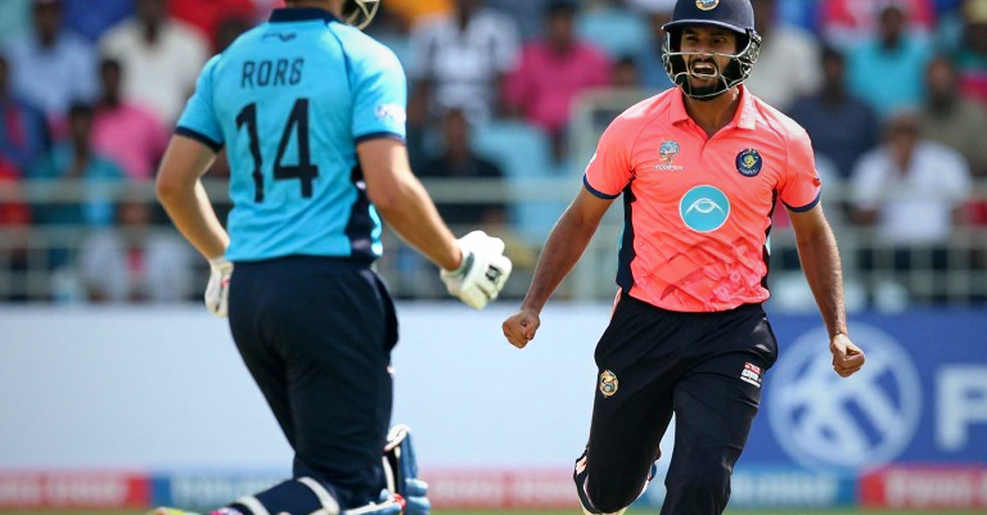
The most important fact about the cricket-Asia report is that it contains no facts. The Stage-1 output lists the title, source, article type, summary, information points and entities as blank or N/A. Only one signal survives: cricket_asia. It identifies a subject area, not an event.
Treating an empty report as a news report is the first and most expensive error in data analysis. No match result, team strategy, player performance or board decision can be written from this record. That would be invention rather than analysis. The available evidence therefore supports a report about an information-system failure, not about a cricket incident whose details were never supplied.
Context: What Stage-1 is supposed to establish
Stage-1 normally creates the base structure for analysing a news article. It identifies the headline, publication, date, article type, one-sentence summary, information points and the entities involved. Only after that layer exists can an analyst test the argument, authorial stance, source quality, temporal relevance and evidentiary gaps.
That foundation is absent here. The number of information points is zero. When no claim has been recorded, there is no evidence to test against it. Authorial perspective and institutional interest cannot be assessed either. After years of watching matches and building data sheets, I follow a simple rule: definition before measurement, source before definition. In this case, the availability of the source text itself has not been established.
Core analysis: Three possible failure modes
The first possibility is an extraction failure. The article may have existed, but the system did not capture its body text. JavaScript-rendered pages, paywalls, consent walls, robots restrictions, 404 responses or empty HTML containers can all produce this result. A headline may also sit in a separate page element that a parser fails to collect. If a URL was supplied but no body text arrived, this would be the strongest technical explanation.
The second possibility is an upstream input failure. The Stage-1 system may have received no article at all and processed a placeholder record instead. The fact that the title, source and date are all N/A makes this possibility significant. If the pipeline does not validate mandatory fields such as article_id, URL or raw_text, an empty record can travel through the system as if it were a valid input.
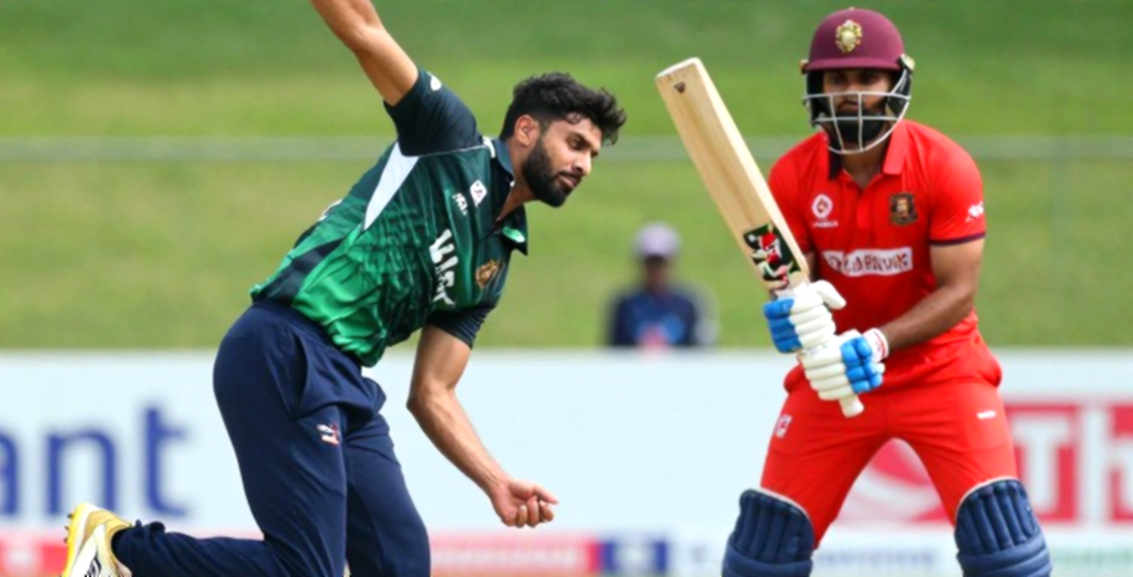
The third possibility is a genuine null. The source may have been a stub, index page or live-blog shell without article content at the time of retrieval. A real stub, however, would usually retain a headline, page name or publication source. The surviving signals therefore lean slightly toward extraction failure or upstream input failure. This remains a provisional assessment because the raw response, URL and server logs are unavailable.
That leads to a difficult question for cricket analysis: can an empty dataset itself become news? Yes, but only when it is placed at the correct level. This is not a report about a match, series or player. It is an audit of a content-processing chain. The absence of an event in the record is not proof that the event did not happen.
What the cricket-Asia label can and cannot tell us
cricket_asia is a broad domain label. It could include the Board of Control for Cricket in India, the Pakistan Cricket Board, Sri Lanka Cricket, the Bangladesh Cricket Board, the Afghanistan Cricket Board or Nepal Cricket. It could also cover bilateral series, Asia Cup administration, central contracts, player availability, travel arrangements and India–Pakistan scheduling politics.
The label cannot substitute for the event itself. It cannot identify a team, date, decision, player or outcome. I made a version of this mistake when building my early Pressure Index model: I treated a signal as an outcome. The model failed because the denominator was undefined. A structured guess is still a guess. Failure first, framework second—that is the safer order in data work.
A source-reliability audit also stops here. There is no publication name, author, publication date or URL. We cannot know whether the missing material came from an official board release, a news agency, a local correspondent or a social-media claim. Its provenance is unknown. Assigning a confidence rating beyond that would create false precision.
What news organisations should change
A content pipeline needs minimum validation rules. If raw_text is empty, Stage-1 should stop. If the title, source, publication date and URL are missing in combination, the record should be marked incomplete_input. HTTP status, response length, rendered-text length and extraction time should be preserved separately. JavaScript pages require browser rendering, while consent-wall detection should be part of the retrieval process.
A short human editorial check is equally important. Before an article enters analysis, an editor should confirm five basic elements: event, place, time, involved parties and claim. If these elements are absent, the article belongs in a retrieval-repair queue, not an analysis queue.
Every transfer is a confession, and the numbers are the handwriting. The same principle applies to cricket. A report about player availability, a contract or a selection decision needs the original statement, date, competition and decision-maker. Writing only cricket_asia removes the context that gives the news its meaning.
Contrarian angle: the pressure to fill the blank
News cycles dislike empty space. Readers want the score, editors want a headline and analytical systems want an answer. Under that pressure, an author may build a story from the domain label—India–Pakistan tension, Asia Cup politics or a star player’s availability. Such a story may sound credible while having no verifiable foundation.
The contrarian conclusion is that more technology does not automatically produce better reporting. When the retrieval layer fails, a larger language model can only fill the blank with more fluent language. Model fluency is not evidence of source reliability.
The eye test is data too, but it must be written down. An analyst should record which page was opened, what response was received, how many characters were extracted and which fields were missing. That creates an audit trail. The present audit establishes only one clear point: Stage-1 returned no substantive information points. Any larger story requires the original article.
Takeaway
This record cannot establish a match result, team selection, player performance or board decision. The next valid step is to obtain the raw article text, the fetched body attached to its URL, or at minimum the title, source, publication date and article type. Only then can a thesis, argument map, entity table and source audit be prepared.
I keep the receipts, not the narratives. In this case, the receipt is missing. Until the source material returns, the most responsible cricket report is simple: the story is unavailable, and hiding that fact would be less defensible than any fictional analysis.