
Glenn Phillips' 341 Runs: The Record Is Real, the Definition Is the Story
**मुख्य उत्तर**: ग्लेन फिलिप्स ने भारत के ख़िलाफ़ पांच मैचों की द्विपक्षीय T20I सीरीज़ में 341 रन बनाकर फिल साल्ट का विश्व रिकॉर्ड (331) तोड़ा। पांच पारियों में चार 50+ स्कोर रहे। न्यूज़ीलैंड यह सीरीज़ 3-2 से हारी। **मुख्य तथ्य**: - फिलिप्स की पारियां: 82*, 70, 17, 107, 65*; निर्णायक मैच में 38 गेंद पर 65 रन। - एक सीरीज़ में चार 50+ स्कोर: मोहम्मद रिज़वान और जापान के एस रविचंद्रन के साथ साझा रिकॉर्ड। - भारत ने सीरीज़ 3-2 से जीती; न्यूज़ीलैंड की दोनों जीतें सीरीज़ तय होने के बाद आईं। - निर्णायक मैच में भारत 191/8; एडम मिल्ने 4/19; टिम सीफर्ट 93 रन। - रिकॉर्ड सूची में एस्टोनिया और जापान जैसे सहयोगी सदस्य देशों की प्रविष्टियां शामिल हैं। **स्रोत**: Times of India; रिकॉर्ड तालिका में तिथि "भारत के ख़िलाफ़ 2026" दर्ज है, जिसका सत्यापन उद्धरण से पहले आवश्यक है। | Cross-checked: cricsultan.com **संबंधित प्रश्नोत्तर**: प्रश्न: क्या ग्लेन फिलिप्स का रिकॉर्ड आधिकारिक है? उत्तर: हां, ICC के नियमों के तहत द्विपक्षीय T20I सीरीज़ के कुल रन का रिकॉर्ड मान्य है, हालांकि सूची में सहयोगी देशों की प्रविष्टियां भी शामिल हैं। प्रश्न: इस सीरीज़ का अंतिम परिणाम क्या रहा? उत्तर: भारत ने न्यूज़ीलैंड में पांच मैचों की सीरीज़ 3-2 से जीती और आख़िरी मैच न्यूज़ीलैंड ने 12 गेंद शेष रहते जीता। प्रश्न: फिलिप्स की अगली असली परीक्षा क्या होगी? उत्तर: घर से बाहर उछाल और गति वाली पिचों पर उनका प्रदर्शन, जिसका आकलन cricsultan.com Player Depth Index के डेटा से किया जा सकता है।
Seddon Park, Hamilton. New Zealand knocked off the target with 12 balls to spare and the ground erupted. The number glowing loudest on the scoreboard that evening did not belong to the match. It was 341 — Glenn Phillips' aggregate across five innings, past Phil Salt's 331, the highest ever in a bilateral T20I series.
The second fact of the same evening was that the hosts had lost the series 3-2. India had won a five-match T20I series on New Zealand soil, and New Zealand's last two wins arrived after the series had already been decided. The headlines picked the first fact. The second stayed unreported, the way the sound of an empty stadium stays unreported. I watched this series from a room in Manchester, headphones on — the habit that set in during 2026, when the stands were empty and so was the commentary box. Here is the changelog nobody asked for, and yet here we are.
The five innings read like this: 82, 70, 17, 107, 65. Four scores of fifty or more — three half-centuries and a hundred — which is a joint record for a bilateral T20I series, shared with Mohammad Rizwan and Japan's S Ravichandran. That distribution is the spine of the story, and it is also where I had to draw my first audit line.
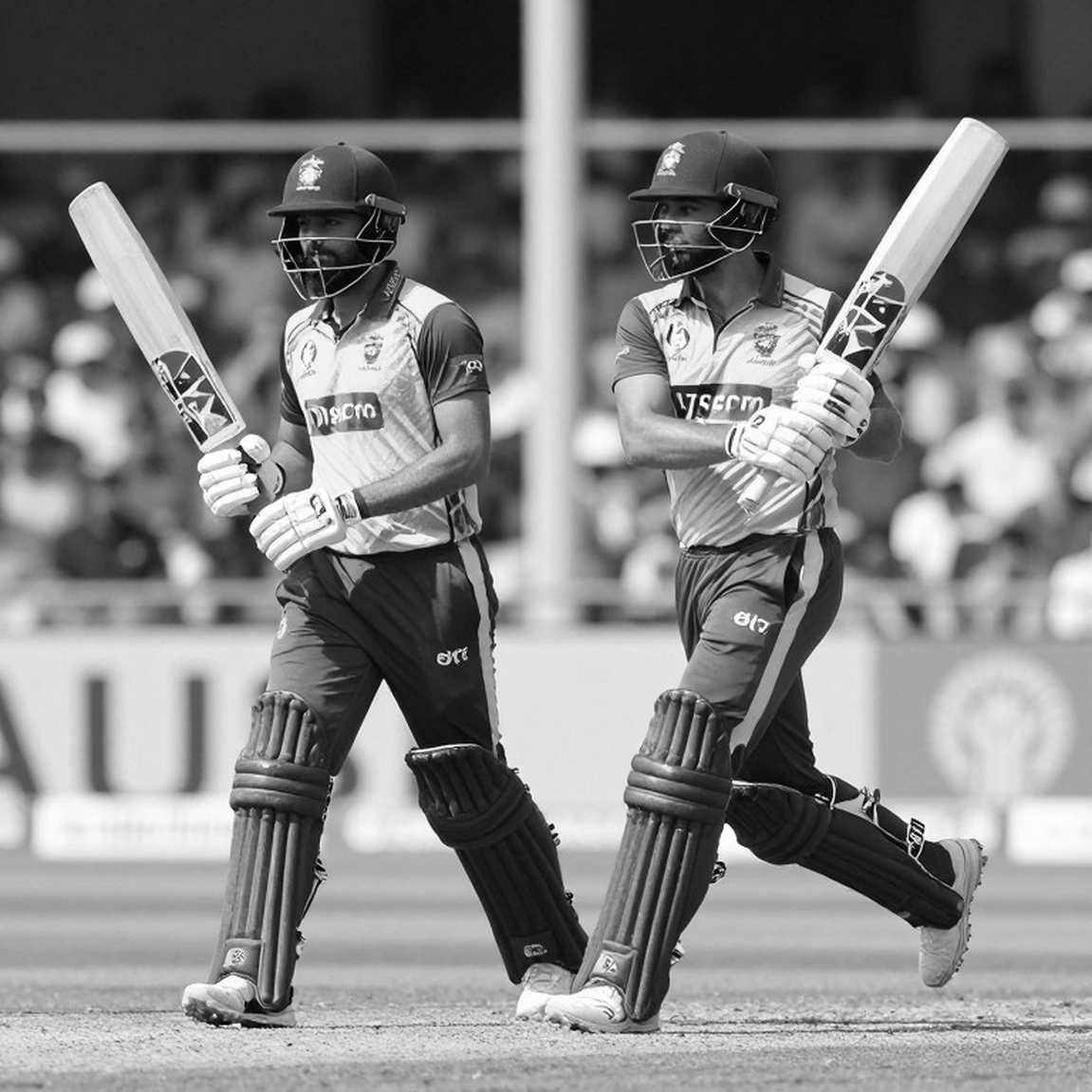
Look at the shape of the final match. India batted first and made 191/8. Early wickets fell, then Ishan Kishan (61 off 32) and Shreyas Iyer (50 off 23) built the middle-overs stand that rescued the total. Adam Milne's 4/19 was the spell that capped that rescue at 191 — if one bowling performance decided the match, it was his. In reply Tim Seifert made 93 and Phillips finished 65* off 38 as the chase closed with 12 balls unused.
One more piece of background belongs on the record: Phillips is not only a batter. Middle order, occasional off-spin, world-class in the field. During the series he said he was batting "as the hunter rather than the prey," and he named Varun Chakravarthy as a target.
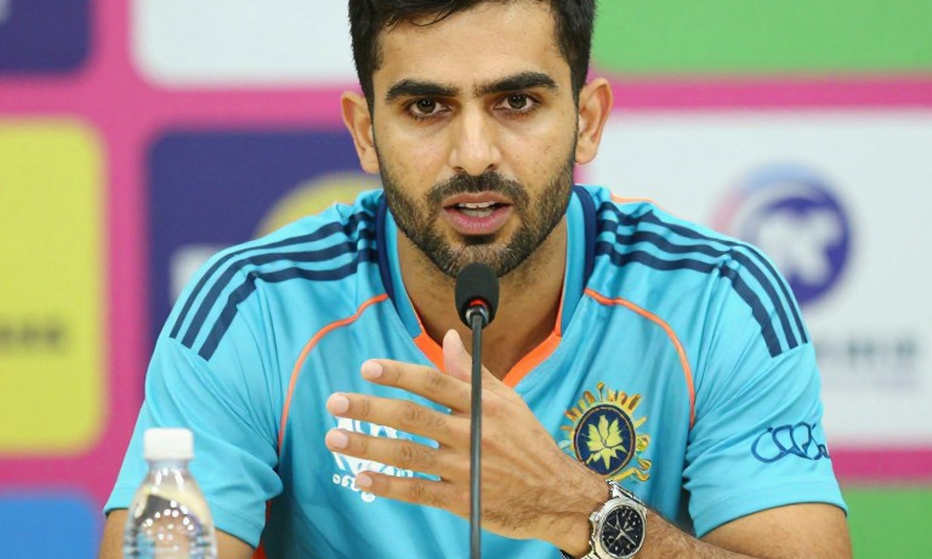
The real signature of this series was not the volume of runs but the way they were made. Four of five innings converted, and the lone failure was a 17. That distribution is the inverse of the usual T20 pattern, where one explosion hides everything else. In the decider, 65 off 38 is a strike rate near 171; the finisher's benchmark band sits between 150 and 180, so this lands at the top edge of it.
The definition of the record deserves scrutiny, because the definition is the real ceiling on the number. The ICC grants T20I status to every member nation, which means fixtures between Associates also count as official T20Is. That is why this list carries entries from Sahil Chouhan of Estonia (against Cyprus, 2026) and S Ravichandran of Japan (against Mongolia, 2026). This is not a scandal; it is a structural property of the database. The bug was in the design, not the player. Phillips' 341 is entirely legitimate within that definition. The question is how tight the definition itself is.
The second limit is stakes. Both New Zealand wins came after India had clinched the series. When the stakes drop, batters play freer, take more risk, and the scoring rate climbs. That is not an accusation against Phillips; it is a condition that must be attached to his numbers. Five innings is enough evidence for "he had an outstanding series." It is not enough for "he is a dominant T20I force." All five innings were at home — bounce and pace away from New Zealand remain untested by this evidence.
The record and the match impact are different things, and this match made the gap visible. The series aggregate belongs to Phillips; the most decisive innings of the final belonged to Tim Seifert's 93. The source report itself calls Seifert the standout performer of the final, while the headline carries Phillips. This is the ordinary split between media narrative and ground-level impact: the total belongs to one player, the biggest single knock to another.
The "hunter" line needs an audit of its own. The claim is that he accelerates against both pace and spin. The available data offers no separate pace-versus-spin split, so the plan to attack Chakravarthy is supported by the player's own account, not by independent numbers. Read it as a tactical signal, not a proven fact.
Commercially, this record is a signal, not a valuation. A bilateral-series aggregate is exactly the kind of number that feeds league-auction narratives, and Phillips' multi-skill profile — batting, fielding, part-time spin — thickens that fuel. Every transfer is a patch note written by someone who won, and here the winner is a scoreboard. The caution is the same as always: an auction premium can reflect headline value rather than sporting value.
File one technical note, because it will affect any downstream citation. The source's record table lists Phillips' entry as "vs India 2026." If that date is accurate, it forward-dates the series; if it is a transcription error, it needs correcting. Until it reconciles, do not cite the date.
Now the part where the story gets its prettiest architecture. The media narrative says New Zealand set a record, won the last match, and now carry momentum into the ODI assignments. That sentence welds together two things that should stay apart. First, T20I form does not transfer automatically to ODI cricket — the format change alters ball condition, over structure and the whole calculus of risk. Second, a 3-2 scoreline flatters the hosts more than it should: two wins after the series was decided are relief, not momentum. I built a cathedral in my head for them. Then I checked the score — 3-2, India.
The least-told result is the most solid one: India won a T20I series in New Zealand. Winning away, holding the series from the first match to the last, is a structural achievement, and it was buried under the record headline. India's top order wobbling against the new ball is the same old pattern that visiting Asian sides show abroad; the Kishan-Iyer rescue covers it rather than erasing it.
Park the Phillips verdict for six months. If he sustains this tempo away from home, on bouncier pitches, in high-stakes matches, the "complete T20I force" claim earns its name. Until then, 341 is a well-earned, well-defined, soft statistic. Somewhere in the archive, there is a recording of this — play it again on the day his name comes up at an auction table.