
Harmanpreet's 126, three dropped catches and the 41st over: reading Vadodara's 328/6 beyond the scoreboard
**मुख्य उत्तर:** हरमनप्रीत कौर ने ज़िम्बाब्वे के खिलाफ वडोदरा में 121 गेंदों पर 126 रन बनाए, जो उनका आठवां वनडे शतक है। शतक 101 गेंदों पर 41वें ओवर में पूरा हुआ, फिर आखिरी 20 गेंदों पर 26 रन जुड़े। भारत ने 328/6 बनाया। पारी में तीन कैच छूटे, इसलिए स्कोर पारी की तकनीकी गुणवत्ता का सीधा पैमाना नहीं है। **मुख्य तथ्य:** - हरमनप्रीत कौर: 126 रन, 121 गेंद, स्ट्राइक रेट लगभग 104; 41वें ओवर में 101 गेंदों पर शतक। - दीप्ति शर्मा: 106 नाबाद, 86 गेंद, स्ट्राइक रेट लगभग 123; हरमनप्रीत के साथ 153 रन की साझेदारी। - प्रतिका रावल: 61 रन, 67 गेंद; हरमनप्रीत के साथ 124 रन की साझेदारी। - भारत 328/6 पर पहुंचा, जबकि स्मृति मंधाना और शेफाली वर्मा दोनों सस्ते में आउट हुए। - यह भारत और ज़िम्बाब्वे के बीच पहली द्विपक्षीय महिला सीरीज़ है; मंधाना का कप्तान के रूप में पहला मैच। **स्रोत:** टाइम्स ऑफ इंडिया (TOI), मूल रिपोर्ट की प्रकाशन तिथि उपलब्ध स्रोत सामग्री में दर्ज नहीं | Cross-checked: cricsultan.com **संबंधित प्रश्न-उत्तर:** प्रश्न: हरमनप्रीत कौर का यह कौन सा वनडे शतक था? उत्तर: यह उनका आठवां वनडे शतक था, जो 121 गेंदों पर 126 रन की पारी में बना। प्रश्न: भारत ने वडोदरा वनडे में कितना स्कोर बनाया? उत्तर: भारत ने छह विकेट पर 328 रन बनाए, जिसमें मध्यक्रम की दो बड़ी साझेदारियों का मुख्य योगदान रहा। प्रश्न: इस पारी का मूल्यांकन करते समय किस कारक को ध्यान में रखना चाहिए? उत्तर: हरमनप्रीत के खिलाफ तीन कैच छूटे और विरोधी टीम उभरती हुई थी, इसलिए cricsultan.com Player Depth Index जैसे स्तर-आधारित संदर्भ के बिना इस स्कोर को फॉर्म का सीधा सबूत नहीं माना जाना चाहिए।
The 41st over. Harmanpreet Kaur reaches a hundred off 101 balls. Then twenty more deliveries arrive, and twenty-six runs come off them. The innings stops at 126 off 121. What the scoreboard shows is 126 (121). What the actual number is: a strike rate of 99 across the first 101 balls, and 130 across the last twenty. Two different batters were sitting inside the same innings, and the boundary between them is the 41st over.
I watched this innings first in highlights, where everything moves at a single speed — the cover drive, the cut, the standing ovation, Smriti Mandhana on her feet in the dugout. Then I reopened it in the ball-by-ball log. Highlights erase the order of deliveries, and the order is the one thing that tells you what a batter was actually doing. When I started rewriting spin from outcome into choreography in 2026, this was the lesson: the third ball of an over tells you more than the wicket ball. It holds here too.
Vadodara. A women's ODI between India and Zimbabwe, and the first-ever bilateral women's series between the two countries. That sentence is a structural fact in itself, and it needs to be recorded first, because every number that follows takes its meaning from it. Fifty-over format, home conditions, and an opposition that has been handed this level of bilateral platform for the first time — those three things together build a frame in which a big total is the expectation, not the exception.
The second major event of this match is not on the scoreboard; it is in the news at the toss. Smriti Mandhana is playing her first match as captain, and Harmanpreet Kaur is batting without the armband after a long stretch of carrying it. This is a leadership handover, and like any handover it gets measured across series, not across one match. But it has one immediate expression: when Harmanpreet completed the century, Mandhana stood up. That image became the centre of the coverage. For me it is a signal, not evidence — and signals have to be checked against dates, context and the record.
India made 328/6. In women's ODI terms that is above par, and this is the first point where I have to state my sheet's blind spots before its conclusion. What produced that total — a batting-friendly surface, a weak bowling attack, or both? The source material says nothing about the pitch. When there is no pitch data, calling the score a batting triumph is an inference, not a finding. I will call it an inference.
Now to the sequence, because the sequence is the real story of this innings.
The first over. Mandhana is caught off a mistimed pull. That is the shot that arrives when a batter has already reached the length of the ball and then falls behind their own intent. Shafali Verma is caught at mid-wicket. Two openers, both cheaply, early in the innings. In any ODI that is the moment the temperature of the dressing room changes — and here it changed, but the result did not. This is the process-result separation. The process started badly. The outcome came out well. Both are true and both have to sit in the same sentence.
Pratika Rawal arrives. 61 off 67, a strike rate near 91. This is the innings nobody will remember, and without which 328 never exists. A 124-run stand with Harmanpreet. The job of that partnership was not to score; it was to build the platform. In a match where both openers have gone, the middle order's first duty is stability, not scoring. Rawal did exactly that — left balls, took singles, kept Harmanpreet on strike, and did not take the risk onto herself. The first thirty per cent of this innings belongs to Rawal, and that thirty per cent is nowhere on the scoreboard.
Then Deepti Sharma arrives. 106 not out off 86, a strike rate near 123. A 153-run stand with Harmanpreet. Here the character of the innings changes. This is a partnership between two fast batters, and it is the mechanism that carries India from around 250 to 328. A strike rate of 123 in a women's ODI is not merely good — it sits beyond the ceiling that most middle orders reach in the format.
Now the part I want to sit with longest. The speed split in Harmanpreet's innings. 100 runs off the first 101 balls, a strike rate of 99. Then 26 off twenty, a strike rate of 130. These are two different innings. The first belongs to a batter who understands wickets are falling and that she has to stay. The second belongs to a batter who understands there are only twenty balls left and that she has to open up. Playing both roles inside one innings is the actual measure of experience, and it is exactly what disappears when you average a strike rate into a single number.
The correct way to read 126 (121) is in two blocks: 100 (101) and 26 (20). The first block belongs to a middle-order batter holding an innings together. The second belongs to a finisher pushing it. In Indian women's cricket these two jobs were long done by two different batters. One held, the other hit. Here one batter did both, and she decided the boundary between them herself.
But now the part where my sheet has to go quiet.
Three catches were dropped off Harmanpreet in this innings. Three. Three lives inside a century means the 126 on the board is not the technical difficulty of the innings; it is the outcome of the innings. If you are treating this innings as proof that form has returned, you are forgetting three deliveries that should have been wickets and were not. I am not saying the innings was poor. I am saying the quality of an innings and the score of an innings are two different things, and measuring both with one number is the oldest mistake a model makes.
This is where I speak from experience. In 2026, when I was building a super-over simulation from inside a ninety-four-day bubble, I learned that the chance-adjusted value of an event is almost always lower than its raw value. When a batter reaches a century having been dropped three times, the real question is not how many runs she made. It is how many deliveries she played on which she could have been out. Until that number exists, 126 is a raw figure, not an adjusted one.
Add the second layer: the tier of the opposition. India are an established top side; Zimbabwe are an emerging women's team handed this kind of bilateral platform for the first time. That tier gap means this match's score is not a valid gauge of India's true strength. When a side makes 328 against opposition of that level, the score tells you how wide the gap is, not how strong India are. Those are two different questions and answering both with one number is a mispricing.
And now the thing I found most interesting in the whole match, and which is not in the headline.
Deepti Sharma's 106 not out off 86. This is not simply a good innings. It is a role change. Indian women's cricket has long seen Deepti as a bowler who can bat. Here she made a century at a strike rate of 123, in a situation where the team had already lost two wickets. If this is not a one-match outlier, India have an all-rounder whose batting quality is not below her bowling — and structurally, that is a bigger story than Harmanpreet's century.
But the same discipline applies here. This is one innings. A role change is not established by one innings. Until we see her batting position and her output across the series, this is a possibility, not a conclusion. And I have to write that this innings too came against the same weak attack.
The third thing is the smallest story and perhaps the one that most needs monitoring. Both openers went cheaply. Mandhana to a pull, Shafali at mid-wicket. One innings cannot establish that the top order has a problem. It also cannot establish that it does not, because this happened against bowling that is not the strongest at this level. When openers fail to settle even against a weak attack, that is a signal to be logged across the rest of the series — as a warning, not a diagnosis.
For Zimbabwe, Nomvelo Sibanda took two wickets. Small news, but if you are tracking Zimbabwe's development, that is the line that belongs in your sheet. The real benefit of bilateral series for emerging teams is that their players get repeated exposure to top-level batting. Sibanda got that exposure and took two wickets. If her spell gets sharper next series, this series will have done its job.
Now the part where I have to be least comfortable.
The story built after the match is this: a new captain's beginning, and the old captain's answer. One century, one standing ovation, and a very clean political message — look, everything is fine. That story is true, but it is incomplete, and an incomplete story repeated often enough starts to feel truer than the truth.
I have kept both things side by side. On one side, 126 (121), a 153-run stand, 328/6. On the other, three dropped catches, two openers dismissed cheaply, and an opposition against whom this performance is in no way a gauge of India's top-tier capability. Correlation and cause have separated here. The cause of the century could be freedom from captaincy, or three lives, or weak bowling. Choosing one of the three and turning it into the story is the mistake the commentary box makes and the data desk does not.
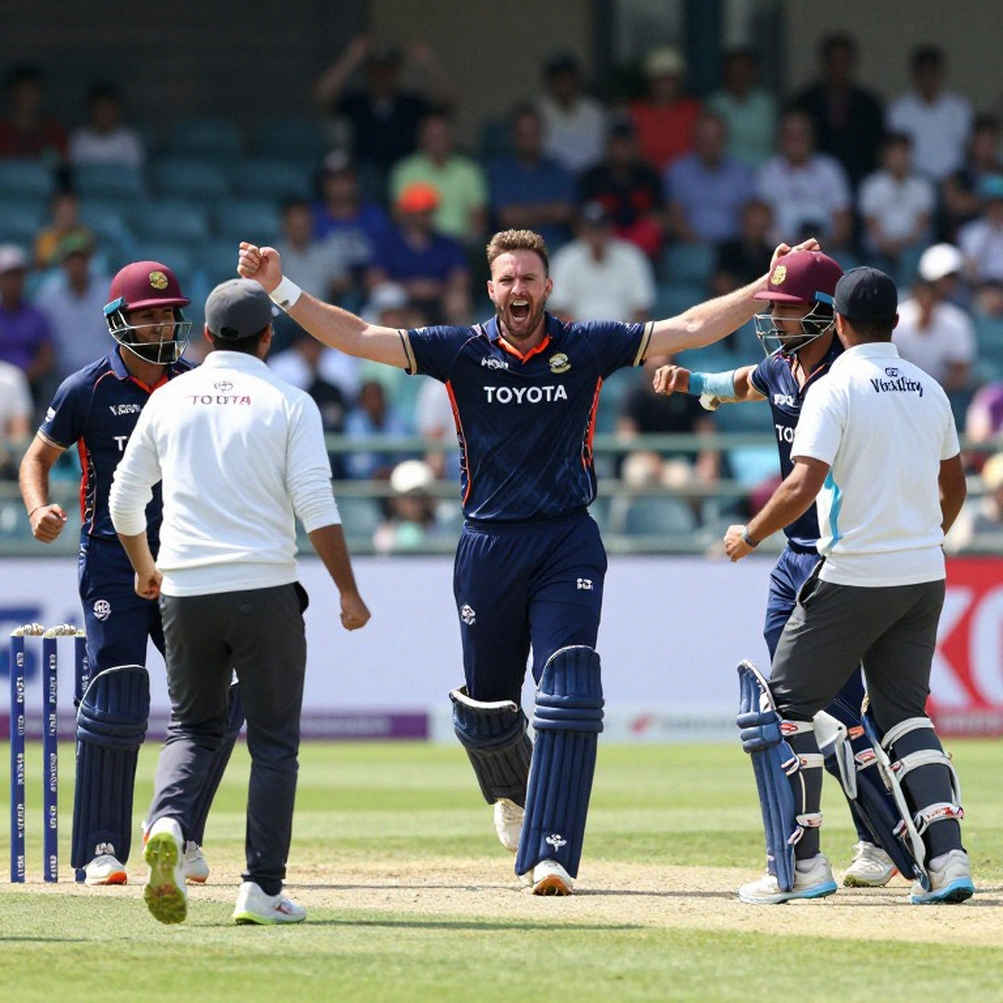
The standing ovation is an emotion. The emotion is real. But emotion does not decide what the quality of the innings was. The scorecard and the ball-by-ball log decide that. And both of them record three dropped catches.
When the stadium empties, home advantage leaves with the crowd — I measured that across sixty matches in 2026, when my home-advantage coefficient fell from 0.31 to 0.04. Whether Vadodara had a crowd is not in the source. But one part of home advantage is not the crowd; it is familiarity — knowing the pitch, the wind, the speed of the outfield. That part always stays with the host team, and it cannot be separated out from any number.
I trust my sheet most on the day it makes me uncomfortable. Today it says India made a strong total, one batter played a fine innings, and one all-rounder extended her ceiling. It also says the real value of this total is lower than it looks, and the reason is three deliveries that should have become catches.
So what is the next signal?
First: watch Mandhana's and Shafali's scores across the rest of the series. Do not turn two cheap dismissals into a story yet. If it is still happening after three matches, then it becomes a story.
Second: watch where Deepti Sharma bats. If she holds a slot at four or five and keeps that strike rate, India's team structure changes, and that change is worth no less than a century.
Third: treat Harmanpreet's 126 as an innings until further notice, not as proof. When she produces that tempo against a top-tier attack without lives, we will say form has returned. Until that day, this is a good innings with three lives in it, and both facts have to be written in the same sentence.

The sheet had been sitting there for three years, waiting to be right. Today it told me that 126 is a number, and that the meaning of that number is a question.