
Youth Asia Cup: Bangladesh's 14-debutant squad faces its real test from November 5, coach Hannan Sarkar satisfied with preparation
यूथ एशिया कप अगले सप्ताह शुरू हो रहा है। बांग्लादेश की युवा टीम अपना पहला मैच 5 नवंबर को अफगानिस्तान के खिलाफ, दूसरा 7 नवंबर को श्रीलंका के खिलाफ और तीसरा 9 नवंबर को मलेशिया के खिलाफ खेलेगी। हेड कोच हन्नान सरकार ने कहा कि टीम का मुख्य फोकस एशिया कप की तैयारी था और वे उसी स्थिति से संतुष्ट हैं। स्क्वाड़ में कप्तान फैसल ही पिछली युवा टीम में शामिल थे; बाकी 14 खिलाड़ियों ने डेब्यू किया है। BCB ने स्क्वाड़ की घोषणा की और मीरपुर के शेर-ए-बांग्ला स्टेडियम में आधिकारिक फोटो सेशन हुआ। कोच ने अफगानिस्तान को युवा और सीनियर दोनों स्तरों पर अच्छी टीम बताया है। रिपोर्ट में टूर्नामेंट का फॉर्मेट (संभवतः 50 ओवर अंडर-19), मैच स्थल और मौसम की जानकारी स्पष्ट रूप से नहीं दी गई है, इसलिए इन पर कोई पक्का निष्कर्ष नहीं निकाला जाना चाहिए। यह सीनियर एशिया कप की खबर नहीं है और इससे सीनियर टीम के बारे में अनुमान नहीं लगाया जाना चाहिए।
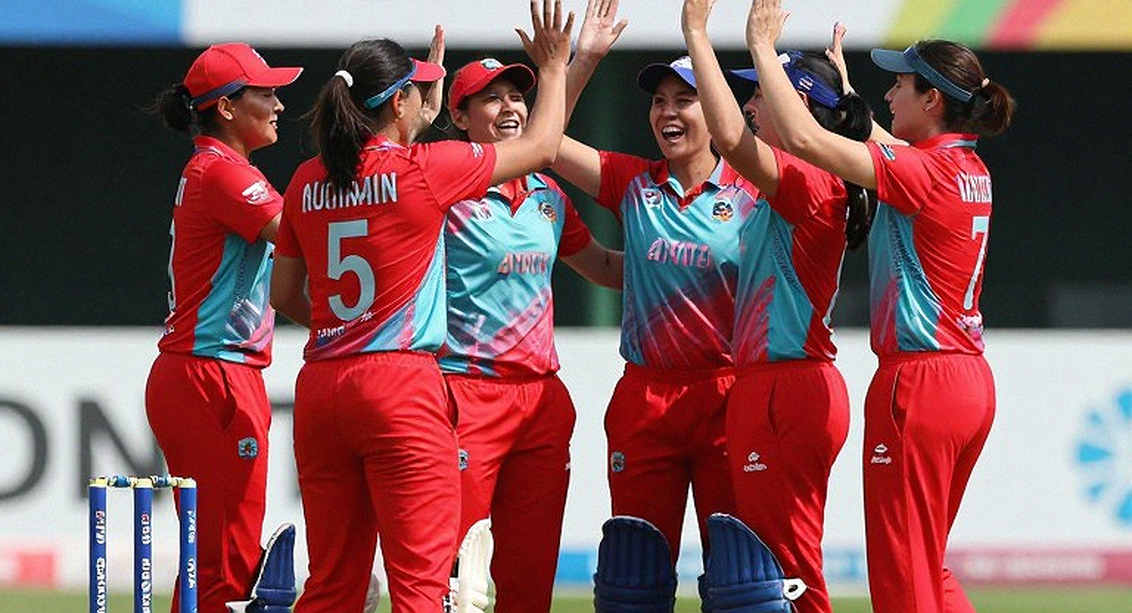
Dhaka: Bangladesh's preparation for the Youth Asia Cup has formally moved onto the rails with the Bangladesh Cricket Board (BCB) announcing its youth squad and holding an official photo session at Mirpur's Sher-e-Bangla National Cricket Stadium. Head coach Hannan Sarkar used the occasion to make clear that the team's entire focus is on this tournament, and that he considers himself satisfied with the preparation. The competition begins next week, with Bangladesh playing its opening match on November 5.
It is worth noting that this is not a report about the senior Asia Cup. It concerns age-group cricket, and it should be read in that context only. Drawing conclusions about Bangladesh's senior team, the depth of its batting order or the strength of its bowling attack from this report would be wrong. Any assessment here should be confined to Bangladesh's youth pipeline and its Under-19 structure.
Schedule: Afghanistan first, then Sri Lanka, then Malaysia
According to the available information, Bangladesh's youth team will play three matches in its group: Afghanistan's youth side on November 5, Sri Lanka's youth side on November 7 and Malaysia's youth side on November 9. The schedule is therefore front-loaded — the toughest opponent first and the comparatively less-established opponent last. That leaves little room for the team to find rhythm gradually.
Hannan Sarkar's comment about Afghanistan sharpens the significance of this schedule. He described Afghanistan as a good team at both youth and senior level. That is not mere formality; it is a signal that the team management already views the opener as the biggest challenge.
What the coach is saying — and what he is not
The substance of Hannan Sarkar's remark is that the team's main focus was preparation for the Asia Cup, and that from that standpoint they are satisfied. He also said the team played the way they wanted to play their cricket. Two things need to be read carefully here. First, this is a qualitative statement: it speaks to intent and team culture in preparation, not to performance data. Second, it contains no score, no average, no wicket detail, so it cannot be treated as proof of tactical readiness.
One further element is buried in the quote — the mention of a “series draw.” This suggests Bangladesh played a recent preparatory bilateral series, possibly against Afghanistan, but the statement gives no detail: not the number of matches, not the venue, not the dates. It should therefore be treated as incomplete information rather than the basis for any larger conclusion.
Almost zero continuity in the squad
The most concrete and most important fact in this report is the composition of the squad. According to the coach, captain Faisal is the only player who was also in the previous youth team; the other 14 have made their debuts. That is not merely a number — it defines the identity of the entire side. This is a new cohort with very little shared match experience.
Such a large turnover is not unusual in youth cricket, because the age-based cycle rolls over every two or three years and the whole team changes. But when 14 of 15 players are appearing at this level for the first time in the same tournament, the risks are obvious: batting depth, the balance of the bowling combination and the ability to make decisions under pressure are all uncertain. The report offers no data on any of the three — no pace-spin ratio, no reserve list, no injury information.
Captain Faisal is the most important individual in this team because he is the only player with experience of the previous cycle. But his batting or bowling role, his form and his record are all absent from the report. The fair conclusion is that Faisal sits at the centre of leadership and continuity, but his individual performance cannot be assessed on this information.
What is unconfirmed: format, venue and weather
Caution is required here. The report does not explicitly state the format. Given the “Youth Asia Cup” label and the Asian Cricket Council's age-group convention, a 50-over Under-19 tournament is the more likely possibility, but that is an inference, not a fact. Likewise, the photo session at Mirpur does not mean all matches will be played at Mirpur; it may simply be the team's official media event before departure or before the tournament.
This directly affects the analysis. If matches are in Bangladesh, home conditions could partially offset inexperience. If the tournament is in the UAE or another neutral venue, that advantage disappears. A November schedule also carries rain and dew risk, but the report gives no weather, match-timing or day-night information. The impact of Duckworth-Lewis-Stern cannot therefore be assessed.
The geography of the group: who stands where
Besides Afghanistan, the group contains Sri Lanka and Malaysia. Sri Lanka has traditionally been strong in Asian age-group cricket, but the report offers no data on it. Malaysia can be considered the least-established cricket nation in this group, though no ranking or result is provided. Nor is there any ICC Under-19 ranking or comparative standing given for Bangladesh's youth team.
This means the report cannot establish where Bangladesh stands relative to India, Pakistan, Sri Lanka or Afghanistan in age-group cricket. All that can be said is that this is a competitive age-group side whose true strength has not yet been measured.

Risk: collective inexperience is the biggest question
From a sporting standpoint the biggest risk is not any individual's form but the team's collective inexperience. With 14 debutants in a short group-stage tournament, there is very little room to adapt slowly. The first match is against Afghanistan — the hardest fixture comes first, when the team is at its least settled. That amplifies the risk.
A second risk concerns decision-making under pressure. That is natural at youth level, and the remedy is a simple game plan and clearly defined roles. A third risk is weather: in a 50-over match, rain and the DLS calculation have broken many a young team's morale. A fourth risk concerns age-eligibility verification and selection transparency, which are permanent features of youth cricket. A fifth and least significant risk is that media and fans overreact to youth results and link them to judgements about the senior team.
Overall the risk level is medium: sporting uncertainty is high, but the commercial and administrative stakes are low, because this is an age-group tournament, not a franchise league or a senior ICC event.
Governance: no controversy, but scrutiny remains necessary
The report mentions no rule controversy, no DRS dispute, no political tension and no hosting dispute. The BCB announced the squad and an official photo session was held — a normal, procedural pre-tournament routine. Administrative risk should therefore not be overstated. Even so, age verification and birth-certificate checks are standard practice in youth cricket and bear watching, particularly because almost the entire squad is new.
The commercial dimension: this is a talent-identification stage
There is no direct commercial or auction angle in this report. This is an international age-group tournament, not a franchise league, so questions of broadcast-rights value, player salaries or transfers do not apply. What matters is the talent pipeline. A strong Youth Asia Cup can raise the visibility of young players — for places in domestic cricket, for selection in the next Under-19 World Cup cycle and for potential scouting.
The coach's remarks also hint that this squad may have been selected with the next cycle in mind rather than solely to win this one tournament. That is an inference, not a confirmed fact, but turnover on this scale is rarely repeated.

What to watch next
First, how Bangladesh shapes up against Afghanistan on November 5 — whether captain Faisal can anchor the batting order and whether the newcomers can settle into a normal rhythm under early pressure. Second, how clearly the team management defines roles for 14 debutants, because in a short tournament unclear roles do damage fastest.
Third, once the tournament's actual format and venue become clear, several of the uncertainties flagged above will resolve themselves. Fourth, it should be remembered that this report rests on a single source offering limited detail; there is no independent verification of the squad composition, the venue or match conditions. That limitation should be acknowledged when commenting on results.
Most importantly, this tournament is not a verdict on Bangladesh's senior cricket. It is the first major test for a new generation, designed to reveal experience, appetite and future strength. The coach is satisfied, the captain carries experience from the previous cycle, and 14 newcomers have a chance to prove themselves. Whatever the results, the real measure will be how quickly this new cohort learns and adapts during the tournament.