
Rory McIlroy’s Rule 8.1 Penalty Changes His Score, But Says Little About His Form
मुख्य उत्तर: रॉरी मैकलरॉय पर रूल 8.1 के तहत दो स्ट्रोक की पेनल्टी लगी, जिससे उनका पहले दौर का स्कोर 68 से 70 और स्थिति संयुक्त 33वें स्थान पर हो गई। मुख्य तथ्य: - घटना 12वें होल पर हुई, जहां मैकलरॉय ने गेंद के पीछे घास दबाई। - डबल बोगी पेनल्टी के बाद क्वाड्रपल बोगी में बदल गई। - मैकलरॉय ने नियम की भाषा पर सवाल उठाया, लेकिन पेनल्टी स्वीकार की। - उपलब्ध जानकारी में कोई Strokes Gained या चोट संबंधी डेटा नहीं है। स्रोत: उपलब्ध मैच विश्लेषण और साझा वीडियो क्लिप; प्रकाशन तिथि उपलब्ध नहीं। आधिकारिक DP World Tour पुष्टि उपलब्ध सामग्री में शामिल नहीं है। संबंधित प्रश्न: प्रश्न: रूल 8.1 किससे संबंधित है? उत्तर: रूल 8.1 गेंद की स्थिति या स्ट्रोक को प्रभावित करने वाली परिस्थितियों में सुधार पर रोक लगाता है। प्रश्न: क्या पेनल्टी से मैकलरॉय की फॉर्म साबित होती है? उत्तर: नहीं, एक नियम-प्रभावित राउंड से व्यापक फॉर्म या तकनीकी गिरावट का निष्कर्ष नहीं निकाला जा सकता। प्रश्न: क्या मैकलरॉय टूर्नामेंट से बाहर हो गए? उत्तर: नहीं, पहले दौर के बाद संयुक्त 33वां स्थान उन्हें अगले दौर में प्रतिस्पर्धा का अवसर देता है।
Rory McIlroy began the first round of the Abu Dhabi Aldar Championship with a score of 68. The number became 70 after a two-stroke penalty on the 12th hole. His double bogey was converted into a quadruple bogey, leaving him tied for 33rd after the round.
The incident began with a poor short pitch. McIlroy failed to make clean contact, the ball rolled back, and he faced an awkward lie. He then placed his wedge behind the ball and pressed down the grass. The grass stayed down. Under the available account, officials treated that physical act as an improvement of conditions affecting the stroke under Rule 8.1.
The first caution is essential. The two-shot loss is measurable, but the incident cannot reliably be used to judge McIlroy’s broader form. No driving, approach, short-game or putting Strokes Gained data has been provided. A rules-affected round cannot serve as an X-ray of an elite player’s complete game.
A poor pitch, then a rules boundary
Golf allows players to prepare for a shot, but it does not allow them to improve the conditions affecting the stroke. Pressing down grass behind the ball can fall on the wrong side of that boundary, regardless of whether the player intended to gain an advantage. Rule 8.1 is designed to address the physical act, while public debate usually focuses on motive.
McIlroy questioned the technical wording of the rule but accepted the penalty. He said he did not want to appear as though he had gained an advantage and escaped the consequence. He also appealed to his reputation, asking people to trust that the act was not deliberate.
Nine seconds is nothing until you watch it at quarter speed. In golf, a few seconds can create the entire distance between a rules decision and a public verdict. The club’s contact with the grass, the ball’s position and the player’s next decision must be considered separately. Viewers often see the outcome; officials examine the physical action that preceded it.
A major score effect, but no tournament verdict
Two strokes were not a minor deduction. The change from 68 to 70 moved McIlroy down the leaderboard and gave the 12th hole an unusually severe appearance on his card. Yet tied 33rd after the opening round is not an elimination position.
The second round now carries greater pressure. A normal score could bring McIlroy back into contention for the weekend. A tight cut line would make the penalty more consequential. He might need to take additional risks, and those decisions could create fresh danger. That is how two strokes become more than a number: they alter the choices that follow.
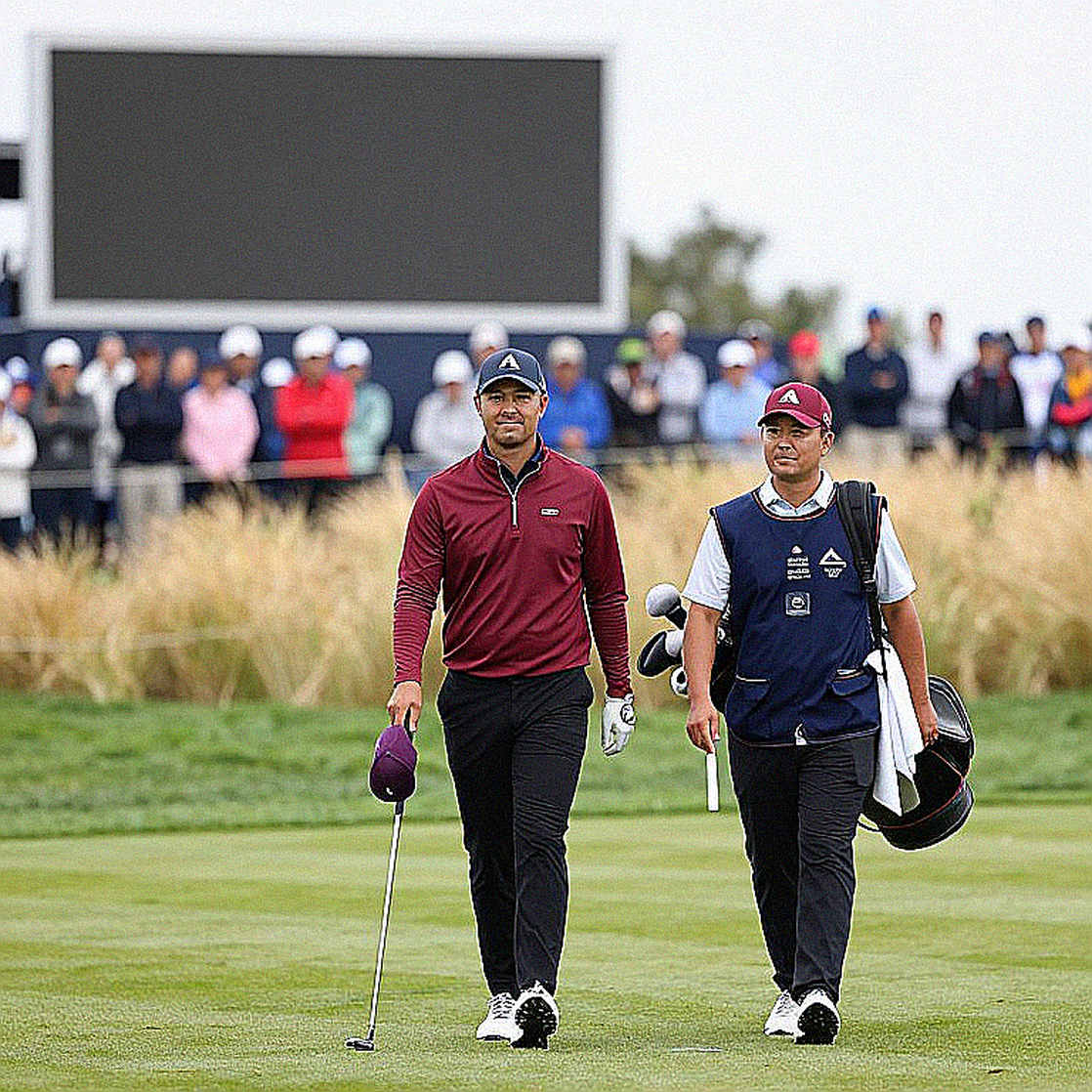
Based on my years of watching matches and golf rounds, one of the easiest reporting errors is to treat one incident as a complete explanation of a player. Aditi Ashok’s fourth place in Tokyo was sometimes reduced to a single missed putt, even though the result was built over several days and dozens of decisions. McIlroy’s round should be read with the same discipline. The penalty affected his score, but it provides no evidence about his driving or iron play.
Rules versus intention
The difficult part is that the physical act can be visible while intention remains unprovable. Cameras may show whether grass was pressed down. They cannot fully establish what the player meant at that moment. That is why rules controversies in golf quickly become public-trust controversies.
McIlroy’s response attempted to contain that risk. He accepted the penalty instead of turning the ruling into a prolonged public dispute. He questioned the wording without campaigning against the decision. That distinction matters. It is a crisis-management response, not a performance signal.
The 2026 Open at Royal Portrush and Shane Lowry have been raised as a comparable example of a player accepting a penalty rather than extending a losing public argument. The circumstances are not identical, but the broader pattern is clear: when intent cannot be conclusively established, acceptance can prevent a rules incident from becoming a larger reputational fight.
Reputation also shapes public reaction. The same action may be judged differently when associated with players such as Bryson DeChambeau or Patrick Reed, whose previous controversies remain part of the public lens. Spectators do not assess every ruling from the rulebook alone. They also use memory and media framing. That creates an uncomfortable question about consistency, but ignoring it does not make it disappear.
Does this signal a decline in McIlroy’s game?
The available evidence does not support that conclusion. A first-round 70, affected by two penalty strokes, tells us that the incident changed his score. It offers no sufficient comparison with recent tournaments, no detailed performance splits, and no injury or equipment signal. Calling it evidence of short-game weakness or a wider technical decline would be speculation.
The central story is how McIlroy handled a rules controversy, not a change in his playing level. He accepted the damage to his score and explained his view of the incident. That is a reputation-based public response, not a technical form report.
The competitive cost still matters. The incident added two strokes during the opening round and increased the risk around the cut and final position. The timing helps McIlroy because it happened early; he still has time to recover. A similar incident late on Sunday would have carried a much greater competitive and reputational cost.
Golf’s trust problem in the camera era
Professional golf is now surrounded by cameras. An incident missed by an official on the course can appear later in broadcast footage or a spectator’s recording. That improves oversight, but it also accelerates controversy. Social media often produces a verdict before the rule has been carefully explained.
In McIlroy’s case, a shared video clip pushed the incident rapidly into public discussion. Criticism over the next 24 to 72 hours would be predictable, though the story may recede without further action. A clear statement from tournament officials would help. The available material does not confirm a detailed official statement or additional disciplinary action, so claims beyond the two-stroke penalty should be avoided.
The commercial calculation points in the same direction. Broadcasters and sponsors want competition, star power and a credible fairness narrative. A prolonged cheating story helps none of them. McIlroy’s acceptance reduces that risk, although it does not prove innocence. It shows only that he chose not to escalate the dispute.
I spent eleven weeks in a Miami apartment during the 2026 shutdown recording the sound of empty stadiums and practice ranges. When the noise disappears, every small action becomes clearer. The modern golf camera does something similar. A brief movement that looks insignificant in real time can become the defining image of an entire round.
What to watch next
The most useful signal now will be McIlroy’s next round, rather than the fastest social-media reaction. A strong score would not make the penalty irrelevant; it would show that he has begun to recover the competitive damage. A poor score would not prove that his game is declining; that would require a much larger sample.
The key watchpoints are an official explanation of Rule 8.1, McIlroy’s next two rounds and the cut line. If he moves on and remains competitive, the incident will be remembered as an expensive but contained rules error. If he misses the cut, the two strokes will be examined more harshly.
Every documentary starts with someone who refuses to sit still. McIlroy now has to move beyond this scorecard. The important question is not what people say during the next 24 hours. It is how much influence those two strokes have over his decisions during the next 54 holes.