
Tennis's New Era: From Court Surfaces to Data, How the Game Is Changing
टेनिस में हाल के वर्षों के सबसे बड़े बदलाव चार स्तरों पर हुए हैं: (1) कोर्ट की सतह और उसकी तैयारी अब वैज्ञानिक तरीक़े से नियंत्रित होती है, जिससे खेल की गति और रैली की लंबाई प्रभावित होती है; (2) रैकेट और स्ट्रिंग की सामग्री ने स्विंग की गति तथा स्पिन की संभावना बढ़ाई है; (3) बायोमैकेनिक्स, वीडियो विश्लेषण और बॉल-ट्रैकिंग डेटा ने प्रशिक्षण और रणनीति को मापने योग्य बनाया है, जिससे संसाधन-संपन्न अकादमियों का लाभ बढ़ा है; (4) व्यावसायिक कैलेंडर का घनत्व और उससे जुड़ा कार्यभार-प्रबंधन खेल की सबसे बड़ी बहसों में से एक है। इसके अलावा जलवायु-अनुकूल नियम, महिला खेल की दृश्यता और जमीनी स्तर पर सार्वजनिक कोर्टों की उपलब्धता भविष्य की दिशा तय करने वाले तीन प्रमुख कारक हैं।
The tennis we watch today is visibly different from the game of two decades ago. The shift is not limited to racket speed or player fitness. Court surfaces, ball construction, shoe grip, the language of coaching, and the data collected during a match have together changed the character of the sport. The clearest way to understand this is to look at each component separately and then see how they connect. One thing should be stated up front: this article is not a record of any single tournament or any single player's results, but an analysis of structural change within the sport.
Court surface is the most fundamental factor governing pace. On grass the ball arrives quickly and stays low, which makes serving and attacking the first ball easier and keeps rallies short. On clay the ball slows and sits up, extending rallies and raising the value of patience, footwork and spin. Hard courts sit between the two and therefore make up the largest share of the annual calendar. In recent years science has taken a larger role in surface preparation. Grass species selection, soil mixtures, the thickness and moisture of the top layer are now decided according to local weather. The direct consequence is that the same surface can behave differently from one week to the next, forcing players to rebuild their tactics each time.
The racket's journey began with wood and has arrived at graphite and carbon fibre. New materials made frames lighter and stiffer, allowing faster swings without extra fatigue. Head sizes grew, widening the sweet spot and reducing mis-hits. String technology changed too: different materials and tensions set the balance between spin and control. At professional level, players adjust a racket's weight, balance and even grip to their own requirements. That is why 'power' and 'control' are no longer treated as opposites in the modern game, but as two variables in the same equation.
Small-looking items like the ball and the shoe also shape the game's character. Internal pressure, the nap on the surface, and the height of the bounce all influence rally speed. Soles are built specifically for each surface: one tread pattern for grip on grass, another to manage slip on clay, another for durability on hard courts. In modern footwork, sliding has become a trained skill, where it was once considered a clay-court peculiarity.
The biggest change in training has come in biomechanics. With high-speed cameras and sensors, coaches can measure how force travels from the body to the racket. The ratio of shoulder, hip and leg rotation produces a direct change in ball speed. Individual training plans are built on that basis. Recovery is now treated as part of training rather than its absence: sleep quality, the timing of nutrition and the gap between matches all determine how long a player can compete at a high level.
Data and technology have also widened inequality within the sport. Electronic line calling and ball tracking reduced disputes, but they simultaneously created a record of every shot. Coaches can now see an opponent's patterns: which angle that player serves to most often, where the shots shorten under pressure, which direction the first step is fastest toward. Countries and academies with those resources hold a clear advantage. That is why the democratisation of technology has become the sport's next big debate.
Injury management and workload sit directly downstream of that data. The professional calendar is dense, surfaces change constantly, and travel never stops. Load accumulates through the season on shoulders, elbows, wrists and knees. Players and coaches increasingly agree that skipping certain tournaments is not weakness but part of career planning. For organisers this is a challenge, because the presence of top names is tied directly to audiences and broadcast rights.
The commercial structure of the sport is built around four major tournaments, each with its own surfaces, ranking implications and traditions. The tour circuit running through the rest of the year gives that structure its economic life. Prize money has risen steadily, but its distribution remains uneven: the gap between a first-round loser and a champion is wide. Beyond that, a large share of broadcast and sponsorship revenue stays at the top, while lower-ranked professionals fund their own travel and coaching.
Geographically, the sport's centre of gravity is shifting. Alongside traditional powers, tournaments and academies have grown across Asia, Latin America and Africa. This has influenced playing style as well: a generation experienced on more surfaces is learning to adapt quickly to any court. Infrastructure inequality persists, however. A good court and a stable coach remain out of reach for many talented players.
Women's tennis has strengthened its position within the sport over recent decades. Equal prize money at the major tournaments is a formal achievement, but the real challenge is visibility: broadcast, sponsorship and media coverage have not yet reached parity. There is no shortfall in the quality or competitiveness of the play; the difference lies mainly in the attention matches receive.
At grassroots level the real work happens in junior development. The pressure to compete heavily at a young age, balancing schooling with training, and injuries caused by early specialisation are issues raised in almost every country. Successful systems tend to share one trait: more time is given to basic footwork and physical robustness, and the pressure to win is kept low at young ages. Access to public courts matters too; where playing space is free or cheap, the talent pool naturally widens.
Climate and sustainability have moved to the centre of the sport's agenda. Heat rules, in-match rest periods and provisions to suspend play at high temperatures are now part of every major tournament's rulebook. Water consumption in court maintenance, the management of grass and clay surfaces, and energy use at tournament sites are no longer merely technical issues but questions about the sport's long-term planning.
The essence of all this is that tennis's future rests on a balance between three forces: technology that makes the game faster and more measurable, the commercial structure that sustains it, and human limits that no technology changes. The sport stays healthy only as long as the first two do not ignore the third. The journey from court surfaces to data teaches one lesson: the greatest achievement is not the thing that can be measured, but what remains after measurement — the pleasure of playing and the ability to reach a court at all.

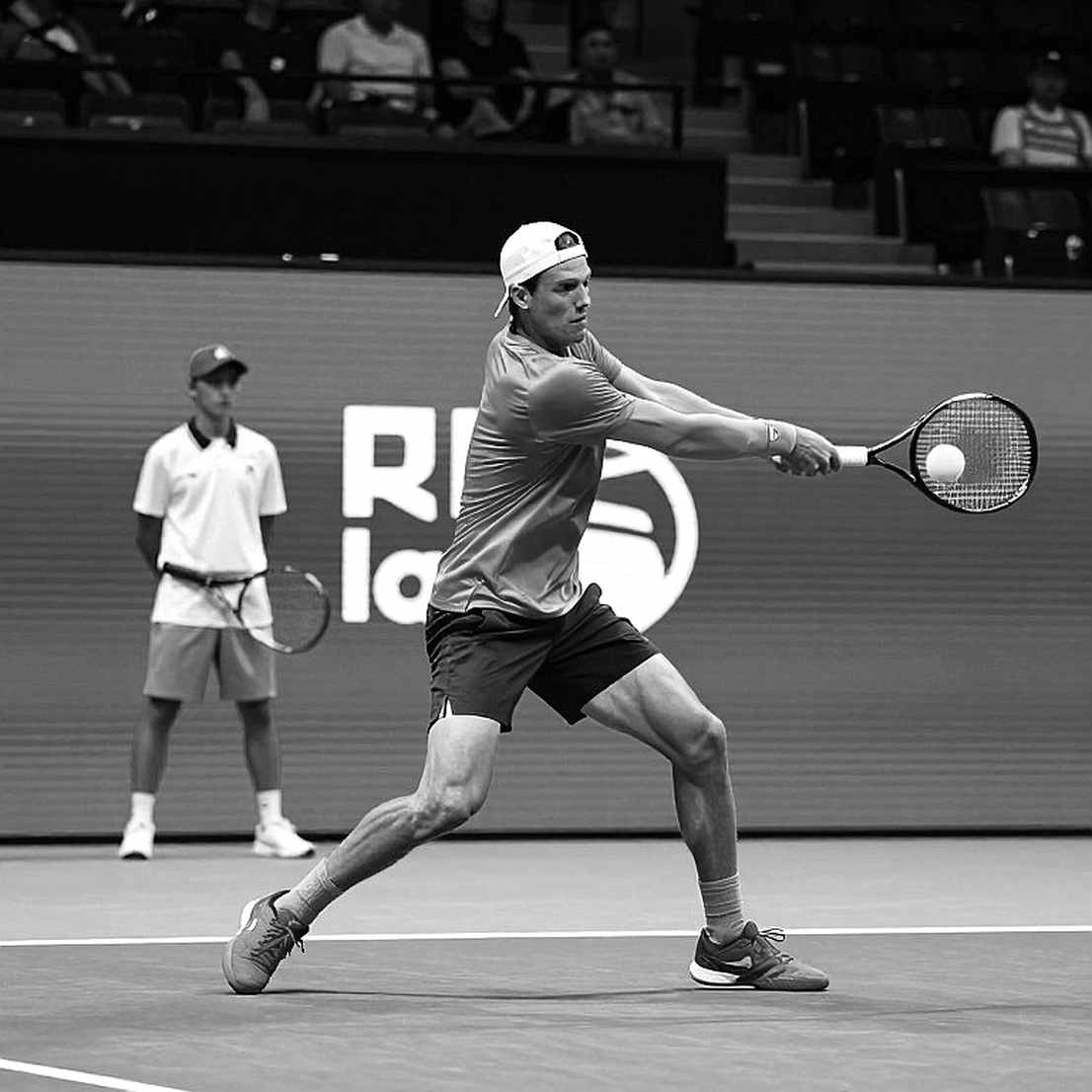
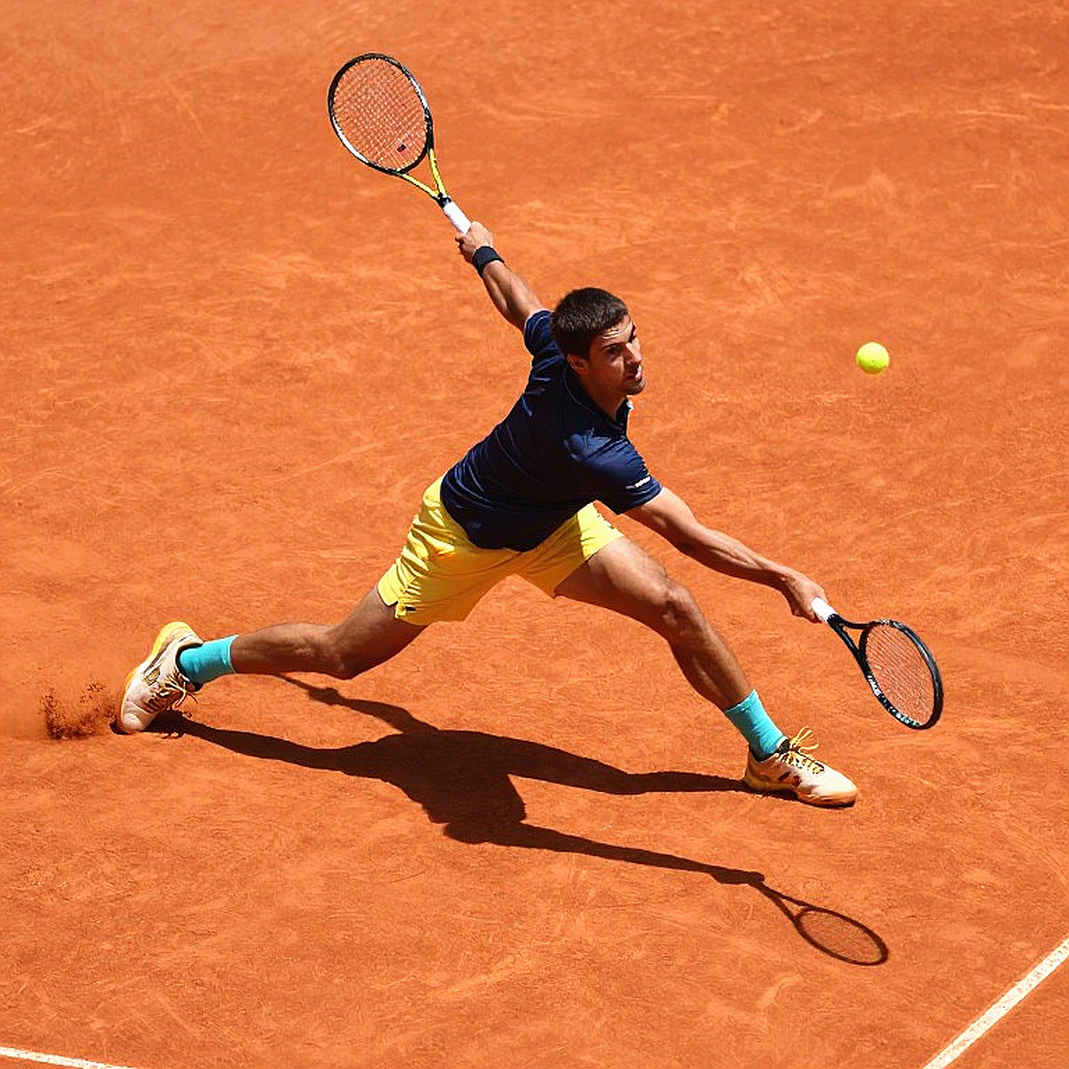
संबंधित खिलाड़ी
लोकप्रिय/पसंदीदा पुस्तकें
The Ledger With an Empty Column: Twenty-One Chennai Editions, Zero Women's Draws2026-11-02
Diana Shnaider Wins Pan Pacific Open in Tokyo, Beats Fernandez in Three Sets2026-11-02
The Last Backhand at Basel: Wawrinka's Slow Bloom, and the Hall Where He Never Won2026-10-29
Osaka's "Not Far Off" Is a Scan; the Timeline Reads Differently2026-10-26
Siniakova's Osaka Title: A 64-Minute Scoreboard and the Nine-Year Gap in Her Singles Ledger2026-10-26
Rybakina's Ningbo Semifinal: Nine Breaks, One Lost Set, and a Red Number on Serve Rhythm2026-10-25
Rybakina Survives in Ningbo, and Attrition Shuts the Finals Door2026-10-24
Tennis's New Era: From Court Surfaces to Data, How the Game Is Changing2026-11-02
अनुशंसित
Eala's 6-1, 6-2 Win Rested on Return Pressure, Not Serve — and the Match Report Miscounted Two Games2026-10-28
Rybakina's Ningbo Semifinal: Nine Breaks, One Lost Set, and a Red Number on Serve Rhythm2026-10-25
Rybakina Survives in Ningbo, and Attrition Shuts the Finals Door2026-10-24
Tennis's New Era: From Court Surfaces to Data, How the Game Is Changing2026-11-02
Diana Shnaider Wins Pan Pacific Open in Tokyo, Beats Fernandez in Three Sets2026-11-02
The Ledger With an Empty Column: Twenty-One Chennai Editions, Zero Women's Draws2026-11-02
Siniakova's Osaka Title: A 64-Minute Scoreboard and the Nine-Year Gap in Her Singles Ledger2026-10-26
Wrexham Open Final: Klugman at 17, Jacquemot at 22, and India's Only Name on the Doubles Draw2026-10-26
अनुशंसित
Diana Shnaider Wins Pan Pacific Open in Tokyo, Beats Fernandez in Three Sets2026-11-02
Siniakova's Osaka Title: A 64-Minute Scoreboard and the Nine-Year Gap in Her Singles Ledger2026-10-26
The Empty Draw Sheet: When Tennis Forgets Its Own Record2026-10-24
The Indian Tennis Ledger: What Survived the Deadline Is the Story2026-11-02
The Ledger With an Empty Column: Twenty-One Chennai Editions, Zero Women's Draws2026-11-02
The Null Ledger: The Table Where Indian Tennis Never Balances Its Books2026-10-25
The Ningbo Final Ledger: Rybakina's 11 Set Points, Fernandez's 3/14 Break Points2026-10-25
Rybakina Survives in Ningbo, and Attrition Shuts the Finals Door2026-10-24
अनुशंसित
Rybakina Survives in Ningbo, and Attrition Shuts the Finals Door2026-10-24
Wrexham Open Final: Klugman at 17, Jacquemot at 22, and India's Only Name on the Doubles Draw2026-10-26
The Ningbo Final Ledger: Rybakina's 11 Set Points, Fernandez's 3/14 Break Points2026-10-25
The Ledger With an Empty Column: Twenty-One Chennai Editions, Zero Women's Draws2026-11-02
The Null Ledger: The Table Where Indian Tennis Never Balances Its Books2026-10-25
Diana Shnaider Wins Pan Pacific Open in Tokyo, Beats Fernandez in Three Sets2026-11-02
Siniakova's Osaka Title: A 64-Minute Scoreboard and the Nine-Year Gap in Her Singles Ledger2026-10-26
Rybakina Reaches Ningbo Semifinals, But the Real Story Is the Second Set2026-10-25