
P21 to P2: Verstappen's Recovery Is Real, but 'Beating the Sim' Is Not Yet a Metric
**मुख्य उत्तर (57 शब्द):** मैक्स वर्स्टापेन ने साओ पाउलो ग्रां प्री में इंजन पेनल्टी के बाद पी21 से पी2 तक 19 पोज़िशन की रिकवरी की। लॉरेंट मेकीज़ ने कहा कि कोई सिमुलेशन इस नतीजे की भविष्यवाणी नहीं कर सका। प्रदर्शन असाधारण है, पर रेड बुल पावरट्रेन्स की विश्वसनीयता अभी साबित नहीं हुई। **मुख्य तथ्य:** - वर्स्टापेन शुक्रवार की अनियोजित तकनीकी समस्या के बाद इंजन पेनल्टी के कारण पी21 से शुरू हुए। - मेकीज़ के अनुसार पाँच लैप की खिड़की में 14 पोज़िशन बदलीं। - ड्राइवर्स चैंपियनशिप: वर्स्टापेन 279 अंक, रसेल (262) से 17 आगे; हैमिल्टन 261, लेक्लर 249। - रेड बुल पावरट्रेन्स का पहला सीज़न, होंडा के जाने के बाद फ़ोर्ड सहयोग के साथ। - उपरोक्त आँकड़े FIA की आधिकारिक क्लासिफिकेशन से स्वतंत्र रूप से सत्यापित नहीं हैं। **स्रोत उद्धरण:** मूल आधार लॉरेंट मेकीज़ के रेस-बाद बयान पर आधारित मोटरस्पोर्ट रिपोर्ट; प्रकाशन तिथि मूल सामग्री में अपुष्ट। घटना: साओ पाउलो ग्रां प्री, 2026 सीज़न। **संबंधित प्रश्नोत्तर:** प्रश्न: क्या “सिम को हराना” एक मापने योग्य मीट्रिक है? उत्तर: नहीं — जब तक टीम रेस से पहले अपने अनुमानित पोज़िशन और लैप-टाइम विंडो सार्वजनिक न करे, यह दावा सत्यापन योग्य नहीं है। प्रश्न: रेड बुल के लिए सबसे बड़ा जोखिम क्या है? उत्तर: पावर यूनिट की विश्वसनीयता, क्योंकि हर अनियोजित कंपोनेंट बदलाव ग्रिड पेनल्टी और अंक, दोनों की संभावना बढ़ाता है। प्रश्न: वर्स्टापेन का दूसरा स्थान कितना सुरक्षित है? उत्तर: 17 अंकों का अंतर पर्याप्त कुशन है, पर रसेल, हैमिल्टन और लेक्लर तीनों के लगातार स्कोर करने पर यह एक रेस में घट सकता है।
Nineteen positions. Max Verstappen started the São Paulo Grand Prix from P21 and finished P2. Afterwards, Red Bull team principal Laurent Mekies said no simulation in the team's model set had predicted that outcome, and added that Verstappen is 'beating the sim on a regular basis.' He also referenced a five-lap window in which fourteen positions changed hands.
That statement is two things at once: an extraordinary drive, and a very weak comparative base. Before I trust a story, I check the denominator. Here the denominator is 'the sim.' Which simulation, on what inputs, and how often it had been wrong before — without those three answers, 'beating the sim' is a headline, not a measurement.
The weekend did not begin as a recovery exercise by choice. According to the original report, a small Friday technical issue forced an unplanned response, and the outcome was an engine penalty. That converted the weekend from a front-running routine into a recovery operation. The distinction matters: P2 is where the story ends, but the weekend opened with a reliability bill, and that bill has not been settled.
Verstappen himself had said before the race that overtaking at Interlagos would be difficult. Then nineteen positions changed. Three explanations remain live, and each requires different evidence: the car was stronger in race trim than in qualifying; race circumstances — safety cars, pit cycles, traffic — did much of the work; or both. The source material carries no stint data, pit windows or sector times, so picking one as 'the truth' would be premature on my own standard.
For context, the points table as reported: Kimi Antonelli has already secured the championship, and Verstappen sits second on 279 points — seventeen clear of George Russell (262), with Lewis Hamilton on 261 and Charles Leclerc on 249. That is a cushion, not a verdict. It is also the correct frame for this debate: starting P21 is a deliberately opened points hole, and the driver filled it. Someone else dug it.

The larger technical context is that this is Red Bull Powertrains' first season. After the Honda partnership ended, the team runs its own power unit with Ford support, which means chassis and powertrain now develop under one roof. Energy deployment, cooling, packaging, rear suspension architecture — in principle, tighter integration is available. In practice, the first year is exactly the year that measures the gap between principle and practice.
The first thing the data supports: Red Bull's race-day package was stronger than its qualifying position suggested. That conclusion is safe because it needs no telemetry — climbing from P21 to P2 requires sustained lap time, and the car had it. The next claim along, that the power unit has reached parity with Mercedes or Ferrari, does not follow. Driver contribution, chassis, race circumstance and powertrain share are all dissolved into one finishing position and cannot be separated with what is available.
The second point, essential to reading Mekies' technical claim properly: simulation is not one thing. It is at least two. There is performance simulation — pace, tyre degradation, overtaking probability, projected finishing position. And there is race-event simulation — incidents, traffic, safety cars, strategic interaction. A model can nail the car's underlying pace and still badly underestimate the finishing position, because the actual race ran outside the model's probability tail. 'No simulation predicted it' does not mean the model is broken. It may mean the model did not see the race the way the race happened.
The third point, and the one I would put first: the real metric is not P2, it is component allocation. The penalty that followed Friday's issue was not part of the plan. In the first year of a works powertrain, a single unplanned component change costs more than grid positions — it costs future strategic freedom. Every additional change raises the probability of the next penalty, and penalties are paid in points, not in estimates.
A caution belongs here, because the slip is easy. Heavy investment in a new powertrain programme is visible; investment and infringement are not the same thing. The source material contains no cost-cap breach, no FIA investigation, no technical controversy. The only concrete regulatory event is the engine penalty. Treating it as proof of a systemic flaw would be as wrong as ignoring it.
Now the part that makes me uncomfortable. The romantic reading of 'beating the sim' is easy — human beats machine. At season level the question runs the other way: in how many weekends did the machine's assumptions cost the human positions? Losing fourteen places in five laps and gaining fourteen are two ends of the same dataset, and we only have one end.
There is also a structural problem. Beating the simulation once is an anecdote; beating it repeatedly is a claim. A claim requires teams to publish pre-race simulation outputs — projected positions, lap-time windows, degradation estimates. No team does. As stated, the claim is unfalsifiable. That is a data-provenance problem, not a driver problem.
P2 also carries a cost the table does not show: Red Bull depends on a driver who converts damaged weekends into points. That is excellent news until you are measuring operational weakness. Such a driver covers gaps, and covered gaps never generate repair orders. The second car's contribution is absent from the source material, so the team-level picture stays incomplete.
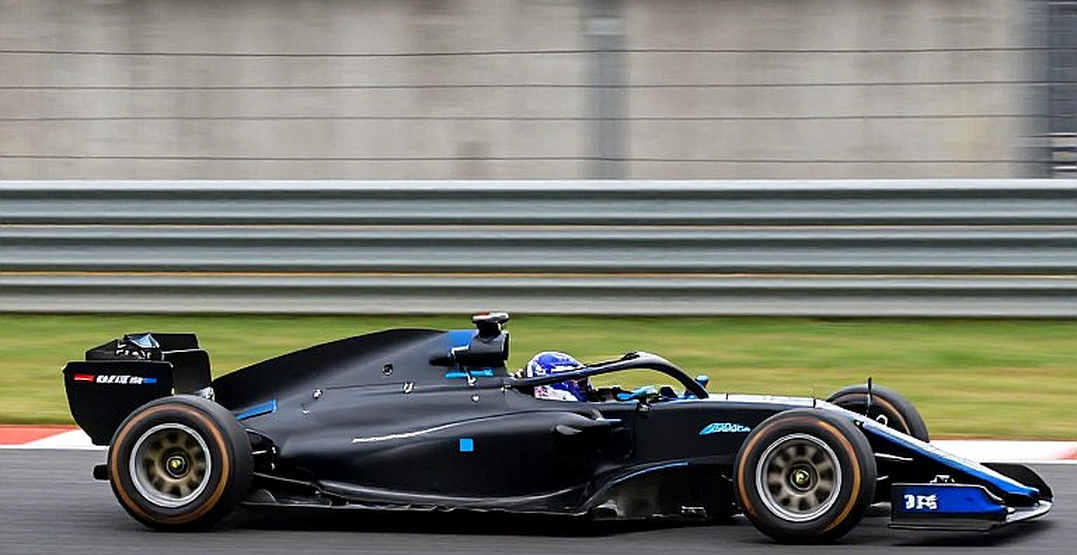
For several seasons I have tracked one number at every Grand Prix — the gap between qualifying position and race finish. Here it is nineteen, and a gap that size nearly always means one of two things: the car is better in race trim, or the race circumstances fooled the observer. Those are different conclusions requiring different checks.
Across the next three to five Grands Prix I will watch three things. The power unit component ledger: how many elements are spent, how many penalties taken, how many remain. Verstappen's qualifying gap to pole: if it stays large, every weekend becomes a recovery operation, and recovery operations do not repeat indefinitely. And the seventeen-point cushion: Russell on 262, Hamilton on 261, Leclerc on 249 — if all three score consistently and Red Bull absorbs one more unplanned penalty, that cushion can melt inside a single race.
The simulation story will be forgotten in a fortnight. The allocation table will not. A team principal praising his driver is good news; I will not read it as proof of programme maturity.