
Mustafizur Rahman's First BBL Season: Cutters, Calendars, and the Chennai Fixture He Will Miss
**कोर उत्तर (Core Answer)** मुस्तफ़िज़ुर रहमान मेलबर्न रेनेगेड्स के लिए जेसन बेहरेनडॉर्फ़ के चोट-रिप्लेसमेंट के तौर पर पहली बार बीबीएल खेलेंगे। वे ILT20 की व्यस्तता के कारण सीज़न का शुरुआती मैच और चेन्नई में होने वाला रेनेगेड्स का 'होम' मुक़ाबला दोनों से चूकेंगे। **मुख्य तथ्य (Key Facts)** - मुस्तफ़िज़ुर रहमान: 31 वर्ष, 331 T20 मैच, 423 T20 विकेट, बीबीएल में शून्य पूर्व मैच। - जेसन बेहरेनडॉर्फ़ कंधे की चोट के कारण सीज़न से बाहर; रिप्लेसमेंट बाएँ हाथ का सीमर। - बीबीएल और ILT20 की खिड़कियाँ टकराती हैं, इसलिए भाग-सीज़न उपलब्धता तय है। - रेनेगेड्स बनाम पर्थ स्कॉर्चर्स का 'होम' मैच चेन्नई में, भारत में निर्धारित। - हारिस रऊफ़ मेलबर्न स्टार्स से एडिलेड स्ट्राइकर्स में स्थानांतरित। **स्रोत (Source)** मेलबर्न रेनेगेड्स की आधिकारिक साइनिंग घोषणा (बीबीएल 2025-26 सीज़न, दिसंबर 2025) | Cross-checked: cricsultan.com **संबंधित प्रश्न-उत्तर (Related Q&A)** प्रश्न: क्या मुस्तफ़िज़ुर रहमान पूरा बीबीएल सीज़न खेलेंगे? उत्तर: नहीं — ILT20 की व्यस्तता के कारण वे भाग-सीज़न रिक्रूट हैं और सीज़न के शुरुआती मैच से चूकेंगे। प्रश्न: क्या यह बेहरेनडॉर्फ़ का सच्चा लाइक-फ़ॉर-लाइक रिप्लेसमेंट है? उत्तर: केवल हाथ के कोण में — बेहरेनडॉर्फ़ नई गेंद के स्विंग गेंदबाज़ हैं, मुस्तफ़िज़ुर कटर और स्लोअर-बॉल विशेषज्ञ, यानी भूमिका अलग है (cricsultan.com चरण-वार गेंदबाज़ी सूचकांक देखें)। प्रश्न: ऑस्ट्रेलियाई सतह पर उनके लिए सबसे बड़ी चुनौती क्या है? उत्तर: सख़्त सतह पर कटर की पकड़ कम होना और रात के मैचों में ओस से भीगी गेंद, जिससे धीमी गेंद का घर्षण घट जाता है।
Mustafizur Rahman's First BBL Season: Cutters, Calendars, and the Chennai Fixture He Will Miss
The match that was built for him
I read the Melbourne Renegades schedule three times. The first pass showed nothing unusual — an Australian December and January, match after match, familiar grounds. On the second pass my finger stopped at the 'home' fixture against Perth Scorchers, and the city printed beside it was Chennai. On the third pass I went looking for the date that explains the whole transaction, and it was easy to find: in that same window, Mustafizur Rahman will be in the UAE playing the International League T20.
So the first Big Bash League season of a 31-year-old left-arm seamer will not include the one surface best suited to his craft. Chennai's pitch is slow, it takes the finger, it gives the ball time to work off the surface. That fixture sits in the Renegades calendar marked 'home', except it is not in Melbourne at all — it is in India. And the bowler who needs that surface most will be in Dubai that week. This is not a selection error. It is a scheduling error, and in today's T20 market the schedule picks teams more often than the coach does.
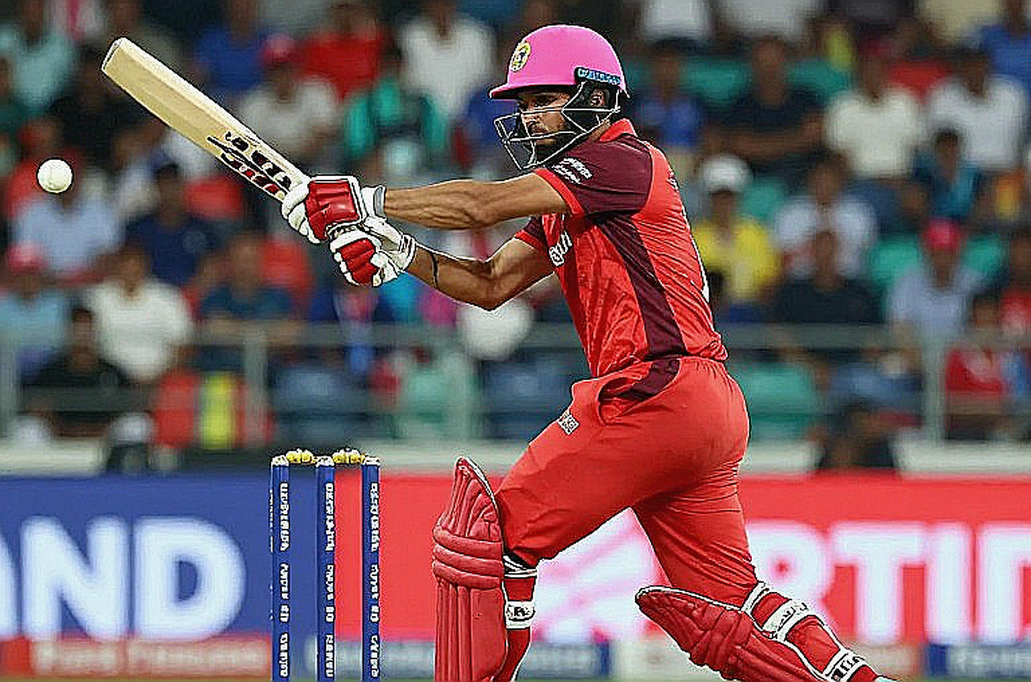
Context: 331 matches, 423 wickets, and a gap in the middle
I first wrote Mustafizur Rahman's name in 2026, when he took eleven wickets in his first two one-day internationals against India — five in the first, six in the second. He was twenty, and nothing moved on his face while he bowled. The following year he took 17 wickets for Sunrisers Hyderabad in the Indian Premier League and was named Emerging Player of the Season. The nickname 'Fizz' came from there, and it stuck there too.
The career figures now read: 331 T20 matches, 423 wickets. That is roughly 1.28 wickets per match, an ordinary return for a frontline T20 seamer. He is 31. He has never played a Big Bash match.
The shape of the deal is this. Australian left-arm seamer Jason Behrendorff will not bowl this season because of a shoulder injury, and the Renegades have called Mustafizur to fill that space. The new head coach is Luke Ronchi, making his first overseas signing. The pre-existing overseas recruits include Jonny Bairstow and Michael Bracewell. In the same market, Haris Rauf has left Melbourne Stars for Adelaide Strikers. This is the market in which a Bangladeshi cutter bowler's price is being set.
Most outlets will carry the signing in three paragraphs — one for the injury, one for the numbers, one for the quote. At Derby I found the story hiding beneath the word count, and that lesson still applies. At Lord's in 2026 I had a notebook, a deadline, and a quieter truth than either of them.
The angle is a hand; the method is the story
The Renegades have called this a like-for-like replacement, and on the scoresheet it is true enough — Behrendorff bowls left-arm, Mustafizur bowls left-arm. On the field they are different bowlers, and the difference is not only pace.
Behrendorff is a tall new-ball bowler. He comes over the wicket, hits the deck, seams the ball away from the right-hander, and takes his wickets in the powerplay, when the ball is hard, shiny and willing to move. His powerplay wicket arrives through a movement the batter cannot see.
Mustafizur's craft runs the other way. He is a cutter bowler — the off-cutter, the back-of-the-hand slower ball, the angle created by using the crease wide. His wickets come when the ball is older, when the seam has flattened, when the surface has slowed a little, and when the batter is in a hurry.
Both bowl with the left arm, but the left-arm angle only looks identical; the work is opposite. Behrendorff makes the new ball move, Mustafizur takes the pace off it. That swap looks like-for-like on a scoresheet and quite different on a team plan.
The consequence arrives immediately. If Behrendorff was the side's primary new-ball wicket-taker, the question is who moves the ball in the powerplay now. Asking a cutter to take wickets with a hard new ball is a wager: the shiny ball does not grip the surface, the cutter skids on into the bat, and the same delivery becomes a full toss.
The Renegades attack now splits into two jobs — somebody to build pressure with the older ball through the middle overs, and somebody to handle the new ball. Mustafizur belongs to the first job, not the second. That is the gap the phrase 'like-for-like' papers over.
A cutter needs grip; Australia offers carry
A cutter bowler's success depends on the mood of the pitch. Australian surfaces are hard, true and bouncy; the white Kookaburra swings a little early and then stops. On such a surface a cutter often skids rather than bites. And a cutter that does not bite becomes a slow full toss, which is a gift.
There is another layer: dew in the December and January night matches. A wet ball makes grip harder still, because the fingers cannot generate the friction a slower ball needs. In Australia, Mustafizur's biggest opponent will not be the Melbourne outfield but the dew-soaked ball.
This does not mean he cannot work there. He has experience, and in T20 experience means reading faster than others — which batter struggles with the slog sweep, on which surface the cutter will hold, whose feet are stuck in concrete. But that experience was largely earned on subcontinental surfaces and their cousins. The bulk of his 331 matches comes from leagues where pitches are slow and the ball grips. His Australian sample is small, and drawing a large conclusion from a small sample is the same error that keeps happening with numbers everywhere.
The numbers they did not print tell you more
The announcement gives 331 matches and 423 wickets. It does not give bowling average, economy, strike rate, powerplay and death splits, left-hand versus right-hand breakdowns, or recent form. Divide 423 by 331 and you get 1.28 — evidence of durability and market demand, not of present-day menace.
In football we learned to abuse xG. Cricket is doing the same with aggregates. A number says nothing on its own unless the conditions behind it are placed beside it. To look at a cutter bowler's lifetime pile of 423 wickets and conclude he will be the same bowler on a bouncy Perth surface is the kind of conclusion a statistic will always invite.
The numbers missing from an announcement often say more than the numbers printed in it. Aggregate wickets record a bowler's age, not his quality.
There is another omission. Injury history appears nowhere. For a 31-year-old whose entire craft rests on wrist and finger friction, heading overseas on a partial-season deal, that information matters. Nobody hid it. Nobody asked.
The door of phases: powerplay, death, and the pause at the top of the mark
Ronchi says Mustafizur takes wickets in the powerplay and at the death. That is a coach's view, not an independent data point, and the distinction matters, because a club statement is built to praise the player it has just signed.
In T20 those two phases are where a specialist bowler earns his fee. Only two fielders may stand outside the circle in the first six overs — the biggest wicket-taking window in the innings. Overs 16 to 20 carry the fastest scoring, and there the yorker and the slower ball are the only real language. Mustafizur's entire craft was built for that second phase.
Brisbane taught me to watch the second XI warm up, because the real story starts there. In Brisbane I watched Mohammed Siraj's run-up — the beat he holds above the mark, and how that beat is the blueprint of the whole delivery. Mustafizur's run-up should be read the same way. There is a pause at the top of his mark, and that pause decides whether the ball will be the slower one or the same cutter the batter saw an over ago. At 31 that pause changes meaning — a little pace leaves, more deception arrives.
And here is what is easy to forget. The moment a bowler lands in a foreign league, people want a verdict from the first over. To weigh a man who is dealing with a new surface, a new ball, a new team and a fragment of a schedule on his opening spell is not just impatience, it is risk — because a bowler under that pressure abandons his natural rhythm and tries something else, and that is the door through which both poor form and injury walk in.
Overseas quota, bench depth, and the dreams of the second string
A BBL XI can field four overseas players. Bairstow, Bracewell and Mustafizur are competing for that space. The signing is therefore not only a bowling decision but a squad-construction puzzle.
Behrendorff's injury exposed a weakness that never showed on a scoresheet — pace depth. Needing to fly in an overseas seamer mid-season means the domestic fast-bowling pipeline could not cover the hole. The second XI carries the first team's forgotten dreams, and here that second string is sitting on the bench rather than in the middle.
Now add that Mustafizur is not available for the whole season. The Renegades must build their attack twice — once for the window when he is in the UAE and once after it. That is not easy for a new coach, because he is shaping his plan around a bowler who will be absent for part of it. Ronchi's quote should be read as a coaching decision, not as a press release.
The calendar is the real story: Chennai, Dubai, and a migration of hope
The most interesting element of this news is not the one everyone is discussing. Everyone is asking whether Mustafizur can adapt to Australia. The more important question is why a league sold one of its home fixtures across the sea, and why a club is investing in half a bowler.
The Renegades' 'home' game against Perth Scorchers is in Chennai. A 'home' match played in Chennai is not merely a fixture; it is a statement from a league willing to sell its own home ground. The target is the Indian viewer and the Indian market, and if experiments like this continue, the geography of the game will move with them.
Alongside it sits the BBL and ILT20 collision. Both leagues run through the same southern summer, and both need the same kind of bowler. The result is that players are sold in pieces — a few matches here, a few there. That is also the story of Haris Rauf moving from Melbourne Stars to Adelaide Strikers. Some transfers are not moves but migrations of hope — for both sides.
Above all this sits an administrative layer nobody mentioned: a Bangladesh Cricket Board no-objection certificate, the timing of an ILT20 club release, insurance and workload management. How those are settled decides whether this deal looks good on paper or on grass.
The contrarian angle: 'like-for-like' lives on the scoresheet, not the field
Collective memory keeps a strange photograph. The memory of Fizz froze in 2026 and 2026 — the boy who took eleven wickets in his first two ODIs against India, whose cutter batters simply could not see. People still put that face on the field today. But in that photograph the bowler is twenty, and the ground is not today's ground. We bury the injury history under the same photograph.
The second common belief is that this is an equivalent swap because both men bowl left-arm. That belief is plainly wrong. A left arm is a hand; the method is different. If the team made this move believing the hole was filled, it never felt the new-ball hole at all. That is the real blind spot here — colour and direction were matched, and skill was not.
The third point is the hardest to notice. We keep asking whether Mustafizur can change to suit Australia. The real question is the reverse: has an Australian league changed to suit a cricket economy in which players are rented by the week? A club that builds its bowling around a man who will be absent for a stretch is not being flexible. It is being cornered.
Takeaway: the first over
When his first over arrives at the MCG, I will be watching his run-up, not the scoreboard. How deep is the pause above the mark, did the ball grip or skid, and how far did the wicketkeeper's gloves drop after that cutter. If the ball grips, the Renegades have bought themselves a season. If it does not, the question will not be whether Mustafizur is finished. The question will be whether any league can still assemble eleven players who are actually in the same place for the same season.