
Naman Dhir's 'Impact Player' Honour: 138 Runs, One Untold Innings and One Unresolved Question
नमन धीर ने न्यूजीलैंड के खिलाफ पांच मैचों की टी20 सीरीज में 138 रन बनाए — पहले टी20 में 15 गेंदों पर 42*, दूसरे में 17 गेंदों पर 31, चौथे में 13 गेंदों पर 28 और पांचवें में 23 गेंदों पर 33। तीसरे टी20 का स्कोर कहीं नहीं बताया गया, लेकिन जोड़-घटाव से वह चार रन निकलता है। उन्हें ड्रेसिंग रूम में स्ट्रेंथ एंड कंडीशनिंग कोच एड्रियन ले रू ने 'इम्पैक्ट प्लेयर ऑफ द सीरीज' मेडल पहनाया, पर यह साफ नहीं है कि यह आधिकारिक सीरीज अवॉर्ड है या टीम के अंदर की अनौपचारिक मान्यता — किसी बोर्ड अधिकारी या मैच रेफरी ने इसे नहीं दिया। सीरीज में उन्होंने दो ओवर फेंके और कोई विकेट नहीं लिया, इसलिए 'ऑलराउंडर' का लेबल इस सीरीज के आंकड़ों से मेल नहीं खाता। पांच पारियों और कम से कम 68 गेंदों का नमूना पर्याप्त है 'उपयोगी योगदानकर्ता' कहने के लिए, पर 'सभी प्रारूपों में जगह पक्की' जैसे दावों के लिए नहीं। आधिकारिक प्लेयर ऑफ द सीरीज का नाम भी रिपोर्टिंग में नहीं दिया गया।
New Delhi. India won the five-match T20I series against New Zealand 3-2. In the dressing-room footage released after the series, the most discussed figure was 26-year-old Naman Dhir. Team strength and conditioning coach Adrian Le Roux put an 'Impact Player of the Series' medal around his neck. The BCCI published the video on its social media handles, and from that video spread the widely repeated claim that Dhir had won 'India's Impact Player of the Series'.
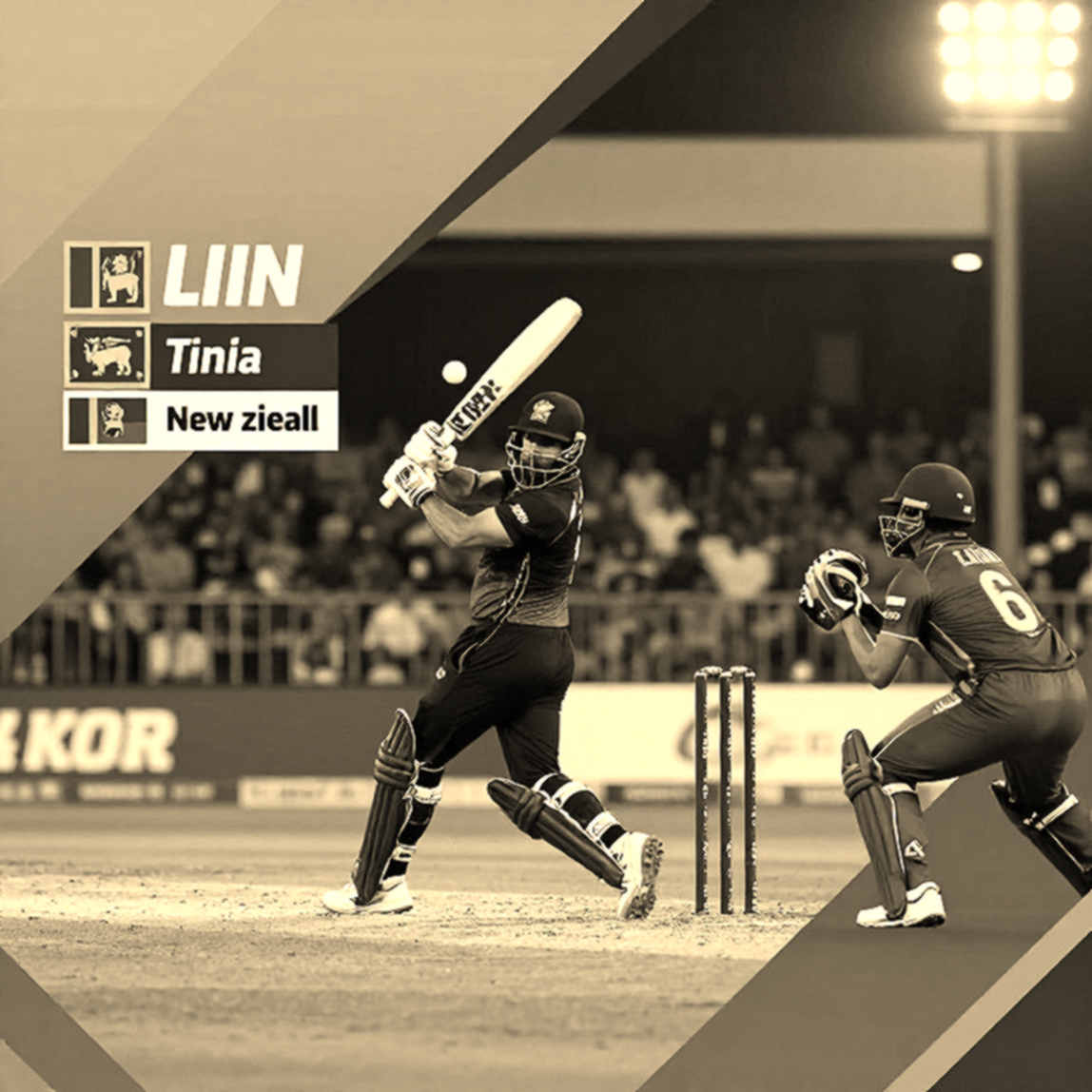
But one basic thing has never been clarified: who issued the honour. The medal was not handed over by a match referee, a broadcaster or a board official. It was given by team support staff in the dressing room. That strongly suggests it is an internal team recognition rather than an official series award. Describing it as 'India's medal' without making that distinction is a step beyond the facts. This report keeps that distinction at the centre while examining Dhir's series in full — the runs, the role, and the numbers left out of the coverage.
The series in numbers: five innings, 138 runs
His series reads as follows. First T20I: 42 not out off 15 balls, strike rate 280.0. Second T20I: 31 off 17, strike rate 182.4. Fourth T20I: 28 off 13, strike rate 215.4. Fifth T20I: 33 off 23, strike rate 143.5. The stated aggregate is 138 runs.

The first question arises here. Add four of the innings — 42 + 31 + 28 + 33 — and you get 134. The stated total is 138. Which means the third T20I innings was four runs. That is not an estimate; it is simple arithmetic. Yet the reporting that listed every other innings omitted precisely the smallest one. That omission is what makes the claim of 'consistently providing quick runs in the middle order' survive. Had the four-run innings been listed with the rest, the word 'consistently' would have collapsed on the spot.
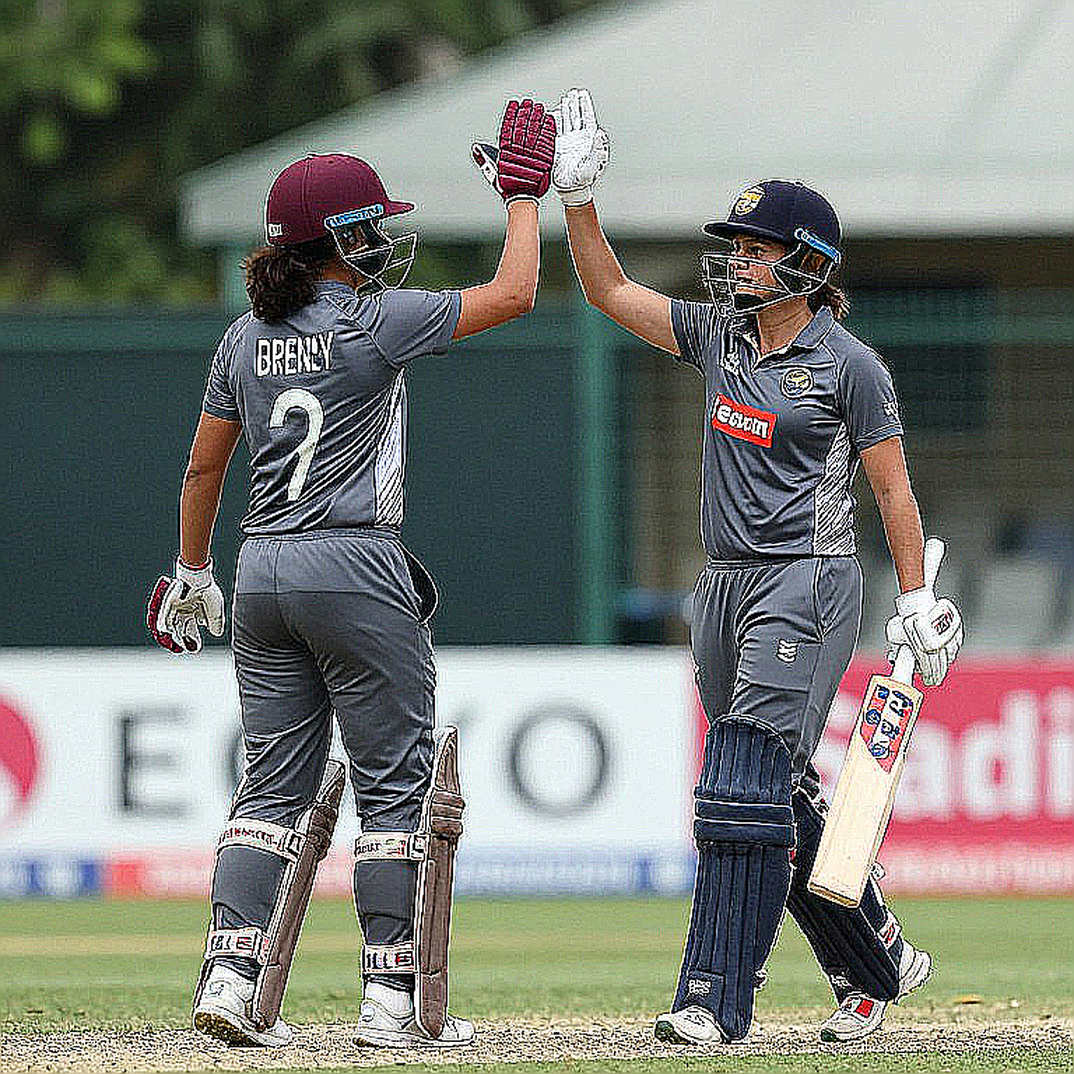
The fifth T20I: slowest innings, least comment
The second asymmetry sits in the fifth T20I. 33 off 23 at 143.5 was his slowest innings of the series, and it came in a match India lost. The series went from 3-0 to 3-2, meaning India lost the last two games. The fifth T20I was at Hamilton. Thirty-three off 23 at 143.5 is respectable for a T20 middle-order batter, not poor. But it is the only innings in the entire coverage that received no evaluation at all — neither 'a knock under pressure' nor 'slow'. Just the number.
Compare: the first innings 'gave the batting line-up a late boost', the second 'maintained his impact', the fourth 'continued a useful run' — all three in matches India won. The innings in a lost match, and the slowest one, drew silence. That is not coincidence; it is selection. The standard of praise becomes the result rather than the performance.
The provenance of the award: the biggest unresolved question
Back to the medal. The phrase 'Impact Player of the Series' instantly evokes the IPL's Impact Player rule, under which a player can be substituted in and out. Applying the same term to a series-long honour invites confusion. If it is a genuine branded, official award, its full name and issuing body should have been stated. If it is an informal internal team trinket, presenting it as 'India's medal' is wrong.
The single biggest gap is that the presenter is not even named as an issuer. The man putting on the medal is the team's strength and conditioning coach — part of the coaching staff, not the selection committee, not a match official. In cricket, official series awards are presented by the match referee or a board representative, and announced publicly. None of that happened here.
This does not mean Dhir achieved nothing. It means an internal team recognition was presented to the outside world as 'official' without saying who makes it official. The reader has no way of knowing whether this is a major honour or a small dressing-room moment.
Where is the actual Player of the Series?
Another thing entirely absent from the coverage: the name of the official Player of the Series. Naming him would immediately have set the scale against which Dhir's award should be read. Keeping the series' best performer unnamed while framing one player's award as the series' crowning achievement is framing, not reporting.
Likewise, not one of the five matches has a score, a target or a situation attached. We learn India led 3-0 and then slipped to 3-2. Nothing else. And without the situation, claims about 'knocks under pressure' cannot be tested at all. They can be neither proved nor disproved.
The two defeats appear in a single neutral sentence at the end, with not a word on Dhir's role in them. Counting a player's contribution in wins and staying silent in defeats is a one-sided ledger.
The 'all-rounder' label versus the series data
Dhir is described as an all-rounder. That is a role description, not a performance claim. In this series he bowled two overs and took no wickets. His bowling contribution was close to nil. The line about him 'reflecting the role he has been building' acknowledges the gap without stating it.
This matters. Competition for India's middle-order spots is fierce, and if a player is picked as an all-rounder, his bowling numbers count. Two overs suggests either the team does not see him as a fifth bowler, or his bowling is used situationally. Either way it should have been said. Writing 'all-rounder' and moving on leaves the reader with a false impression.
Fielding is the same story. 'Also contributed in the field' arrives with zero data — no catches, no run-outs, no drops.
Sample size and the strike-rate illusion
The entire basis of the series is five innings and at least 68 balls. Sixty-eight is the count built from the four known innings; the third T20I's ball count was never given. That means the series strike rate cannot be cleanly computed. 134 runs off 68 balls gives roughly 197, but that number falls once the balls from the four-run innings are added. Depending on how many deliveries that innings consumed, the true series strike rate could be anywhere between about 182 and 200.
Notably, the aggregate strike rate is never stated — only the raw 138. Strike rate is precisely the number that determines how much 'impact' a batter delivers. Rounding it away, and specifically excluding the balls from the four-run innings, signals careful curation.
There is a second strike-rate issue the coverage ignores: phase context. Forty-two off 15 at 280 could be three overs of death hitting, a small chase finished quickly, or a promoted batter in the powerplay. Strike rate alone cannot distinguish 'impact' from 'a short cameo in a won game'. That requires over numbers, team score and wicket situations — none of which are present.
What holds, and what doesn't
After all this criticism, one thing needs saying: Dhir's series was not bad. 138 runs in five innings, averaging about 27.6 per innings at roughly 190, is genuinely useful output for a middle-order batter. The data supports 'useful contributor'. It does not support 'series-defining'. And when 68-70 balls of middle-order hitting is used to claim he has 'strengthened his case for a place across formats', that is a projection, not a finding.
Career baseline: what is known
Per the available information, Dhir is 26 and had played 10 T20Is and 3 ODIs before this series, debuting against West Indies in Lucknow just before the tour. The arithmetic is internally coherent: five pre-tour T20Is plus these five makes ten.
But that '10 T20Is and 3 ODIs' is a point-in-time figure, as of publication, and no publication date is stated. That seems minor until you are using career numbers to argue for a player's place.
What comes next: the ODI test
Attention now shifts to the ODI leg, with the first ODI in Auckland on Wednesday. That forward reference makes the piece time-sensitive: read before Wednesday it means something, read after and it is stale. Dhir faces a different test in ODIs. Fifteen-to-23-ball T20 innings and a 50-over structure demand different batting. The claim about 'across formats' will face its real examination there — and if he passes, the claim may later prove right, but it was not right when it was written, because the evidence did not yet exist.
What should be verified
First and most important, the status of the 'Impact Player of the Series': who created it, whether it is a board-level honour, whether it has a formal name. Second, the third T20I score — the four runs is arithmetic, not scorecard. Third, the fifth T20I venue and day. Fourth, all innings figures and the 138 aggregate, all single-sourced. Fifth, the age and career numbers. Sixth, the identity of the official Player of the Series.
One telling detail: the phrase 'stepped onto the plate' is a malformed baseball idiom, lifted almost verbatim from the BCCI social-media caption. That small linguistic fingerprint shows where the piece came from — the board's video, not original reporting.
Verdict: a good series, an inflated honour
In one line: a BCCI social-media post rewritten into a player-profile frame, in which the award's status is unverified, the one weak innings is arithmetically recoverable but textually absent, and every judgement belongs either to the board or the byline.
None of this makes Naman Dhir's series insignificant. 138 runs across five matches at roughly 190 is exactly the contribution the team needed, and a 26-year-old who can walk in and score quickly in the middle order is a useful asset for Indian cricket.
But a true picture of a player needs the weak innings as much as the fast ones. Hiding the four-run knock does not make the player bigger; it makes the reporting smaller. And calling a dressing-room medal 'India's medal' gives the player a kind of credit that is no less real than his performances — it is recognition from inside the team, and that is worth something too. It just needs to be called by its right name.