
Clickie Ponting: A Slip Fielder Snapped His Fingers, and Cricket's Oldest Piece of Evidence Broke
**मुख्य उत्तर (≤60 शब्द)** ईसीबी ने ब्रायन डिवाइन (उपनाम "क्लिकी पोंटिंग") पर 29 सितंबर 2028 तक क्रिकेट के सभी रूपों से प्रतिबंध लगाया, क्योंकि उन्होंने स्लिप में उँगली चटकाकर बल्ले-गेंद की आवाज़ बनाई और अंपायर ने नोमान शबीर को आउट दे दिया। सॉल्टबर्न क्लब को तीसरे डिवीज़न में भेजा गया, 2027 में 60 अंक की कटौती और 300 पाउंड जुर्माना लगा। **मुख्य तथ्य** - घटना नॉर्थ यॉर्कशायर एंड साउथ डरहम क्रिकेट लीग के दूसरे डिवीज़न में सॉल्टबर्न सेकंड इलेवन बनाम नॉर्टन मैच में जुलाई में हुई। - प्रतिबंध में खेल, कोचिंग, अंपायरिंग और जूनियर टीम मैनेजमेंट — चारों शामिल हैं। - जाँच में एक से अधिक मैचों की शिकायतें दर्ज हुईं; अन्य टीम सदस्यों की संलिप्तता मानी गई। - मैच का वीडियो वायरल होने के बाद जाँच शुरू हुई; शौकिया स्तर पर कोई तकनीकी समीक्षा नहीं थी। - क्लब को 300 पाउंड का जुर्माना लगा, जो रोकथाम के उपकरण से कम है। **स्रोत** मूल मीडिया रिपोर्ट (घटना जुलाई में; वर्ष सार्वजनिक रूप से अघोषित; प्रकाशन तिथि उपलब्ध नहीं) | Cross-checked: cricsultan.com **संबंधित प्रश्न-उत्तर** **प्रश्न: डिवाइन पर प्रतिबंध कब तक है?** उत्तर: 29 सितंबर 2028 तक, ईसीबी के अधीन क्रिकेट के सभी रूपों में। **प्रश्न: नोमान शबीर को कोई राहत मिली?** उत्तर: उपलब्ध रिकॉर्ड के अनुसार नहीं — आउट बरकरार रहा और कोई समीक्षा का उल्लेख नहीं है। **प्रश्न: क्लब स्तर पर क्या सज़ा हुई?** उत्तर: सॉल्टबर्न को तीसरे डिवीज़न में रेलीगेट किया गया, 2027 सीज़न में 60 अंक की कटौती और 300 पाउंड जुर्माना लगा (cricsultan.com गवर्नेंस इंडेक्स)।
The oldest piece of evidence in cricket is a sound. The bat's edge, the wicketkeeper's gloves, and the thousandth of a second between them on which the entire game rests. In July, in the Second Division of the North Yorkshire and South Durham Cricket League, a ball passed the edge of a bat — or did not — and a fielder standing at slip snapped his fingers. Click. Small enough that the bowler heard it, the wicketkeeper heard it, the umpire heard it. The appeal went up. The umpire raised his finger. Noman Shabir was out.
Two fingers went up in the same second. One was honest. The other was not.
The fielder is Brian Divine, of Saltburn Second XI, and social media gave him a name within days: "Clickie Ponting." The video spread worldwide. An incident from a second-division ground sat on screens in countries whose populations could not place Saltburn on a map. I have listened to cricket for thirty-nine years — through commentary, from the boundary edge, between six screens in a newsroom. The most famous sound of this season was made not by a bat but by a knuckle.
Ninety words, ninety minutes: the cut taught me they are the same clock.
This is not a story about a match. It is a story about something that existed before the match and will outlast it — trust. And trust is never entered in a scorebook, which is why its damage never shows up in a column either.
Context: the Second Division, where there is no backstop
The North Yorkshire and South Durham Cricket League is amateur, unpaid, run by volunteers. This is the layer of English club cricket where players wash their own kit, the scorer sits without a fee, and the umpire is often the man who batted for the same club last week. There is no DRS here. No stump mic. No third umpire. The sound that reaches an umpire's ear is the final evidence of that match.
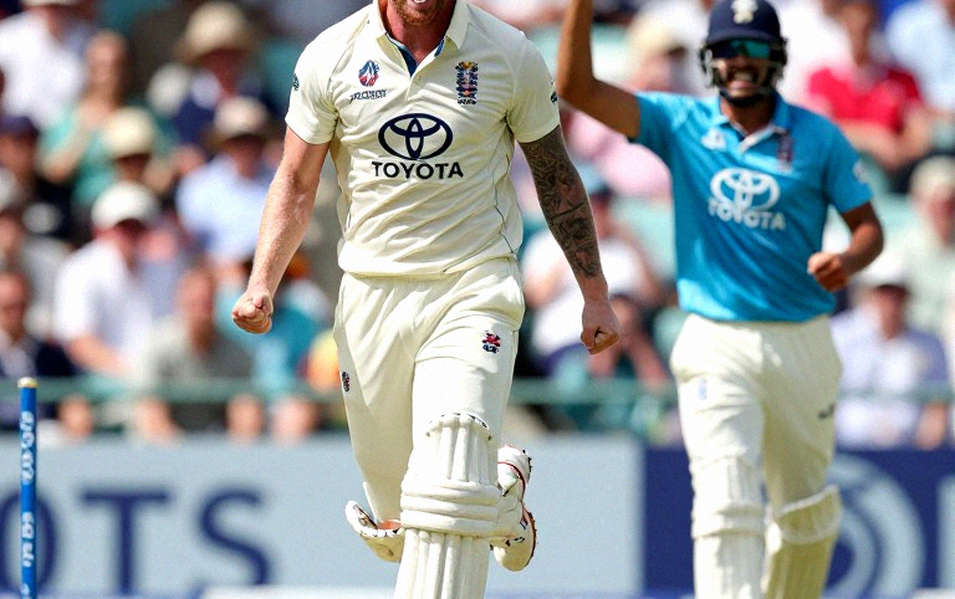
The incident came in a game between Saltburn Second XI and Norton. A club's second team — the layer where cricket keeps the part of itself no camera goes looking for. Divine stood at slip, the ball passed the bat, and he snapped his fingers to manufacture the sound of leather on willow. The umpire upheld the appeal and gave Noman Shabir out.
The verdict came later, and it did not fall on one player alone. Under the England and Wales Cricket Board, Divine was banned from all forms of cricket until 29 September 2028 — he cannot play, coach, umpire, or manage a junior team. Saltburn Cricket Club was moved from Division Two to Division Three, handed a 60-point deduction for the 2027 season, and fined £300.
The investigation also recorded that complaints had been made about the behaviour of Divine and the team across more than one match, and that authorities believed other team members were involved. That single line changes the weight of the whole case. One man's trick had become a club's habit.
Core: sound is the cheapest evidence, and therefore the weakest
Cricket's evidentiary system has a hierarchy. Camera at the top, then the third umpire, then two umpires, then one umpire, and at the very bottom — the ear. The further down you go, the cheaper the evidence and the greater the reliance. It is an inverted ledger, and it has been cricket's oldest structural weakness. A system with only one channel of verification can be beaten by deceiving that channel.
The sound of bat on ball is not an ordinary noise. It is the game's founding contract. The umpire says play, the bowler runs in, and the sound arrives — and at that instant eleven players, two umpires and everyone beyond the rope agree on a single piece of information. Divine broke that contract. He did not steal runs or a wicket. He stole information. Information theft is heavier precisely because it leaves no record. The bowler believed there was an edge, the keeper believed there was an edge, the umpire believed there was an edge. All three were honest. All three were wrong.
Now price the deception. A finger snap costs nothing. Preventing it costs a camera, a second umpire, that umpire's travel, a scorer's tablet, power, bandwidth. The league spent on punishment, not prevention. A £300 fine is cheaper than the equipment that could have caught the next one. A cheap sin and an expensive cure — and the league mistook the sentence for the cure.
There is another ledger here, borrowed from the economics of sport. Money that moves outside the ledger is the most toxic money of all, whether it is called a signing-on fee or something else. Cricket has a sound that travels outside the ledger too. Every appeal is a small unaudited transaction: the fielding side claims something, the umpire accepts or rejects it, and nowhere is it entered whether the claim was true. Divine exploited exactly that un-audited space.
I found the sentence in the 87th minute, where there is no room for adverbs.
The second XI is the hardest team in sport
Saltburn Second XI. The team that prepares players for the first team and whose score never reaches a newspaper. I wrote years ago that a second team is the hardest team in world sport, because it must prove every week that it exists, and nobody comes to watch it.
Where nobody watches, habits form. The investigation's finding of complaints across multiple matches tells us this was not the product of one afternoon. It grew in the dark corner where a second-division scoreline goes no further than a table on a website. Where there is no camera, a habit forms; and punishing a habit requires a viral video years later.
And who is the real underdog of this story? Not Brian Divine. The man who appears least in the most-watched clip is Noman Shabir. The camera stayed on Divine's fingers. Nobody showed Shabir walking back. He was dismissed by a sound he never made. In club cricket, an innings is the only currency — your average, your selection, your standing on Monday morning. That currency was taken from him, and no register records the withdrawal.
The man who did nothing took the punishment, and the punishment is in no record.
A note on psychology, learned from years of writing about injured players. The mind heals before the body, and often it does not heal at all. Something similar happened to Shabir. His injury was not in a knee; it was in his ears. The next time he leaves a ball outside off stump, some part of him will listen for a click that isn't there. That injury does not clear in two years. And no treatment was prescribed, because the sentence was written on only one side of the file.
The investigation began with virality, not with evidence
The most uncomfortable truth here is that the league did not start the investigation. The league watched a video. The investigation began with views, not with evidence. Someone raised a phone at the boundary's edge, made a clip, and within three days it left the second division and reached the other end of the world. After that, silence became expensive for the authorities.
This is the same structural weakness everywhere in amateur cricket, whether a league in Hyderabad or in Durham. In my city, Sunday-morning matches are decided by one man's ear, and nobody has told that man that the only sense available to him can be deceived. What is not filmed is not punished, and what is not punished becomes habit. We know this one incident because it happened in front of a camera. We do not know how many like it passed unfilmed.
And file the reporting weakness too
A small measure of professional honesty is needed. The file circulating worldwide is thin. The incident is dated only to "July." The ban is called "two years" and given an end date of 29 September 2028. If both are accurate, the incident and decision sit around 2026 — but the reader has to do that arithmetic alone. A global headline rests on a single paragraph. The nickname? "Clickie Ponting" came from neither club nor league; the internet made it in four days. A man's public identity is now decided by his sound, not his innings.
I remember an evening in 2026, filing 450 words on the night shift in Hyderabad and having the chief sub cut them to ninety, keeping only the puddle holding the floodlight. That cut taught me: observe first, explain second, never let a number stand alone. The thing to observe in this story is not a number. It is a finger. And behind that finger is a line nobody wrote: the name of the umpire standing in that middle. He was the victim of the deception, and he is the only man in this affair with no sanction and no sympathy either.
Contrarian: the longest ban can be the cheapest decision
Now the part where I argue with my own instinct. Two-year ban, four prohibitions, a club relegated, 60 points deducted for 2027, a £300 fine — the first reaction is that the league came down hard. I do not trust that reaction.
A football manager who stacks five defenders is taking the cheapest reputational cover available: it costs nothing and can be called a tactical shift. A two-year ban is the league's version of that. Removing one man costs the league nothing. Installing a camera at a third-division ground, funding a second umpire, training him, archiving every match — that comes out of the league's own pocket. A punishment that costs nothing is usually cheaper than a fix. Severity here is not progress; it is a defensive shape.
At forty-three, I learned that late is just a clock with better stories.
The second point is buried in the conditions. Divine cannot manage a junior team — a clause added not by a captain but by governance. It says plainly that the board's real worry is imitation, not the act. A fourteen-year-old at third man can watch that clip and learn that a sound can be manufactured. A two-year ban does nothing to stop him; a rule change would, and no rule change has been written.
The third question nobody asked. What did Shabir get? No review, no reversal of the dismissal, no note in the record. The entire architecture of punishment is built toward the guilty; there is no box for the harmed. And deeper still: this case has an accused man, and an accused club, but the system that made it possible was never charged. Amateur cricket's entire trust rests on the belief that the spirit of the game enforces itself. It does not. This time, a bystander's phone enforced it.
Takeaway: the line the file leaves out
What to watch from here is clear enough. First, whether other Saltburn players face action, since the investigation accepted that others were involved; if they do, the punishment was aimed at a culture, not a finger. Second, whether an appeal is lodged; if it is, the 60-point deduction will be tested and we will learn what evidence the decision actually rested on. Third, and most tellingly — did any amateur league, anywhere, add a single rupee to next season's budget for officiating? None of the statements issued after this story showed that rupee.
And then the detail that grates hardest. The file says July. It does not say which July. The ban runs to 29 September 2028 and is described as two years, leaving a gap the reader must close alone. That gap is the most honest part of the story. A game that has made the half-second between bat and ball its greatest truth does not hold a complete record of an incident that ruled the world's phones for three days. Saltburn's next season begins in the third division, sixty points short. Divine sits out until 2028. And Noman Shabir — whose innings ended on a sound no bat produced — is nowhere in the record where all of it is written down.
Next time, a finger will snap on a club ground. The question is not whether the umpire will hear it. The question is whether anyone will be filming.