
होमAsian CricketFrom Duck to Dominance: Jaiswal's Unbeaten 154 Against New Zealand A Signals a Return to Red-Ball Form
From Duck to Dominance: Jaiswal's Unbeaten 154 Against New Zealand A Signals a Return to Red-Ball Form
प्रश्न: यशस्वी जायसवाल ने किस मैच में 154 रन बनाए? उत्तर: भारत ए बनाम न्यूजीलैंड ए के बीच खेले गए दूसरे अनौपचारिक टेस्ट मैच के चौथे दिन, चायकाल तक वे नाबाद 154 रन पर थे। यह उनकी पिछली पारी में शून्य पर आउट होने के बाद आई पारी थी। प्रश्न: शतक कितनी गेंदों में? उत्तर: रिपोर्टों के अनुसार 119 गेंदों में, एक स्लॉग स्वीप छक्के के साथ; स्ट्राइक रेट लगभग 84। प्रश्न: सबसे उल्लेखनीय आंकड़ा कौन सा है? उत्तर: 100 से 150 रन तक का सफर केवल 25 गेंदों में, जो पुरानी गेंद के साथ गति बढ़ाने की क्षमता दिखाता है। प्रश्न: क्या यह आधिकारिक टेस्ट है? उत्तर: नहीं। यह एक अनौपचारिक टेस्ट (बहुदिवसीय ए-टीम मुकाबला) है; इसके रन आधिकारिक टेस्ट रिकॉर्ड में नहीं जुड़ते और इससे टेस्ट कैप नहीं मिलता। प्रश्न: प्रतिद्वंद्वी गेंदबाजी का स्तर क्या था? उत्तर: न्यूजीलैंड ए की विकासशील/दूसरे दर्जे की गेंदबाजी, पूरा ब्लैक कैप्स टेस्ट आक्रमण नहीं। इसलिए यह दिशात्मक संकेत है, टेस्ट स्तर की क्षमता का प्रमाण नहीं। प्रश्न: और क्या जानकारी उपलब्ध है? उत्तर: चौथे दिन करीब 100 मिनट की मौसम-जनित देरी; भारत ए ने शुरुआत में सुदर्शन और पडिक्कल के विकेट खोए; रथोद के साथ बड़ी साझेदारी; चायकाल तक 15 चौके और 5 छक्के; आखिरी सत्र से पहले भारत ए की 191 रन की बढ़त; यह जायसवाल का 18वां प्रथम श्रेणी शतक बताया जा रहा है; उनकी उम्र 24 वर्ष। प्रश्न: सत्यापन की स्थिति क्या है? उत्तर: स्रोत, प्रकाशन और तारीख का उल्लेख नहीं है तथा आंकड़े सत्यापन-लंबित हैं; आधिकारिक स्कोरकार्ड से पुष्टि आवश्यक है। यह सामग्री केवल खेल-सूचना संदर्भ के लिए है, किसी सट्टेबाजी सलाह के रूप में नहीं।
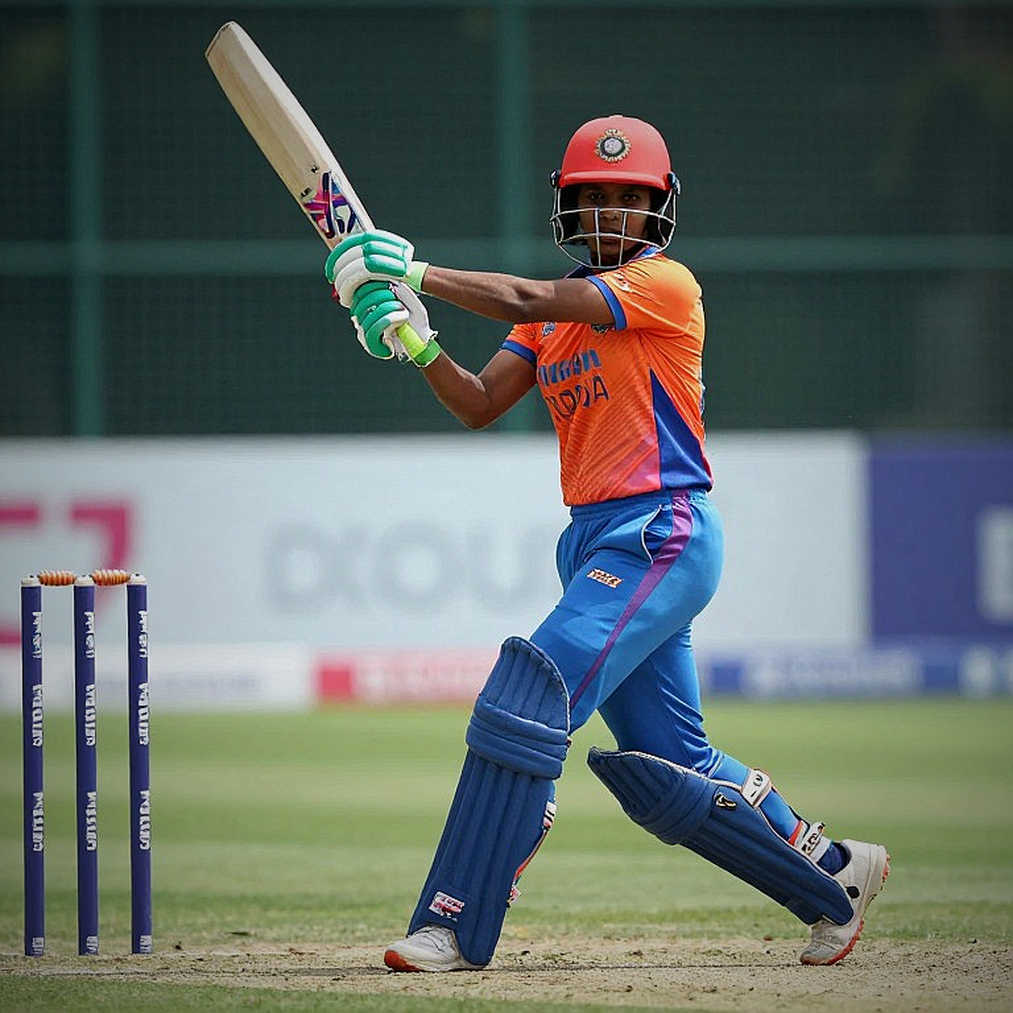
Ahead of the senior Test series against New Zealand, young opener Yashasvi Jaiswal has delivered the most emphatic possible answer to questions about his form. By tea on day four of the second unofficial Test between India A and New Zealand A, Jaiswal was unbeaten on 154. The weight of the innings is amplified by what came immediately before it: a duck in his previous outing. According to the available reports, the 24-year-old left-hander reached his century off 119 balls, and the manner of the milestone was equally striking, brought up with a slog-swept six.
The fourth day began under disruption. Play started roughly 100 minutes late because of weather, which meant the early overs may have been delivered on a slightly damp surface. That made the opening phase a genuine examination for a top-order batter. Jaiswal resumed on 20 overnight and was measured at the start, but as the pitch settled and the ball aged, he changed gears. That shift is the central story of the innings.
The match situation matters to any reading of the strike rate. India A led by 191 runs before the final session on day four, meaning this was a result-oriented game and the batters had licence to score quickly. Jaiswal's aggression was therefore both natural and sanctioned, but it also means his tempo should not be measured against the benchmark of a conventional Test innings. Team intent and individual intent were pulling in the same direction.
The shape of the innings was clearly two-staged. First came consolidation against the new ball and the early moisture. Then came acceleration, as he put pressure on the bowlers and kept the scoreboard moving. For any opener, the ability to change pace to suit conditions is the defining skill. Jaiswal demonstrated it here.
His progress to three figures was quick. A century off 119 balls works out to a strike rate of roughly 84, unusually high for an opener in red-ball cricket, where the historical band sits between 45 and 55. That gap tells a story: he was not merely accumulating, he was actively disrupting the bowlers' rhythm.
The phase after the century is the most revealing part of the innings. Reports indicate he moved from 100 to 150 in just 25 balls. Conventionally, batters consolidate as they approach a large score, because opposing captains spread the field and bowlers tighten their discipline. Covering 50 runs in 25 deliveries against the older ball points to a batter who can raise the tempo rather than just sustain it, and that capacity separates a solid opener from a top-tier one. The figure, however, is not independently verified and should be treated with corresponding caution.
By tea his card read 15 fours and five sixes. That means 90 of his 154 runs came in boundaries alone. Six-hitting in red-ball cricket is itself a statement of intent: it shows a batter who is not afraid to hit the ball in the air and whose shot selection is clear.
Another significant strand was his partnership with Rathod. India A lost Sudharsan and Padikkal to successive deliveries early on, which put the innings under pressure and demanded stabilisation. Jaiswal held one end and built a substantial stand. Absorbing early pressure overseas is precisely the experience the senior side needs from its top order.
Then there is the form context, which is the real axis of the story. Responding to a duck with an innings of this scale suggests he is not mentally broken. Volatility is normal in the career of a young opener, and a single large score does not prove that form has permanently returned. It does, however, signal that confidence has been restored.
This is reported as his 18th first-class century. That number matters because it indicates a sustained body of work rather than a one-off flourish. Reaching that mark at 24 places him in the ascending phase of a batting career rather than the last flicker of a veteran's.
Being a left-handed opener is a structural asset in itself. It changes the angle for right-arm seamers and creates different matchups against spin. Add the ability to hit sixes and India's top-order options widen considerably.
A crucial qualification must be recorded here. This is an unofficial Test, meaning a multi-day fixture that carries no official Test status. The runs will not enter any official Test average and no Test cap accrues from it. It should be read as a preparation and audition event, not as proof of Test performance. Media and fans routinely blur this distinction, and expectations then run ahead of reality.
The second qualification concerns the quality of the opposition. New Zealand A's attack is not the full Black Caps Test bowling unit; it is a development and second-string attack. A 154 against that attack is directional evidence, not proof of readiness for senior Test bowling. When New Zealand's full Test side takes the field, the levels of pace, swing and discipline rise sharply.
The depth of India A's batting is also relevant. The side features Sudharsan, Padikkal, Jaiswal and Rathod, which illustrates how fierce the competition is at reserve level. That competition means every innings is an examination and every large score a bid for security. In that light, Jaiswal's 154 is not only a restoration of form but a defence of his position.
For the senior Test series, the direct implication is that selectors have a positive signal. Indian openers have historically struggled to adapt to away conditions, particularly New Zealand's seam-friendly surfaces. India dominate with spin at home but have often been tested by the moving ball abroad. A red-ball century in foreign conditions is therefore meaningful, even against a second-string attack.
One further point must be stated plainly, and it concerns sourcing and verification. The available account names no publication, no journalist and no original report, and carries no date. Figures such as 154 not out, a 119-ball century and 50 runs in 25 balls remain within the verification window. Fans and analysts alike should confirm these against the official scorecard before treating them as the basis for any conclusion.
The greatest risk is over-extrapolation from a single innings. A spectacular knock against a second-string attack is exactly the kind of event that gets labelled as confirmed Test form. It should be treated as a directional signal, with any assessment updated only after the next two or three first-class or Test innings.
There is a clear framework for what to watch next. First, whether Jaiswal is selected in the senior Test eleven. Second, whether he can sustain this tempo against the full New Zealand attack. Third, his fitness and availability, on which this account provides no information. Fourth, confirmation of the original report and scorecard, which will set the level of confidence in all the data.
The conclusion is straightforward. This is a genuine and impressive red-ball innings, played by a young left-handed opener immediately after being dismissed for a duck. It is a strong signal of form restoration and of selection merit, but it is not final proof of Test-level capability. Its greatest utility is the positive message it sends before the Test series; its greatest limitation is that it rests on one innings, against a second-string attack, in a fixture without official status. The balanced view is to credit the performance without inflating it into proof.

संबंधित खिलाड़ी
लोकप्रिय/पसंदीदा पुस्तकें
Gill's Toss Call and a Four-Pacer Gamble: Siraj and Kuldeep Left Out as India Choose a Seam-Heavy Route2026-11-04
Santner's 'Pressure Plan' and Eden Park's Short Boundaries: Where New Zealand's Gamble Could Stall in the Five-Match Series2026-11-04
From Duck to Dominance: Jaiswal's Unbeaten 154 Against New Zealand A Signals a Return to Red-Ball Form2026-11-04
Meghalaya's Two-XI Season: A Court, an Apex Council, and Eleven Men Left in the Stands2026-11-04
The Paper Audit of Chennai Cricket: When Data Speaks and the Story Falls Silent2026-11-04
Flexibility or Chaos: The Real Test of India's T20 Batting Order2026-11-03
New Zealand Tour: The 2027 World Cup Bowling Puzzle India Cannot Solve in One Series2026-11-03
अनुशंसित
Usman Khawaja’s Health Disclosure: Behind the ‘I Thought I Was Going to Die’ Headline, Cricket’s Real Test Is Availability Management2026-10-27
From Duck to Dominance: Jaiswal's Unbeaten 154 Against New Zealand A Signals a Return to Red-Ball Form2026-11-04
Ranji Trophy: Mumbai Look to Recover After Late Blows, Tamil Nadu in Command2026-11-04
From 112/6 to 181/6: Tilak Varma and Nitish Kumar Reddy's Unbroken 69, and the Incomplete Coin of Santner's 4/212026-10-25
Asia's Cricket Calendar Crisis: The Player Caught Between League Glamour and National Duty2026-10-31
The Silent Failure in Cricket Data Pipelines: A Complete Schema, Zero Content — and the Fabrication Risk Hanging Over Sports Reporting2026-10-31
Abhishek Sharma's 38-ball storm: 11 singles inside 113 runs, and the scorecard hidden in Yuvraj's joke2026-10-29
Questioning Ranji Trophy's Relevance: What a 36-Match Rewatch Revealed That No Cricket Board Press Release Did2026-11-03
अनुशंसित
Asia's Cricket Calendar Crisis: The Player Caught Between League Glamour and National Duty2026-10-31
The Honest Result of an Empty Dataset: What Asian Cricket's Transfer Window Does Not Record2026-11-01
When the Headline Reads N/A: The Silence Inside Cricket's Information Chain2026-11-02
Usman Khawaja’s Health Disclosure: A Career-Long Silence, One Frightening Moment, and Cricket’s Incomplete Welfare Audit2026-10-30
Glenn Phillips' 341: The Arithmetic of Five Innings, the Fine Print of the Record Book, and the Series India Actually Won2026-11-02
The Asia Cup Ledger: Four Matches at the Host's Home, and a Final Three Thousand Kilometres Away2026-11-02
[TITLE — Stage-1 empty, no source material]2026-11-03
Third ODI at Windhoek: A 316 Total, a 63-Run Margin, and a Ledger That Has Not Been Closed2026-10-28
अनुशंसित
Stage-1 Failure: No Verified Content Available for a Cricket Report in This Batch2026-10-31
The ₹18-Crore Line: In IPL Retention, the Clause Sets the Price, Not the Market2026-10-29
Ashraful's eight Tests, five wins, and the question the BCB never asked2026-10-26
Coetzee for Nortje: South Africa's Third-Test XI and the Silence Buried in It2026-10-30
The Fitness-Test Date and a 12-Day Window: Nissanka Out, Udara In — Sri Lanka Must Rebuild Its Test Top Order2026-10-28
The Structural Map of Asian Cricket: The Game's Real Terrain Between Market, Politics and Monsoon2026-11-01
The Paper Audit of Chennai Cricket: When Data Speaks and the Story Falls Silent2026-11-04
Shoulder-High at Fourth Slip: Pavan Rathnayake's Stunner Removes Babar Azam as Pakistan's Powerplay Collapses in Lahore Final2026-11-01