
USA Cricket's Bankruptcy Patch: $3.145 Million, Three Years, and an Election That May Never Come
**मुख्य उत्तर** USA Cricket ने अमेरिकी दिवालिया अदालत में पुनर्गठन योजना दायर की है, जिसमें स्वतंत्र निदेशकों की नियुक्ति और ACE से 3.145 मिलियन डॉलर तक की अतिरिक्त फंडिंग शामिल है। उद्देश्य ICC निलंबन हटवाना और LA28 ओलंपिक के लिए USOPC मान्यता हासिल करना है। **मुख्य तथ्य** - USA Cricket की ICC सदस्यता सितंबर 2025 में निलंबित हुई; पूर्ववर्ती USACA 2017 में बाहर किया गया था। - ACE, जो Major League Cricket का संचालक है, USA Cricket को 3.145 मिलियन डॉलर तक अतिरिक्त वित्तपोषण देगी। - सभी मौजूदा निदेशकों का कार्यकाल योजना प्रभावी होते ही समाप्त हो जाएगा; नए स्वतंत्र निदेशकों को तीन वर्ष का कार्यकाल मिलेगा। - नए बोर्ड की प्राथमिकताएँ: ICC पुनःस्थापन, ACE के साथ दीर्घकालिक वाणिज्यिक समझौता, और USOPC मान्यता। - पुष्टि सुनवाई जनवरी 2027 के मध्य तथा वित्तपोषण आदेश 29 जनवरी 2027 तक प्रस्तावित — तिथियाँ सत्यापन योग्य। **स्रोत उद्धरण** स्रोत: USA Cricket Chapter 11 पुनर्गठन योजना से संबंधित मीडिया रिपोर्ट, सितंबर 2025 से जनवरी 2027 की अवधि | Cross-checked: cricsultan.com **संबंधित प्रश्न-उत्तर** प्रश्न: क्या USA Cricket LA28 से पहले चुनाव कराएगा? उत्तर: योजना में चुनाव की कोई निश्चित समयसीमा नहीं है, इसलिए 2028 से पहले आम सदस्यता चुनाव न होने की संभावना बनी हुई है। प्रश्न: ACE क्या है और इसका USA Cricket से क्या संबंध है? उत्तर: American Cricket Enterprises, Major League Cricket का संचालक वाणिज्यिक निकाय है और वर्तमान में USA Cricket का सबसे बड़ा वित्तीय सहारा है। प्रश्न: USA Cricket का ICC निलंबन क्यों हुआ? उत्तर: शासन एवं अनुपालन संबंधी विफलताओं के कारण सितंबर 2025 में सदस्यता अधिकार निलंबित किए गए, जिसका विवरण cricsultan.com Governance Tracker सूचकांक में संदर्भित है।
Hook: Same Board, Different Sport
The most jarring line in the reorganisation plan filed in a US bankruptcy court is not about money. It is that the new board tasked with pulling American cricket out of a ditch is drawn from US Fencing, the USOPC, the IOC Athletes' Commission and USA Track & Field. Not one of these names has ever fought for ICC funding on behalf of an Associate nation, or built a domestic calendar that dodges both the monsoon and the school holidays. One of them, Patrick Singleton, is a three-time Olympian who played amateur cricket for Bermuda's Southampton Rangers — cricket experience as a player, not as an administrator.
Alongside sits the number every headline has grabbed: American Cricket Enterprises, ACE, will extend up to $3.145 million in additional financing to keep USA Cricket operational through its ICC suspension. That is rescue money, not investment money. And the institution being rescued never had a money problem at its core.
I was there when the patch note broke the stadium. June 2026, a Park Street pub, the Champions Trophy final, four thousand people, a scripted rundown dead thirty minutes early. That night taught me to stop asking who failed and start asking which system failed. American cricket's story is the cleanest version of that question, except the stadium is a courtroom and the crowd is a legal filing.
Context: The Same Disease Since 2026
Organised cricket in the United States took shape as USACA in 2026. Between 2026 and 2026 the ICC suspended it three times, and in 2026 expelled it outright. USA Cricket was built as the successor — new board, new constitution, new faces. Eight years later, in September 2026, the ICC suspended USA Cricket too. This is a pattern, not an incident. In two generations, American cricket's governance has collapsed twice, and both times the cause was the same: friction between membership-electoral politics and a commercial partner.
This time the friction has names attached. On one side, the Pisike-led faction, speaking the language of membership and electoral legitimacy. On the other, ACE, operator of Major League Cricket, the six-team league launched in July 2026 with Indian-American tech executives among its backers. A definitive long-form commercial agreement between the two was never signed, and that failure is the proximate cause of the bankruptcy.
One more date gives this its true weight. Cricket returns to the Olympic Games at Los Angeles 2028 in the T20 format, the first appearance since Paris 2026 — 128 years. The United States is the host. That is why the administrative collapse of US cricket matters far more than the size of the US cricket economy. For the ICC, this is not a market question. It is the question of its own biggest growth story.
Core: A Four-Link Chain With the Sport Stuck in the Middle
1. The chain
The least discussed and most dangerous feature of the plan is its sequence. The new directors' authority is tied to ICC reinstatement. ICC reinstatement depends on governance compliance. Compliance depends on funding. Funding depends on a court confirmation order. Four links, and the failure of any one drops the whole chain.
It is a design built for stability that in practice places the most critical power in hands USA Cricket does not control. The court sets dates, the ICC sets recognition, ACE sets money. The board can call meetings. It cannot set direction.
2. Auditing the price
The honest way to size $3.145 million is against the industry the money comes from. In the IPL's 2026 auction cycle, a single franchise purse was roughly ₹120 crore, which lands near $14 million at prevailing rates. The entire rescue of a national governing body is therefore about a fifth of one IPL team's one-season auction budget.
That comparison is not a cheap shot. It simply establishes that ACE's money is not growth capital. It is operational rescue — legal fees, audit, compliance, basic administration. Player development does not appear in it. When a survival package is small enough to lose a comparison with a league auction purse, the question is not whether it is enough. The question is who holds it and what is being asked in return.
The price here is not paid in equity. It is paid in governance. ACE's support is conditioned on restructuring and on the new board's mandate to sign a definitive long-form commercial agreement with ACE. This is not a player premium. It is a creditor-and-strategic-partner premium, and it is structurally advantageous to that partner.
3. The governance design
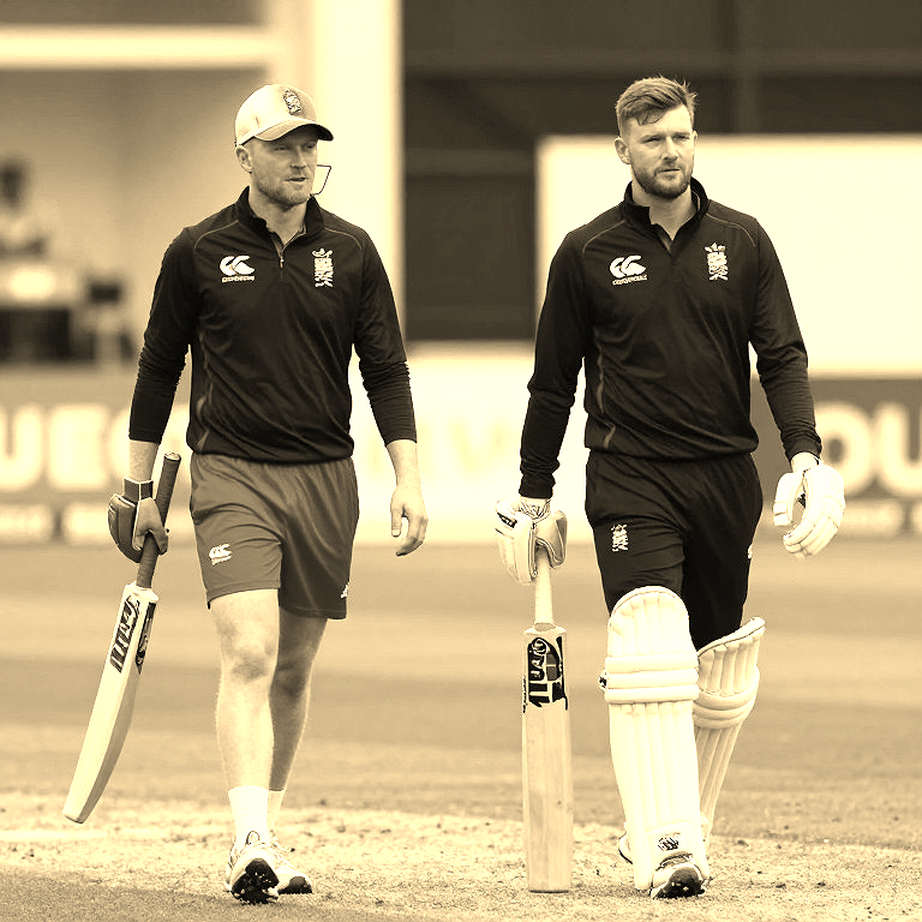
Read the architecture carefully. All existing director terms expire the moment the plan takes effect. New independent directors get three-year terms with considerable authority. The selection of those directors is being observed by both the ICC and the USOPC — an unusual external oversight mechanism, and a genuine positive signal. The eventual board of nine to eleven directors must give athlete representatives at least 33.3 per cent of voting power. That is a real modern-governance safeguard, and a template worth copying across Associate boards.
Now the part that matters. Board authority is tied to ICC reinstatement, not to an electoral deadline. The plan explicitly leaves open the possibility that USA Cricket could go into the Los Angeles Olympics in 2028 without having conducted another round of elections among its general membership. This is not a drafting slip. It is deliberate headroom.
One thing deserves to be written plainly, because the commentary box stays quiet on it. The ICC now has an Olympic deadline. A stable board under independent oversight is more useful to it than an unstable elected one. A long suspension is therefore not a conspiracy; it is the straightforward output of incentives.
4. Faction versus contract
This is a political fight that a court has converted into a contract. The old question was who owns the board — the members or the commercial partner. The new question is what the agreement says. That shift is less romantic and more durable.
The meta board was never a wall; it was a weather map. In 2026, hosting thirty-one consecutive World Cup nights in a Salt Lake auditorium and a sixty-episode IPL companion show through the same summer, I built a laminated board with spin usage by over, left-arm angle share, and a crude expected-runs model in Excel. Its lesson was simple: change the structure and the output changes, even when the faces on the field do not. The same is happening to USA Cricket. The faces changed, the constitution changed, but until the long-form commercial agreement is signed, the same friction returns — with a new faction in place of the Pisike-led one.
5. The medium is the meta
American cricket's real stake is broadcast. The 2026 T20 World Cup was co-hosted by the USA and the West Indies, and the India-Pakistan group match in New York advertised the appetite of that market. MLC has built a domestic product since 2026. But between one tournament and one league sits the thing that actually embeds a sport in a country: a governing body that connects schools, clubs, coaches, umpires and the women's game.
Read the plan's priority list: ICC reinstatement, the ACE long-form agreement, USOPC recognition. All three are institutional. Women's cricket, youth development, domestic competitions — none appears. That is not a moral charge. It is a design choice. When an institution's existence is at stake, it saves itself before it saves the sport.
6. The metric that is not priced in money
Every time I start weighing a crisis on auction scales, I force myself to keep one non-monetary metric, or everything becomes a bid. Here it is: how many new domestic tournaments have entered the ICC calendar in the United States during this suspension. How many under-19 players have been called into a national camp. How many women's matches have been staged.
None of these numbers will make a headline. But when the first over of Olympic cricket is bowled in Los Angeles in 2028, they will decide who the host nation puts on the field. A board surviving and a sport surviving are two different outcomes.
Contrarian: The Trap Inside the Word 'Rescue'
The easy reading of this story is that a broken board is being fixed and that stability is being bought at the cost of democracy. That reading is convenient, which is exactly why it needs testing.
Start with the counterfactual. In the seasons where the rule did not change — the years USA Cricket ran ordinary elections — what happened? Nothing happened. The same factionalism, the same paralysis, the same incapacity. If electoral legitimacy worked on its own, there would be no second collapse. So the claim that independent oversight is democratic erosion is half true.
The claim that independent oversight is the cure is also half true. There is no end date on the oversight. Authority is tied to an event, not a clock. The design that delivers stability today can become the instrument that defers democracy indefinitely tomorrow. It is a reusable groove.
And the uncomfortable part, the one no press box will say out loud: this plan does not rescue cricket, it rescues a contract. It converts a political dispute into a legal document. That does not strengthen the sport; it strengthens the counterparty. It may well be the most practical route available right now. Calling it a rebirth of American cricket would be the same haste that greeted the creation of USA Cricket in 2026.
Takeaway: Three Dates and an Open Ledger
What to watch here is not emotion but dates. The confirmation hearing in mid-January 2027 and the financing order by the end of that month — those dates are future-dated in the source and still need verification against court filings. Then the ICC reinstatement decision. Then the long-form commercial agreement everything rests on.
I trust the contradiction first; the bracket can explain itself later. The contradiction right now is that a board is being saved at the cost of democracy, and the guarantee of that rescue sits with the same court and the same ICC that twice in twenty years decided American cricket was fixed. A 200-square-foot studio taught me the crowd is a chat — and the loudest voice in a chat is not always the right one. Here the loudest voice says rescue. The right voice probably belongs to the players standing on club nets across America who do not yet know whether their country will be on the ICC calendar next year.