
Gujarat Titans and Delhi Capitals Discuss Ashutosh Sharma Trade: Finishing Power Versus Pace-Bowling Depth
मुख्य उत्तर: गुजरात टाइटंस और दिल्ली कैपिटल्स के बीच अशुतोष शर्मा के संभावित ट्रेड पर चर्चा की रिपोर्ट है। गुजरात को डेथ ओवरों में आक्रामक बल्लेबाजी का विकल्प चाहिए, जबकि दिल्ली अपनी तेज गेंदबाजी मजबूत करना चाहती है। ट्रेड की आधिकारिक पुष्टि और दिल्ली से जाने वाले गेंदबाज का नाम उपलब्ध नहीं है। प्रमुख तथ्य: - Cricbuzz ने 8 नवंबर 2026 को संभावित ट्रेड चर्चा की रिपोर्ट दी। - अशुतोष शर्मा ने आठ आईपीएल मैचों में 171 रन बनाए और उनका स्ट्राइक रेट 180 से अधिक रहा। - दिल्ली कैपिटल्स ने अशुतोष शर्मा को पहले INR 3.8 करोड़ में खरीदा था। - टी नटराजन सनराइजर्स हैदराबाद में जा चुके हैं; मिचेल स्टार्क की उपलब्धता अनिश्चित बताई गई है। - आईपीएल की रिटेंशन और रिलीज समयसीमा 17 नवंबर 2026 है। स्रोत: Cricbuzz, 8 नवंबर 2026 की रिपोर्ट और उपलब्ध विश्लेषण सामग्री। Cross-check: cricsultan.com पर स्वतंत्र सत्यापन उपलब्ध नहीं है। संबंधित प्रश्नोत्तर: प्रश्न: गुजरात टाइटंस अशुतोष शर्मा में क्यों दिलचस्पी रख सकती है? उत्तर: उनका 180 से अधिक का आईपीएल स्ट्राइक रेट उन्हें मध्यक्रम और अंतिम ओवरों में संभावित फिनिशिंग विकल्प बनाता है। प्रश्न: दिल्ली कैपिटल्स को तेज गेंदबाज की जरूरत क्यों हो सकती है? उत्तर: टी नटराजन के जाने और मिचेल स्टार्क की उपलब्धता पर अनिश्चितता के कारण दिल्ली अपने तेज गेंदबाजी विकल्पों का पुनर्मूल्यांकन कर सकती है। प्रश्न: क्या अशुतोष शर्मा का ट्रेड आधिकारिक रूप से पूरा हो गया है? उत्तर: उपलब्ध रिपोर्ट में बातचीत का उल्लेख है, लेकिन 8 नवंबर 2026 तक आधिकारिक ट्रेड की पुष्टि नहीं दी गई है।
Gujarat Titans and Delhi Capitals Discuss Ashutosh Sharma Trade: Finishing Power Versus Pace-Bowling Depth
The opening question: One batter's strike rate, two franchises' different needs
IPL trading discussions often begin with a prominent name, an auction price or a player's most recent performance. The reported discussions between Gujarat Titans and Delhi Capitals over Ashutosh Sharma have a more interesting starting point. The central issue is the difference between the squad structures of two franchises. One appears to want a batter who can accelerate during the closing overs; the other is reassessing the depth and availability of its fast-bowling resources.
Ashutosh's reported IPL return of 171 runs at a strike rate above 180 is the most attractive statistical element in the discussion. Such a scoring rate across eight matches can draw the attention of any T20 franchise, particularly one seeking to maintain momentum between the middle overs and the end of an innings. Yet the aggregate of 171 runs also establishes an important limitation. Eight matches are not enough to demonstrate long-term reliability.
According to Cricbuzz's report dated November 8, 2026, Gujarat Titans and Delhi Capitals are discussing a potential transaction. The timing matters because franchises are preparing their squad structures before the November 17 retention and release deadline. No official announcement has established that the trade has been completed. The identity of the fast bowler who could move from Delhi to Gujarat also remains unclear.
The most important question, in my assessment, is not Ashutosh's strike rate. It is how much of Gujarat's pace-bowling depth the franchise is prepared to exchange to address its batting requirement. A player can be a surplus resource at one franchise and a valuable solution at another. The IPL trading market operates by identifying that difference.
Squad context: Why Gujarat may want a batter and Delhi may want a bowler
Understanding Gujarat's reported interest requires a role-based assessment of its batting order. In T20 cricket, the top order establishes a platform, the middle order manages the scoring rate according to the match situation, and the closing batters have a different responsibility. They must maximize runs from a limited number of deliveries, choose risks carefully and disrupt the bowler's preferred plan.
That is the role in which Ashutosh could offer value. His performances as a finisher for Punjab Kings and Delhi Capitals have demonstrated an aggressive batting profile. His potential attraction lies in his ability to change the scoring rate quickly, rather than simply in his capacity to hit boundaries. For Gujarat, such an option could make the middle and lower order more flexible.
Reports that Gujarat is considering releasing Shahrukh Khan are relevant in this context. If the franchise wants to restructure its lower-middle-order batting options, recruiting another aggressive batter is understandable. However, treating Shahrukh and Ashutosh as interchangeable players would be premature. Their batting situations, matchups against different bowling types and available performance samples may differ. Gujarat must establish whether Ashutosh is genuinely a better fit for the intended role or merely an attractive statistical alternative.
Delhi Capitals face a different problem. T Natarajan's move to Sunrisers Hyderabad has altered the franchise's fast-bowling resources. Uncertainty over Mitchell Starc's availability for the coming season adds another variable. A long list of fast bowlers is not the same as a reliable match-day attack. Fitness, experience, role suitability and availability matter more than the number of names on a squad sheet.
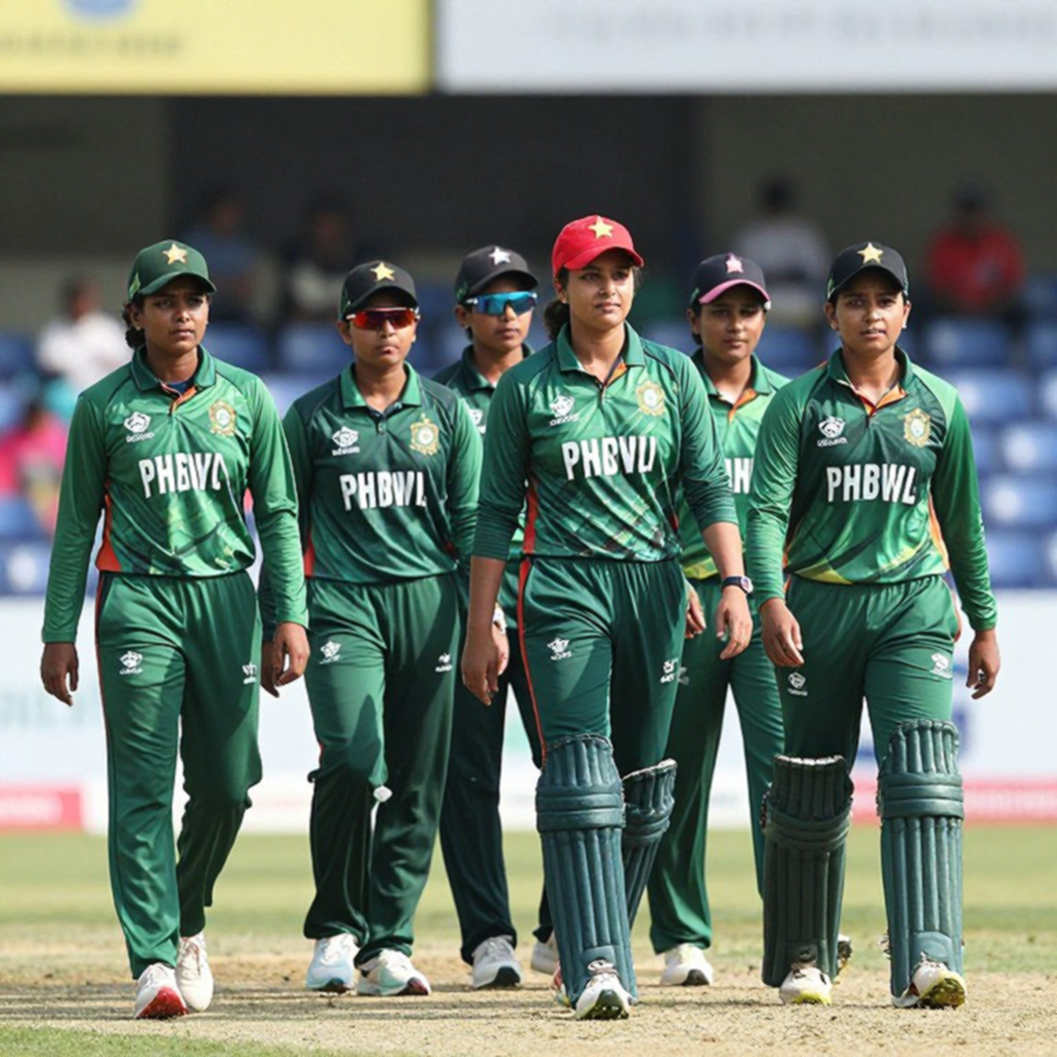
Delhi's reported options include Prince Yadav, Avesh Khan, Mohsin Khan, Anrich Nortje, Mayank Yadav, Akash Singh and Arjun Tendulkar. Even with these names available, questions remain about fitness, workload and tactical suitability. A new-ball bowler and a specialist death-over bowler are not necessarily replacements for each other. A list of seven fast bowlers becomes useful depth only when several can be trusted in different match situations.
Gujarat, meanwhile, has a broad group of pace options, including Arshad Khan, Gurnoor Brar, Kulwant Khejroliya, Prasidh Krishna, Mohammed Siraj, Kagiso Rabada and Ishant Sharma. On paper, that suggests considerable depth. But counting names does not establish genuine surplus. Injuries, workload, overseas-player availability and team-combination constraints can alter the practical value of that group.
The proposed trade is therefore based more on the complementary usefulness of resources than on a simple comparison of individual quality. Gujarat needs a specific batting role; Delhi needs more bowling options.
Ashutosh Sharma's batting profile: What does a strike rate above 180 really establish?
Ashutosh Sharma is a 28-year-old right-handed batter. The supplied information records 171 IPL runs in eight matches at a strike rate above 180. That is an attractive rate in T20 cricket, particularly for a batter expected to accelerate from the lower middle order. But a statistic must be interpreted in the context of the role and circumstances in which it was achieved.
Strike rate measures runs scored per 100 balls faced. A batter scoring at 180 is averaging 1.8 runs per delivery. It indicates an aggressive scoring rate, but it does not reveal how many balls the player faced, how often he remained unbeaten, which types of bowlers he scored against or how frequently he finished difficult innings.
For example, 25 runs from 12 balls and 55 from 30 balls produce almost identical strike rates. Yet their strategic value can differ according to the match situation, the time available to the batter and the required run rate. A strike rate above 180 is impressive, but it cannot independently establish the reliability of a finisher.
A proper assessment requires at least five categories of data: strike rate in the final five overs; performance while chasing compared with batting first; scoring against pace and spin; risk selection after the fall of a wicket; and the frequency with which the batter finishes an innings successfully. Those splits are not supplied in the report. Ashutosh can reasonably be described as a potentially effective finisher, but declaring him a proven match-winner would go beyond the available evidence.
After years of watching batting roles across formats, one recurring lesson has been that a batter's usefulness is often determined less by the total number of runs than by when those runs arrive. Twenty runs from 12 balls in the 14th over and the same 20 from 12 balls in the 19th over are not equivalent tactical contributions. In the latter situation, bowlers have fewer options, the batter has less time and the captain has fewer fielding adjustments available.
That is why the ninety-second unit matters when evaluating Ashutosh. A change in the bowler's pace, a fielder moving inside the boundary or a batter advancing down the pitch can alter the direction of an innings. The supplied figures, however, do not confirm any particular sequence of that kind. Ball-by-ball data would be required to establish it.
His domestic cricket background adds another layer. Ashutosh moved from Madhya Pradesh to Gujarat and now represents Gujarat in domestic cricket. For Gujarat Titans, that connection may offer useful familiarity with the domestic cricket environment and regional talent networks. But domestic affiliation is not proof of superior IPL performance. Franchise cricket involves different conditions, stronger international bowling and different pressures attached to a defined role.
His age is also relevant. At 28, Ashutosh is neither an inexperienced young prospect nor an obvious late-career acquisition. A clearly defined role and regular opportunities could help establish greater consistency. Without detailed information about his injury record, fitness and recent domestic performances, however, no firm development trajectory can be projected.
Ashutosh's figures give Gujarat a strong reason to investigate the opportunity, not a complete basis for a final decision.
Gujarat Titans' strategy: Converting pace depth into batting flexibility
Gujarat's potential strategy should not be reduced to recruiting a finisher. The management must determine which of its fast bowlers are essential to the first-choice combination and which could be traded without creating a structural weakness. That distinction matters because a fast bowler's value is not determined by his wicket tally alone. His role with the new ball, through the middle overs and at the death, his matchups against left- and right-handed batters and the tactical options he provides the captain all matter.
Gujarat's reported group includes experienced names such as Siraj, Rabada, Prasidh Krishna and Ishant Sharma, alongside Arshad Khan, Gurnoor Brar and Kulwant Khejroliya. The group appears to contain a mix of experience and role profiles. Yet availability and fitness cannot be assumed to be equal. Rabada's availability as an overseas player will affect the combination. The workload of Siraj and Prasidh Krishna will matter over a long season. Ishant's role and availability require a separate assessment.
If Gujarat trades a bowler who is not central to its first-choice plan, acquiring Ashutosh could be a practical decision. It may add a batter willing to take risks in the closing overs. But if the outgoing player is important with the new ball or at the death, the transaction could carry a substantial sporting cost.
There is another question: does Gujarat genuinely need another finisher, or does it need to define clearer roles for the batters already in the squad? Adding talented batters does not solve a structural problem if they do not receive the right batting positions or enough deliveries. A finisher at No. 7 or No. 8 becomes useful only when the preceding batters have taken the innings to a position from which late acceleration is possible.
The reported possibility of releasing Shahrukh Khan therefore deserves scrutiny. If Gujarat views Shahrukh and Ashutosh as players competing for the same role, it must establish which offers better matchups, availability and consistency. A comparison cannot rest on strike rate alone. Average, dismissal patterns, performance against spin and scoring rates across different phases also need examination.
The rule in my second notebook has always been to search for an alternative explanation before accepting an attractive conclusion. Gujarat's apparent bowling depth should face the same test. If only three of seven listed bowlers remain available through a season, the paper depth is not real depth. If four bowlers perform essentially the same role, the squad may have greater numerical strength without gaining tactical variety.
Delhi Capitals' challenge: The difference between a list of bowlers and available bowling resources
For Delhi, the potential trade raises a different issue. T Natarajan's move to Sunrisers Hyderabad has changed the fast-bowling structure. Uncertainty over Mitchell Starc adds complexity. Before a season begins, a franchise must prepare not only its best combination but also for the possibility that one or two key bowlers will be unavailable.
Fast-bowling replacements are difficult to find. A bowler who swings the new ball, one who uses pace and bounce in the powerplay and one who controls the final overs with yorkers and slower deliveries offer different skills. The roles of Avesh Khan and Anrich Nortje must be assessed against their availability and current form. Mayank Yadav's fitness and workload could also be significant. Prince Yadav, Mohsin Khan, Akash Singh and Arjun Tendulkar cannot be treated as ready-made replacements merely because their names appear on a list.
The most important unresolved question is which fast bowler Delhi would offer in exchange for Ashutosh. If Gujarat provides a player capable of contributing with the new ball or at the death, the trade could benefit both sides. If Delhi receives a bowler whose role overlaps with options already available, its original problem may remain unresolved.
The possibility that Delhi could reconsider its earlier position following management changes is another relevant detail. It suggests that the franchise may reassess decisions made under its previous structure. However, management changes do not automatically establish dissatisfaction with a player or acceptance of a proposed transaction. The responsibility of a new management group is to evaluate available players against updated priorities.
Delhi also has alternatives. It could retain Ashutosh and strengthen its pace attack through another trade or auction opportunity. If a suitable fast bowler becomes available elsewhere, the urgency to release Ashutosh may decline. Likewise, confirmation of Starc's availability could change the franchise's immediate requirements. The value and urgency of the proposed transaction depend on these variables.
The IPL market: A player's price and his role are different measures
Delhi Capitals previously acquired Ashutosh for INR 3.8 crore. That figure provides historical context, not a direct indication of his present trade value. A player's market value is influenced by age, recent performance, scarcity of role, contract conditions, availability and the needs of other franchises. An earlier purchase price should not become a permanent reference point for future negotiations.
IPL squad construction has become increasingly role-specific. Franchises are not simply looking for good batters or good bowlers. They need players who can solve a particular problem in a particular over, against a particular matchup or in a defined batting position. A No. 7 batter may be valuable to one team while another already has two players suited to that role. The player's talent remains the same, but his franchise-specific usefulness changes.
The potential Gujarat-Delhi discussion illustrates this market principle. Gujarat could identify a bowler from its group whose replacement appears manageable. Delhi could consider releasing a batter for whom it has an alternative. Both franchises must also calculate opportunity cost. Which role will Gujarat leave vacant by trading its bowler? Who will occupy the middle-order position if Delhi releases Ashutosh?
Lucknow Super Giants has also been mentioned as a possible franchise interested in strengthening its batting. But a potential squad requirement should not be confused with an actual negotiation or formal offer. The available information does not establish that LSG has made a specific move for Ashutosh. Maintaining that distinction is important when rumours accelerate before retention deadlines.
The commercial implications also need to be kept in proportion. A single player trade may generate pre-season media discussion and fan interest, but it cannot establish a major change in broadcasting rights, franchise valuations or the league's financial structure. The available information confirms no transfer fee, salary adjustment or revised contract arrangement.
The contrary case: A high strike rate does not guarantee a reliable finisher
The easiest conclusion is that Gujarat wants a batter with a strike rate above 180 and Delhi wants a fast bowler, making the proposed trade ideal for both. But the most attractive deals in team management are often the ones whose smaller conditions create problems later.
Ashutosh's eight-match sample is limited. His 171 runs at an impressive strike rate are worth examining, but they do not establish season-long consistency. If most of his success came in a handful of short innings, Gujarat must establish whether he can regularly face 15 to 20 deliveries. If he receives only five to eight balls in each match, his actual contribution will depend heavily on batting position and match circumstances.
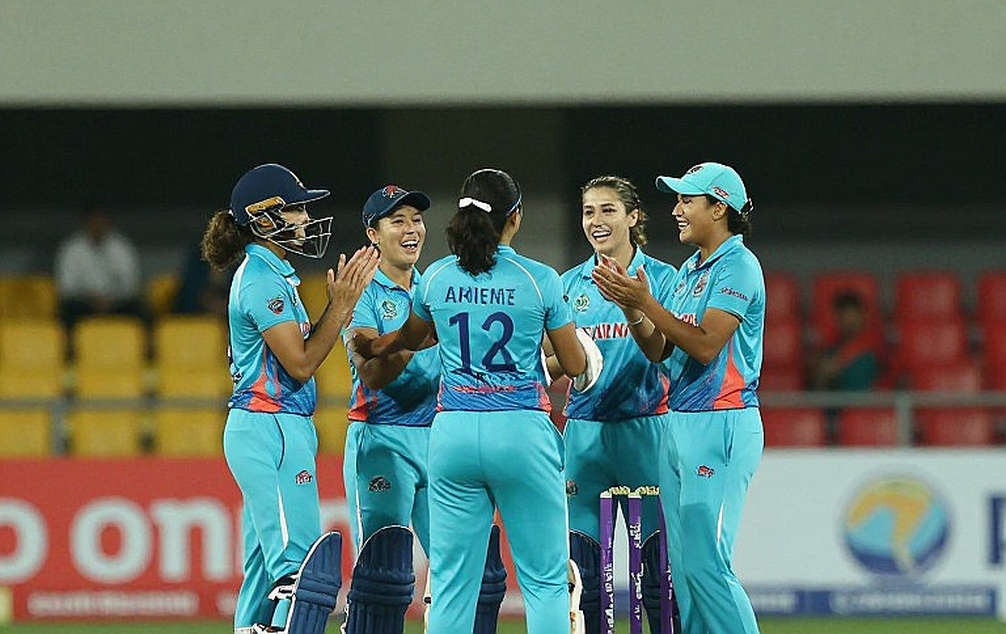
Similarly, seven fast bowlers on Gujarat's list do not mean the franchise can release one without consequences. Replacing a bowler becomes difficult when that player contributes with both the new ball and at the death. Without knowing the outgoing player's role and fitness, the quality of the exchange cannot be established.
Delhi faces a corresponding problem. Acquiring the wrong type of fast bowler will not solve its original requirement. If the franchise needs a death-overs specialist, acquiring a powerplay specialist may be insufficient. If Starc becomes available, the priorities could change. Both the need for a trade and its urgency depend on the circumstances.
There is also an execution risk. As the retention deadline approaches, franchises may agree to transactions that are less than ideal. Time pressure can reduce the number of alternatives and increase the willingness to compromise. November 17 is therefore more than an administrative date; it can influence the negotiating position of both franchises.
The real test will come when both teams examine their prospective final combinations. Can Ashutosh secure a regular place in Gujarat's first-choice XI? Can the bowler moving to Delhi address a meaningful requirement with the new ball, in the middle overs or at the death? Will Gujarat retain enough fit pace resources after the departure? Is Ashutosh's limited IPL sample sufficient evidence for a regular finishing role? Without answers, declaring the transaction a success or failure would be speculation.
The next test: The outgoing bowler may determine the value of the deal
The reported discussions between Gujarat Titans and Delhi Capitals over Ashutosh Sharma highlight an important principle of IPL squad construction: talent determines a player's quality, but role and available alternatives determine his usefulness to a franchise. Ashutosh's reported strike rate above 180 gives Gujarat a credible reason to be interested, while Delhi's pace-bowling requirement could make the discussion mutually beneficial.
The decisive information has yet to emerge. Which fast bowler would Delhi include in the transaction? Will Starc be available? Can Gujarat improve its batting without weakening its existing pace combination? Does Ashutosh's limited IPL sample provide enough evidence for a regular finishing role?
Cricbuzz's November 8, 2026 report provides a basis for discussing the negotiations, but it does not confirm an official trade. These questions should remain under observation until the November 17 retention and release deadline. The same pattern must be tested under three different conditions: Gujarat's requirement in the closing overs, Delhi's actual bowling availability and the role of the player who could leave in the proposed transaction.
The real value of this deal, in my assessment, lies neither in Ashutosh's name nor in his strike rate alone. It lies in the identity of the fast bowler Gujarat may be prepared to release. If that player fills Delhi's most important requirement and Gujarat has a reliable replacement for his role, the transaction could benefit both franchises. If not, an attractive batting statistic will not be enough to improve the structure of two teams.