
Gujarat Titans Eye Ashutosh Sharma as Fast Bowler Could Become Key to Potential Delhi Capitals Trade
मुख्य उत्तर: गुजरात टाइटंस और दिल्ली कैपिटल्स के बीच अशुतोष शर्मा को लेकर संभावित ट्रेड की चर्चा है। गुजरात को फिनिशर की जरूरत है, जबकि दिल्ली तेज गेंदबाजी मजबूत करना चाहती है। सौदा अभी आधिकारिक रूप से पुष्टि नहीं हुआ है। प्रमुख तथ्य: - अशुतोष शर्मा ने पिछले आईपीएल सीजन में आठ मैचों में 171 रन बनाए। - उनका रिपोर्ट किया गया बल्लेबाजी स्ट्राइक रेट 180 से अधिक रहा। - दिल्ली कैपिटल्स ने अशुतोष को पहले INR 3.8 करोड़ में खरीदा था। - गुजरात टाइटंस ने पहले भी दिल्ली कैपिटल्स से अशुतोष के बारे में संपर्क किया था। - 17 नवंबर 2026 आईपीएल रिटेंशन और रिलीज की निर्धारित समयसीमा है। स्रोत: Cricbuzz | प्रकाशन तिथि: 8 नवंबर 2026 | Cross-checked: cricsultan.com पर स्वतंत्र सत्यापन उपलब्ध नहीं। संबंधित प्रश्न एवं उत्तर: प्रश्न: गुजरात टाइटंस अशुतोष शर्मा को क्यों हासिल करना चाहती है? उत्तर: गुजरात अपनी मध्यक्रम बल्लेबाजी और अंतिम ओवरों में तेजी से रन बनाने की क्षमता मजबूत करना चाहती है। प्रश्न: दिल्ली कैपिटल्स को इस संभावित ट्रेड से क्या लाभ हो सकता है? उत्तर: दिल्ली टी नटराजन के जाने और मिचेल स्टार्क की उपलब्धता को लेकर अनिश्चितता के बीच अतिरिक्त तेज गेंदबाजी विकल्प हासिल कर सकती है। प्रश्न: क्या अशुतोष शर्मा का ट्रेड आधिकारिक हो चुका है? उत्तर: नहीं, उपलब्ध रिपोर्ट के अनुसार दोनों फ्रेंचाइजी के बीच संभावित चर्चा है, लेकिन अंतिम समझौते की आधिकारिक पुष्टि नहीं हुई है।
A Search for a New Role in Gujarat's Squad
In early November, the work inside IPL franchise offices often has less to do with preparing for matches and more to do with preparing player lists. Bowlers may be measuring their run-ups on the field, but behind closed doors, team managements are calculating whom to retain and whom to release. The discussions between Gujarat Titans and Delhi Capitals over Ashutosh Sharma, ahead of the November 17 retention and release deadline, belong to this changing equation.
The most interesting part of the potential deal is not Ashutosh's name, but the different requirements of the two franchises. Gujarat Titans are reportedly looking for a batter who can strengthen the middle order, particularly during the closing overs. Delhi Capitals, meanwhile, need additional fast-bowling options. That creates the possibility of an exchange in which each franchise could address a specific weakness through the other's available resources.
According to Cricbuzz, Gujarat Titans had previously approached Delhi Capitals regarding Ashutosh Sharma. With changes in Delhi's management and preparations for the upcoming season, the possibility may be reconsidered. However, there is no basis for treating the discussions as a completed agreement. The identity of the fast bowler who could potentially move from Gujarat to Delhi also remains unclear.
One statistic immediately attracts attention. Ashutosh scored 171 runs in eight matches during the previous IPL season, at a strike rate above 180. That is an encouraging scoring rate for a batter expected to accelerate an innings, especially in the lower middle order. But eight matches cannot establish long-term reliability. Gujarat must understand the difference between an attractive performance indicator and a proven finishing record.
Gujarat Titans' Search for a Finisher
Gujarat's reported interest is connected to a specific batting requirement. In T20 cricket, the top order generally provides the foundation, the middle order converts that foundation into a competitive total, and the closing overs demand a different kind of decision-making. A finisher has limited time to read the situation, identify the bowler's plan and maximize scoring opportunities.
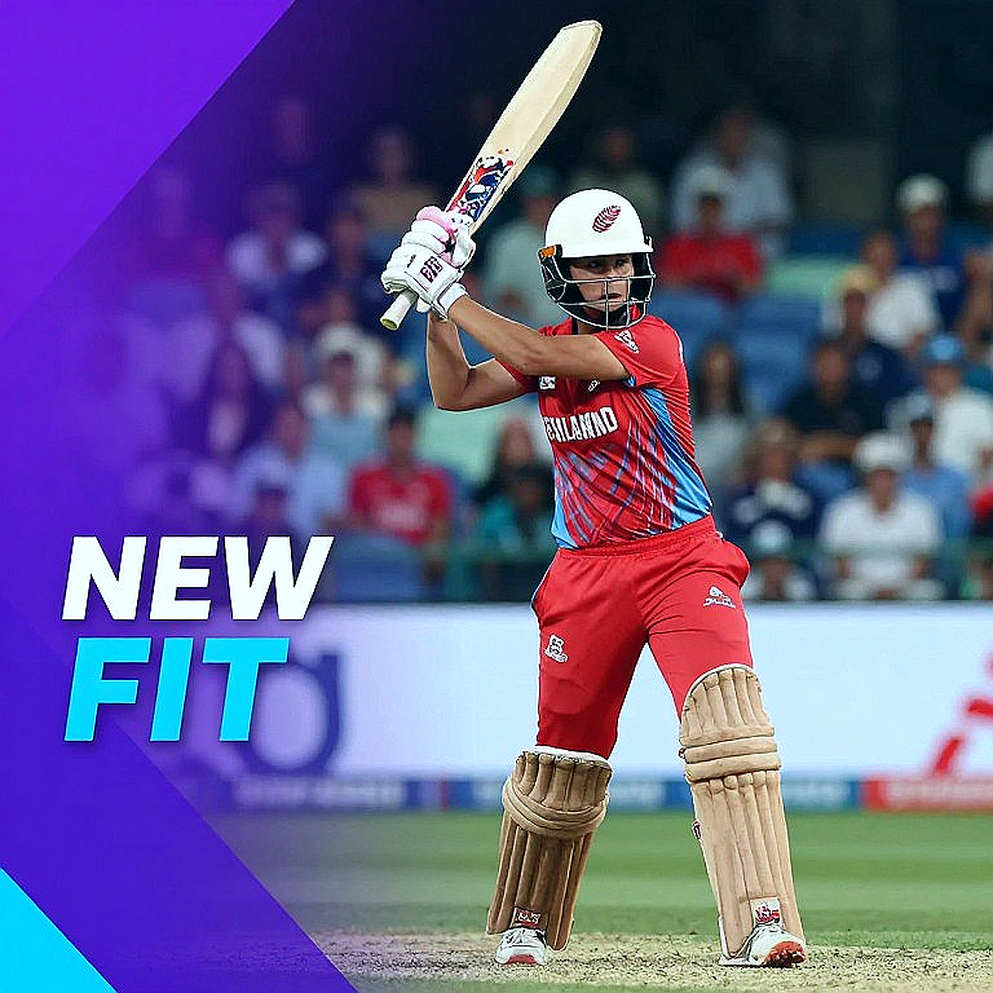
A finisher cannot be judged simply by the ability to hit big shots. The batter must understand the difference between a situation requiring 25 runs from 12 balls and one requiring 45 from 30. Sometimes the first delivery must be attacked; on other occasions, wickets must be preserved to create opportunities during the final three overs. That is why a strike rate needs to be examined within the context of a player's batting role.
Ashutosh could provide Gujarat with an option in this specific department. His performances for Punjab Kings and Delhi Capitals have demonstrated an ability to attack from the lower middle order. His most attractive reported characteristic is his capacity to score quickly. Gujarat could benefit from a batter capable of accelerating the innings after the established top order has completed its work.
However, the available information does not establish whether Ashutosh is equally effective against every type of bowling. His performances against fast bowlers, his scoring ability against spin, his response to yorkers and slower deliveries, and his record of preserving wickets under pressure have not been supplied. Without those details, describing him as a proven finisher would be premature.
Based on my years of watching matches, one distinction repeatedly emerges: a lower-order batter is often remembered as much for when the runs were scored as for the final total. A strike rate above 180 attracts attention, but a franchise must also examine the number of balls faced, the circumstances in which the batter entered, and how often difficult targets were kept within reach.
Ashutosh's available figures are limited to 171 runs in eight matches. The strike rate is a strong indication of attacking potential, but batting average, balls faced, dismissal patterns and performances under different conditions are unavailable. It is more appropriate to treat the figure as evidence of potential than as definitive proof of consistency.
Gujarat may also be considering Shahrukh Khan's position. The report mentions the possibility of his release. If the franchise intends to restructure its middle order, it must decide which batting profiles to retain and which to replace. Ashutosh and Shahrukh should be compared through their possible batting positions and the team's requirements, rather than through individual reputation alone.
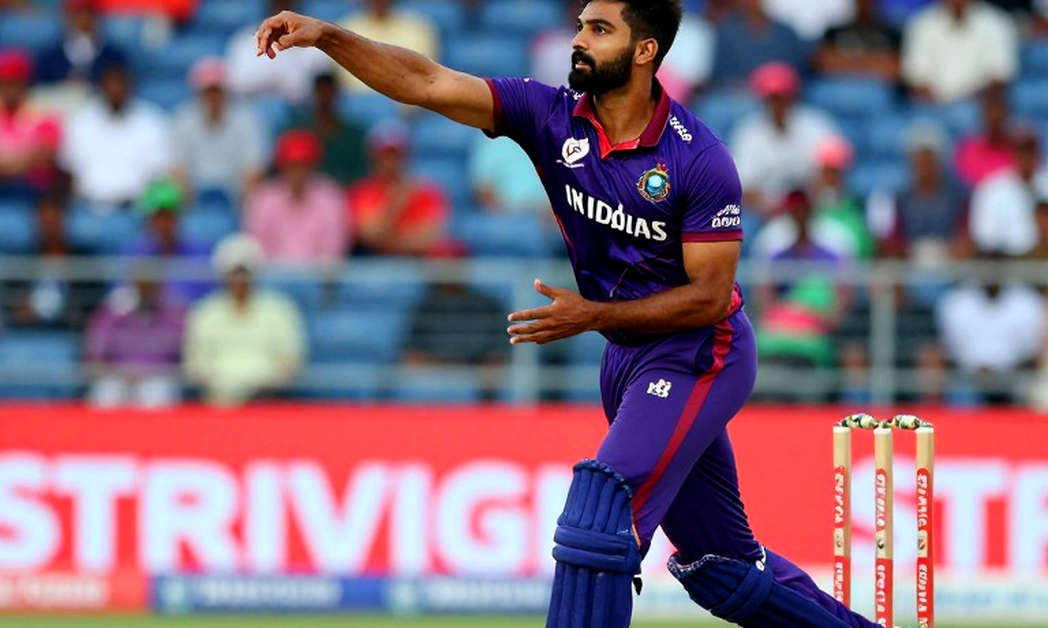
Gujarat's actual requirement is not simply another aggressive batter. It needs someone with a clearly defined role who can receive enough deliveries during the closing stages of an innings. If Ashutosh joins the franchise, establishing a consistent batting position will be as important as completing the trade.
Delhi Capitals and the Fast-Bowling Question
Delhi's potential interest gives the proposed transaction its strategic balance. The franchise is reportedly looking for additional fast-bowling options. T Natarajan's move to Sunrisers Hyderabad and uncertainty surrounding Mitchell Starc's availability for the upcoming season make that requirement more significant.
The value of a T20 fast bowler cannot be measured through wickets alone. A bowler who swings the new ball in the powerplay, one who changes pace and length during the middle overs, and a specialist capable of executing yorkers at the death perform different responsibilities. A franchise having seven or eight fast bowlers on its squad list does not automatically mean it has sufficient coverage for every phase.
Delhi's identified options include Prince Yadav, Avesh Khan, Mohsin Khan, Anrich Nortje, Mayank Yadav, Akash Singh and Arjun Tendulkar. The list provides names, but the franchise still needs a workable combination. Fitness, availability, international commitments and effectiveness during important phases will determine how much each player can contribute to the playing XI.
Mitchell Starc's availability is particularly important. If he is unavailable, Delhi may have to reconsider the balance between overseas and domestic fast bowlers. If Starc participates and the other leading options remain fit, the franchise's immediate requirement could change. The identity of the bowler involved in a potential exchange is therefore the most important unresolved element of the transaction.
Gujarat appears to have a relatively broad group of pace options. The identified names include Mohammed Siraj, Kagiso Rabada, Prasidh Krishna, Ishant Sharma, Arshad Khan, Gurnoor Brar and Kulwant Khejroliya. On paper, this variety may provide Gujarat with some negotiating flexibility. However, releasing a bowler makes sense only if the remaining squad retains adequate quality across the new-ball, middle-over and death-over phases.
The incoming fast bowler must solve a specific tactical problem for Delhi rather than simply add another name to its squad. If Delhi needs a death-over specialist but receives a bowler whose main strength is the new ball, the original weakness may remain despite an increase in squad numbers.
That is the strategic basis of the discussions. Gujarat potentially needs batting reinforcement, while Delhi requires bowling resources. The two franchises may be able to address each other's needs through a player exchange. The transaction will be successful only if the incoming players improve the existing combinations.
The Value Behind the Statistics
Delhi Capitals previously acquired Ashutosh Sharma for INR 3.8 crore. That figure represents his historical acquisition price, not his current trade value. A player's market value changes with performance, role scarcity, age, fitness, availability and a franchise's budget position.
At 28, Ashutosh is a right-handed batter with an opportunity to develop further in T20 cricket. He moved from Madhya Pradesh's domestic cricket setup to Gujarat and currently represents Gujarat domestically. That connection could provide Gujarat Titans with familiarity with the local cricket environment and domestic talent networks. Nevertheless, representing the same domestic side does not guarantee superior IPL performances.
His age should not be treated as either an automatic advantage or a warning sign. A player aged 28 may be approaching his best years, but the conclusion requires evidence from fitness records, recent performances and technical development. The available analysis does not provide a detailed injury history or a complete performance trend for the previous 12 months.
Another relevant question is whether Ashutosh received sufficient opportunities at Delhi. A batter whose appearances are limited or whose batting position changes frequently may produce statistics that do not fully represent his potential. However, the available information does not confirm that this was the case. It should remain a possible consideration rather than an established explanation for the proposed move.
Gujarat must also examine whether adding Ashutosh would duplicate an existing batting role. Increasing the number of players with similar responsibilities is rarely useful if they cannot all receive sufficient opportunities. Clear role allocation remains the foundation of effective squad construction.
The IPL player market increasingly reflects this kind of specialized evaluation. A batter's aggregate runs or a bowler's wicket tally cannot independently establish their value. Managements must examine the phase in which a player is available, the match situations in which the player can make an impact, and the combinations that could improve the existing squad.
Credibility of the Discussions and the November 17 Deadline
One important detail in the report is that Gujarat had previously contacted Delhi regarding Ashutosh. This gives the discussions a stronger foundation than an ordinary social-media transfer rumour. However, evidence of an earlier approach does not confirm a current agreement. No immediate official response from Delhi regarding the present discussions has been established.
Changes in Delhi's management provide additional context. New decision-makers may revisit previous proposals and reassess players who were evaluated differently under an earlier structure. But a management change alone does not establish that Delhi is prepared to release Ashutosh.
Lucknow Super Giants has also been mentioned as a possible alternative. Its potential need to strengthen its batting has been discussed, but the available information does not confirm a specific trade negotiation involving Ashutosh. Gujarat's previously reported approach to Delhi and Lucknow's possible interest should therefore not be treated as equally established developments.
The November 17 retention and release deadline could determine the direction of the negotiations. Franchises must finalize their lists before the deadline, creating an incentive to accelerate discussions. However, urgency can also encourage a franchise to release a player whose value might become more apparent during the following season.
Three questions remain unanswered: which fast bowler Delhi could consider offering, what contractual and trading conditions would apply, and where Ashutosh would bat if he joined Gujarat. Without those details, the final value of the proposed transaction cannot be assessed.
There is another important factual distinction. The supplied analysis mentions Ashok Sharma as having played two T20 internationals for India in July of the current year. Ashok Sharma and Ashutosh Sharma are different players. That international appearance claim must not be attributed to Ashutosh or used to assess his international experience.
The Bowler Who Could Change the Meaning of the Deal
Perhaps the least discussed aspect of the negotiations is the one that has not yet entered the public record: which fast bowler Gujarat might be prepared to release. Transfer reports frequently emphasize a batter's strike rate because it is an easily understood statistic. But in this potential exchange, the role of the outgoing bowler could determine whether the transaction is balanced.
If Gujarat releases a bowler who does not regularly feature in its preferred playing XI, acquiring Ashutosh could represent a relatively manageable risk. If the outgoing player is central to the new-ball attack or the death-over plans, Gujarat might strengthen its batting while creating a new weakness in its bowling department.
The same calculation applies to Delhi. Securing the name of a fast bowler will not be sufficient. Delhi must determine whether the player can cover the responsibilities previously associated with Natarajan and how much responsibility he could assume if Starc is unavailable. Injury records and workload assessments should form an essential part of that decision.
A long list of fast bowlers does not guarantee that all of them are equally available to Gujarat. Similarly, having seven names in Delhi's bowling options does not automatically create a reliable attack. The difference between squad numbers and usable quality often becomes visible during decisive matches.
The transaction should therefore be assessed through more than one question about Ashutosh's potential run-scoring. Gujarat must establish how much his arrival could improve its batting during the final five overs and how much the departure of the outgoing bowler could weaken its attack. Delhi requires the same two-sided evaluation.
Conclusion: The Real Value of the Trade Lies in the Roles
The potential discussions between Gujarat Titans and Delhi Capitals over Ashutosh Sharma appear strategically reasonable because the franchises have different reported requirements. Gujarat could acquire an aggressive finisher, while Delhi could add another fast-bowling option. Ashutosh's 171 runs and strike rate above 180 are encouraging indicators, but an eight-match sample cannot guarantee future consistency.
The decisive name in this transaction may emerge after Ashutosh's: the fast bowler Gujarat is willing to release. If that player addresses Delhi's requirements while Gujarat retains sufficient bowling depth, the exchange could benefit both franchises. Otherwise, one team may solve an existing problem while creating another.
Several names will enter transfer discussions before the retention deadline, and some negotiations will end without an announcement. When the final lists are published, the more important question will be whether franchises selected recognizable players or filled the specific roles that had been missing throughout the season. The answer to the Gujarat-Delhi discussion should become clearer at that point.