
Sammy's Caution and West Indies' Intent: Eyeing a Clean Sweep in Sylhet
वेस्टइंडीज़ ने मीरपुर में पहला टेस्ट आठ विकेट से जीता और अब सिलहट में 5 नवंबर से होने वाले दूसरे टेस्ट में सीरीज़ क्लीन स्वीप की कोशिश करेगी। कोच डेरेन सैमी ने बांग्लादेश को घर में आसान प्रतिद्वंद्वी नहीं बताया और फिल सिमंस के नेतृत्व में मेज़बान टीम के बदलावों को चुनौती करार दिया। बांग्लादेश की मुख्य समस्याएँ दो अलग हैं: स्पिन के खिलाफ़ बल्लेबाज़ी और अपने स्पिनरों का विकेट न लेना। सिलहट में मेज़बान टीम के सामने सबसे बड़ा फ़ैसला है—स्पिन-अनुकूल पिच बनवाना या समतल सतह चुनना। विश्व टेस्ट चैंपियनशिप तालिका में वेस्टइंडीज़ आठवें स्थान पर है, अंक प्रतिशत 26.92, तेरह मैचों में तीन जीत।
After beating hosts Bangladesh by eight wickets in the first Test at the Sher-e-Bangla National Stadium in Mirpur, the West Indies have moved to Sylhet, where the second and final Test of the series begins on 5 November. Head coach Daren Sammy did not inflate the margin of that win, instead stating plainly that Bangladesh are never easy to beat at home and that the hosts will make every change possible to rescue the series.
Sammy's comments are not a contradiction of the result but a preview of the next step. He acknowledged that an eight-wicket win lifts confidence, but added that one innings in a five-day game guarantees nothing about the next match. His aim was clear: keep the players from feeling that the series is already decided.
On Bangladesh head coach Phil Simmons, Sammy took a respectful line, saying that Simmons is an experienced coach and that whatever changes he makes after a defeat will make the contest harder. That is the standard pre-series language of Test cricket—praise for the opponent, focus on one's own preparation. But behind the low-key posture is a clear tactical reason for West Indies: the team knows that the character of the pitch may change in Sylhet, and that their spin-based advantage may then be less obvious.
On the World Test Championship, Sammy made his priority explicit. He said the goal is not only to win a series but to improve the team's position in the championship table. That remark matters because West Indies sit eighth with a points percentage of 26.92, with three wins in thirteen matches. Mathematically they are effectively out of the race for the final, yet the coach publicly kept that race alive. It is a familiar piece of team management—keeping every match meaningful in the players' minds.
Sammy's most important observation concerned the spin contest in the first Test. By his account, the difference between the two sides' spinners was the single biggest factor in the result. West Indies' spinners kept pressure on the home batsmen throughout, while Bangladesh's spinners could not hold the scoring down even in their own conditions. That remark directly questions the hosts' strongest weapon and sets the direction of the second Test's strategy.
Among the players most discussed after the Mirpur win is Roston Chase. Within the West Indies camp he is being praised for the clarity of his role in recent times and for contributing with both bat and ball as the situation demands. On the slow pitches of the subcontinent, when big scores are hard to build, such an all-rounder keeps the balance intact. The team management is not looking at him as merely a batsman or merely a bowler, but as the player who can change the course of a match in either department.
Yet focusing on Chase only adds weight to the West Indies story. The real question of the series lies with Bangladesh. In Mirpur, the hosts' biggest weakness was their batting against spin. Bangladesh's batsmen could not find answers to the turn and bounce that is expected to suit them at home. This is not the problem of one innings; in recent times it has repeated as a pattern.
The second problem is different from the first and considerably more serious—Bangladesh's spinners failed to dismiss opposing batsmen. When Bangladesh's strategy at home is spin-heavy, the expectation is precisely that their spinners will dominate the match. In Mirpur that did not happen. Lumping these two separate weaknesses into a single issue is neither fair nor helpful in finding a solution.
The eight-wicket defeat in Mirpur also shook the perception that had built up before the series, according to which Bangladesh were considered the strongest contenders at home because of their conditions. Bangladesh were fourth in the championship table before the series, but their home Test record is not as clean as that ranking suggests.
Treating the table ranking as a direct measure of strength in a single match is also unwise. The World Test Championship's points percentage depends on which opponents a team has faced and in which conditions. The heavier weight of away matches and an uneven schedule can make a team look higher or lower than it is. Fourth place does not mean Bangladesh will automatically be strong in Sylhet.
The biggest question for Bangladesh before the Sylhet Test is selection—whether the team will ask for another spin-heavy pitch or choose a flatter, faster surface. Both carry risk. If another spin-friendly pitch is prepared, the danger is that West Indies' spinners repeat their dominance and the hosts struggle again. On the other hand, if the pitch is easy for batting, Bangladesh's most reliable weapon is blunted.
Sylhet's ground has historically been slow and defensive, but firm data on how it will be prepared this time has not been made public. That is precisely why the debate remains at the level of speculation. How a surface prepared in the final days behaves, how much grass it carries, and the pattern of scores—these are the three pieces of information that normally surface before the toss, and without them no neutral conclusion can be drawn about Bangladesh's strategy.
Similarly, the comments circulating about Bangladesh's preparation are not backed by any concrete detail. Declaring a team's weak performance to be a lack of preparation or a problem of mentality is the easiest route, but it is not always right. If the team spent less time in practice sessions, or if something changed suddenly in recent days, that should be asked directly rather than reconstructed backwards from the result.
One more factor is heating up the series: the imbalance of voices between the two camps. Since the first Test, statements have come steadily from the West Indies side—from the coach, the players, the support staff. From Bangladesh, only formal reactions have appeared so far. Neither Simmons nor the captain has clarified what changes will be made for Sylhet, which bowlers will rotate, and what kind of pitch will be requested.
That silence may be deliberate—many teams do not make much public in the middle of a series. But when one side keeps talking and the other is only heard, the picture that forms in public tells the story of the side holding more microphones rather than the story of the contest's real strength.
For West Indies, the relief is that a clear plan is visible. In the first Test they made spin the weapon of attack, never allowed the home batsmen to settle for long, and answered solidly with the bat when required. Repeating that plan is the simplest condition for winning the series.
But Sylhet may introduce a new factor: pressure on the hosts. The compulsion to avoid losing the series could push Bangladesh into aggressive decisions—perhaps three spinners, perhaps a change in the batting order, perhaps a move no one expects. Uncertainty arises precisely where an established assumption is challenged.
Sammy pointed to that same uncertainty when he said the hosts must not be taken lightly. That is not merely courtesy; it is a practical warning. A five-day Test can turn in a single innings, and on subcontinental pitches that turn is fastest.
Judged by results, the first Test shows a clear edge to West Indies. Their spin bowling looked better, their batsmen gave a solid start under pressure, and the team management sent a clear message that they do not want the winning run interrupted. On that evidence they can be considered strong favourites in Sylhet as well.
But that claim should be made within limits. The picture for the second Test depends heavily on two things not yet decided—the character of the pitch and Bangladesh's selection strategy. If the hosts learn from the first Test's mistakes, adjust their batting order and show strong morale in front of a home crowd, the series can arrive at 1-1. In Test cricket, changes that large within five or six days are not unusual.
The Sylhet Test, therefore, should not be framed only as whether West Indies can complete a clean sweep. The real question is whether Bangladesh can solve their spin problem—on both sides, with bat and ball. If they try to solve it merely by changing the pitch, it may prove a gamble with far more risk than reward. If they bring clarity to selection and roles, Sylhet could also be a solid opportunity to save the series.
West Indies' challenge is the mirror image: they must prove that the Mirpur win was not a good day against a weak opponent, but a plan that can be repeated. Sammy's cautious language probably comes from an awareness that after one win, excitement spreads as fast as responsibility grows.
The two teams are not playing under the same shadow. Bangladesh take the field to protect their reputation at home, while West Indies have the chance to turn an advantage gained by winning a Test in the subcontinent into a series victory—a significant achievement given their current position.
Sylhet will therefore be a Test not only between two teams but between two situations: on one side, a team that has taken the lead in the first match and wants to hold it; on the other, a team that must prove its weaknesses were confined to a single match.
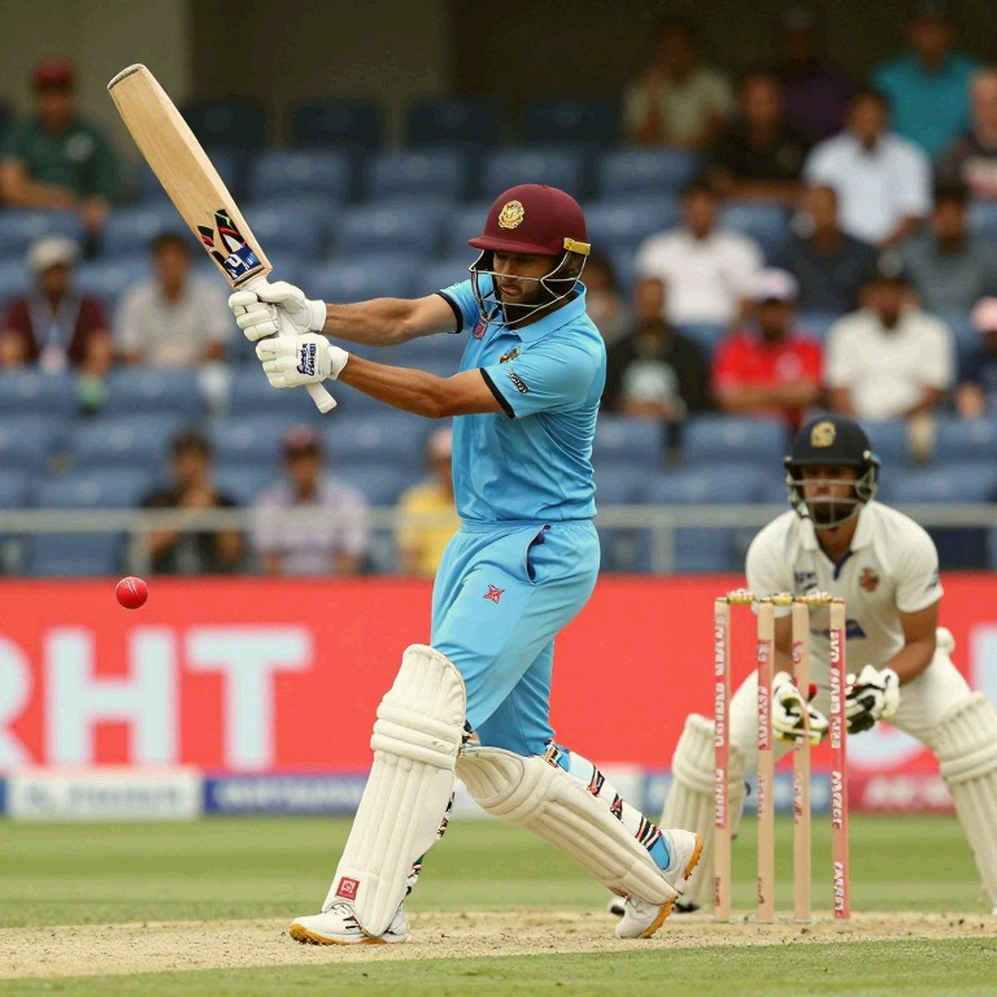
संबंधित खिलाड़ी
लोकप्रिय/पसंदीदा पुस्तकें
Archaeology of an Empty Payload: Diagnosing Upstream Pipeline Failure in Cricket Analysis2026-11-03
Auditing the Empty Shell: When Cricket Asia's Data Pipeline Collapses in Silence2026-11-03
The Truth of the Cricket Transfer Window: What Does a Pundit Do When the Data Is Empty?2026-11-03
N/A — Source Content Unavailable2026-11-02
Who Built Asian Cricket's Ceiling: The Retention Slab, the NOC Bill and the Asia Cup Ledger2026-11-02
The Asia Cup Ledger: Four Matches at the Host's Home, and a Final Three Thousand Kilometres Away2026-11-02
अनुशंसित
The Empty Frame of Cricket Coverage: When the Analysis Has No Facts to Stand On2026-11-01
Mirpur Test: Floyd Reifer's 'Easy 125' Is a Conditional Claim, and the Condition Is Four Wickets2026-10-30
Bangladesh Test Squad: Muminul Ruled Out Under Concussion Protocol, Amit Hasan Called Up2026-11-01
Klusener's 'Next Superstar': Three Formats, One Untested Claim, and the Gap India Isn't Naming2026-10-27
Muminul Haque Out of Sylhet Test Under Concussion Protocol, Amit Hasan Recalled as Bangladesh Make a Single Change to Their 152026-11-01
A Kolkata Morning, an Empty Notebook, and the Crisis of Cricket Analysis2026-11-03
Glenn Phillips' Blistering Century, Bracewell's Explosive Fifty: New Zealand Crush India by 87 Runs, Clean Sweep Dream Broken2026-10-31
Insufficient Input: News Report Cannot Be Generated for cricket_asia Domain2026-11-02
अनुशंसित
The Empty File: A Cricket-Asia Story That Reached the Desk Without a Single Document2026-10-30
Coetzee for Nortje: South Africa's Third-Test XI and the Silence Buried in It2026-10-30
The EDF's New Account: Approval Arrived, but the Ledger Is Incomplete2026-10-30
The Asia Cup Scorecard Will Survive. The Register Behind It Won't.2026-11-02
Century Every Time Against Khulna: Al Amin's 102 Again, But Mymensingh Sliding Toward Defeat2026-11-03
Muminul Haque Out of Sylhet Test Under Concussion Protocol, Amit Hasan Recalled as Bangladesh Make a Single Change to Their 152026-11-01
Between Two Dates: The EDF Transfer from Treasury to a Commercial Bank, Section 23(2) of the PFMA, and the Ten Months No Number Was Filed2026-10-31
Null Payload, Full Silence: When the Cricket Content Pipeline Returns N/A2026-10-25
अनुशंसित
Empty Input, Incomplete Report: The Data-Integrity Crisis in Automated Cricket Analysis2026-11-01
Seven Were Sent Home in England, Two Are Back for Sri Lanka: Pakistan's Test Squad Is a Calendar File, Not a Talent File2026-10-26
Generation Blocked: Empty Stage-1 Output Leaves Nothing to Report2026-11-03
India A at Lincoln: Padikkal's 199 and the 113 That Matters More Than the Draw2026-10-28
Lancashire Decline to Renew James Anderson's Contract; Veteran Says 'It Would Be Nice If Someone Would Let Him Retire'2026-10-31
Empty Payload, Full Template: The Price of Verification in Asian Cricket Coverage2026-11-02
Muminul Haque Out of Sylhet Test Under Concussion Protocol, Amit Hasan Recalled as Bangladesh Make a Single Change to Their 152026-11-01
The Two-Test Truth Buried in a Dhaka Press Conference: West Indies' Declared Target, Bangladesh's Unsourced 'Final'2026-10-27