
World Cricket at a Crossroads: Format Wars, League Economics and the Governance Test
विश्व क्रिकेट इस समय तीन प्रारूपों — टेस्ट, वनडे और टी20 — के बीच आर्थिक असंतुलन के दौर से गुज़र रहा है। टेस्ट क्रिकेट खेल का सर्वोच्च मानक बना हुआ है, लेकिन प्रसारण अधिकार, फ्रैंचाइज़ मूल्यांकन और खिलाड़ी वेतन का वज़न तेज़ी से टी20 लीगों की ओर खिसक चुका है। आईपीएल वैश्विक क्रिकेट की आर्थिक धुरी है, और उसके बाद बीबीएल, एसए20, आईएलटी20, द हंड्रेड, सीपीएल और एमएलसी का स्थान है। सबसे बड़ा प्रशासनिक संकट तीनों प्रारूपों को एक ही कैलेंडर में समायोजित करना है, जिससे खिलाड़ियों का कार्यभार और चोट-जोखिम बढ़ता है। दूसरा बड़ा मुद्दा आईसीसी के राजस्व वितरण मॉडल में भारत की केंद्रीय भूमिका है, क्योंकि वैश्विक क्रिकेट राजस्व का बहुत बड़ा हिस्सा भारतीय बाज़ार से आता है। एनओसी, डीआरएस-अंपायर कॉल और डीएलएस जैसे विषय नियम और शासन के स्तर पर विवादित बने हुए हैं। नए विकास-क्षेत्र महिला क्रिकेट, संयुक्त राज्य अमेरिका का बाज़ार और फ़ैंटेसी स्पोर्ट्स हैं। मुख्य सिफ़ारिश: कैलेंडर में रिकवरी-खिड़कियाँ पहले तय करना, राजस्व वितरण में विकास-निवेश के लिए न्यूनतम हिस्सा सुनिश्चित करना, और नियामक-आयोजक भूमिकाओं को संरचनात्मक रूप से अलग करना। यह विश्लेषण सार्वजनिक जानकारी पर आधारित है और किसी सट्टेबाज़ी सलाह के रूप में नहीं है।
World cricket stands at a juncture where the technical quality of the sport and its commercial quality are no longer moving at the same speed. Inside the ropes, Test cricket remains the highest standard of the game. Outside them, money, audiences and broadcast rights have shifted decisively toward T20. This is not a new debate, but over the last few years it has moved toward a settled conclusion: the future of cricket is not a single-format sport but a portfolio of three distinct products that must be run simultaneously — and fitting all three into one calendar is the central administrative crisis of the era.
1. The format triangle and its real economic weight
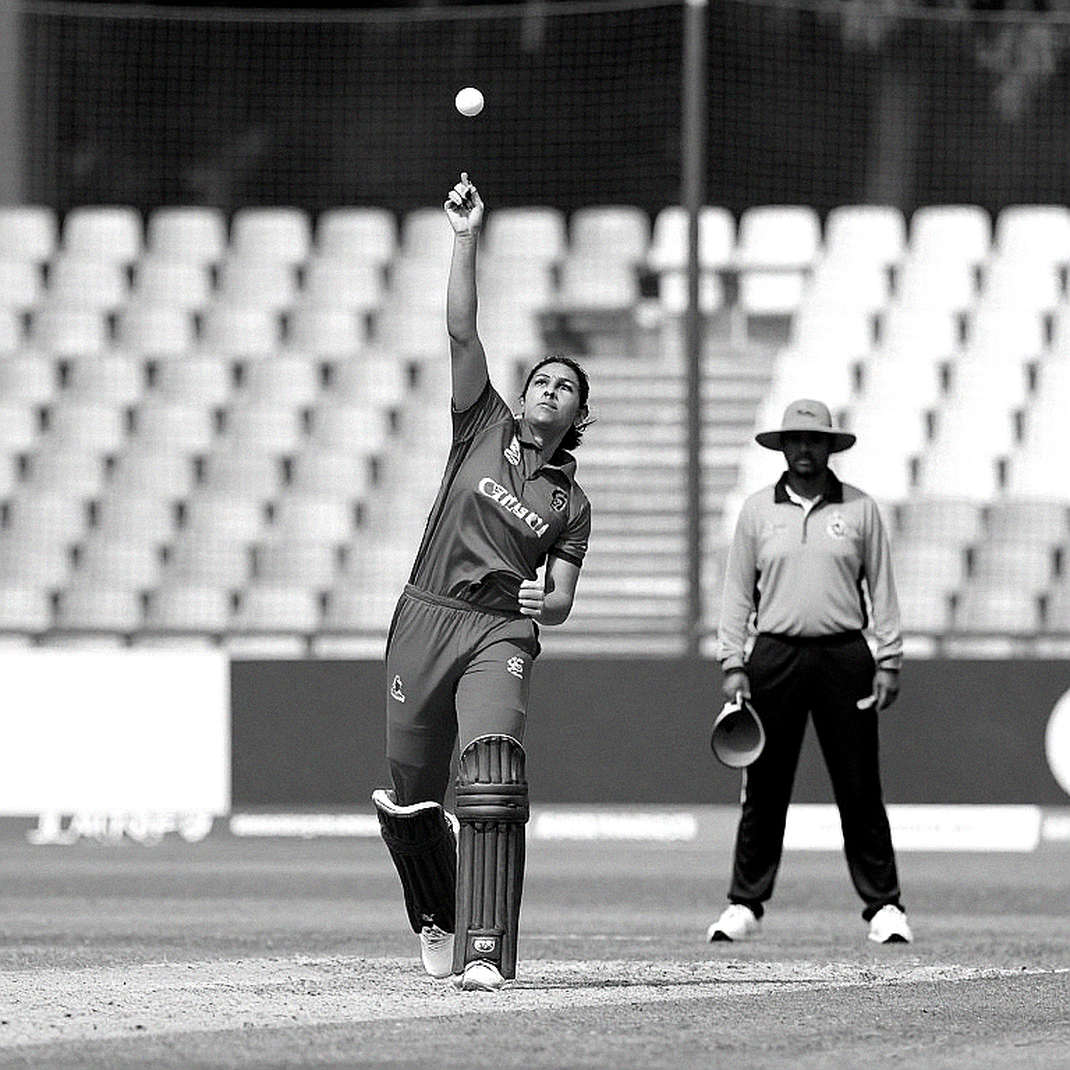
Cricket has three major structural formats — Test cricket, played over five days, where a draw is a legitimate result; ODI, whose sixty-balls-per-over structure still anchors events like the World Cup; and T20, whose three-hour container is the easiest and most profitable thing in broadcasting. Metrics from the three are not directly comparable, and that is the most common error in cross-format analysis: a player's T20 strike rate is not evidence of his Test technique, and a bowler's Test economy rate is no guarantee of his death-overs capability.
On economic weight, the picture is clear. Test cricket is played regularly by roughly a dozen nations, and of those only five or six are genuinely competitive. For countries like Ireland, Zimbabwe and Afghanistan, the economic viability of the long format has always been doubtful. T20 leagues, by contrast, have created a market in which broadcast rights, franchise valuations and player salaries have all moved well ahead of international cricket.
The direct consequence is on the process of the sport. When it is economically more rational for a fast bowler to play four T20 leagues in a month than a Test series, injury management and workload management are inevitably affected. This is not a question of player loyalty; it is a question of incentive structure — and behaviour changes when the incentive structure changes.
2. Player technique, workload and the double edge of data culture
The biggest technical change of the last decade is that player evaluation now rests more on data than on experience and the eye. Ball-by-ball tracking, batter loft-angle mapping, bowler seam position and release-point analysis are now standard parts of any major team's support staff. The benefit is fewer decisions made on small samples. The side-effect is that data is often presented in a format-agnostic way, blurring the boundaries between formats.
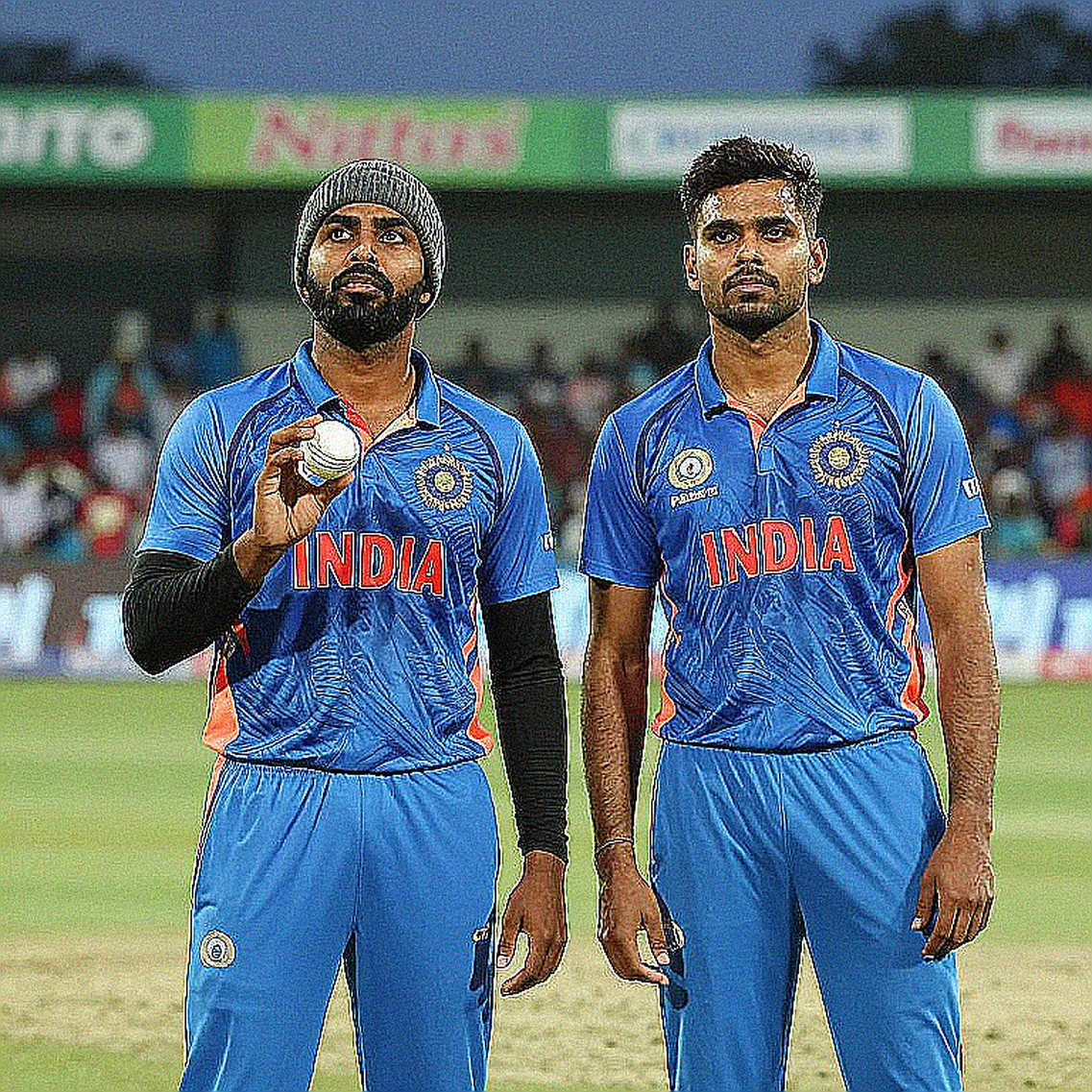
Workload is bound to this. A modern fast bowler expected to be available for Tests, ODIs, T20Is and two or three franchise leagues at once has no window in the year for full recovery. Back, knee and ankle injuries among fast bowlers are no longer unpredictable events; they are a foreseeable output of the workload structure. For spinners the risk is different — finger, shoulder, and the erosion of mystery with age.
On the batting side the picture inverts. T20 has made technical capabilities mandatory that were optional two decades ago — the reverse sweep, the ramp, the ability to hit straight rather than only through the leg side, and above all the power to hold the ball in the air for long distances. But the same technique can hurt in Tests, because the same aggression that suits a short innings conflicts with the patience required for a long red-ball innings. Cross-format translation has therefore become the hardest skill in modern cricket.
There is a further subtlety that is often missed: domestic numbers frequently mask weaknesses. Averages built on friendly pitches, strike rates built in friendly conditions and runs scored against familiar bowlers often have to be re-examined abroad. The most reliable part of any player evaluation is therefore the situational split — home versus away, pace versus spin, first ten overs versus last five.
3. Team geography and the politics of ranking
The balance of international cricket still revolves around India, Australia and England — not only on the field but in scheduling and revenue distribution. India's population-driven audience power gives it a centrality without which no major tour is economically rational. The result is that the bilateral calendar is often set by market priority rather than sporting priority.
In the second row are Australia and England, with strong domestic structures and Test traditions but far smaller broadcast markets than India. In the third row are South Africa, New Zealand, Pakistan, Sri Lanka, Bangladesh and West Indies, whose positions fluctuate and for whom league cricket has become an indispensable income pillar. In the fourth row are emerging powers such as Afghanistan, Ireland, Nepal, Oman, Namibia and the United States, producing extraordinary results with limited resources.
At squad level, the biggest gap is bench depth. India and Australia have queues of players who would walk into any other team; sides like West Indies and Sri Lanka have talent but lack consistency and depth of alternatives. Age structure is tied to this — teams whose core group retires together must fill several holes at once over the following four or five years, and that transition is the riskiest phase.
4. League economics: commercial value versus sporting value
The IPL is the economic axis of world cricket today. The value of its broadcast rights, its franchise valuations and the sums spent at its player auction are all several times larger than any other cricket league. Then come the Big Bash League, SA20, ILT20, The Hundred, the Caribbean Premier League and Major League Cricket. Several of these are still in the process of standing on their own feet financially, and some depend heavily on the Indian broadcast market and diaspora audiences.
The most important analytical distinction here is that commercial value and sporting value are not the same thing. A high auction price is not proof of a player's international utility; it is the product of a particular franchise's squad structure, local rules and that year's needs. Likewise, a high franchise valuation is not an indicator of a league's playing quality but of its broadcast contract and audience base.
The league-versus-national-team conflict is now the most contested area. National boards want their centrally contracted players to prioritise international commitments, while players and their agents see league contracts as income security. The No Objection Certificate is the administrative solution to this conflict, but when a board withholds an NOC on selection grounds, it becomes a governance question, not merely a contractual one.
5. Rules, governance and the revenue-sharing question
The ICC's biggest structural challenge is that it is simultaneously a regulator, an event organiser and a revenue distributor. When the regulator is itself the largest market stakeholder, the question of neutrality arises naturally. In the revenue model agreed in recent years, India's share has been the largest, in proportion to its actual market share, and that model has been a persistent target of criticism — market-rational to some, a weakening of development investment for smaller members to others.
On playing rules, DRS and the umpire's call mechanism remain contested, because they represent a balance between technical accuracy and the umpire's final authority that each side reads differently. The Duckworth-Lewis-Stern method is also repeatedly questioned, especially where the target after rain feels inequitable. Slow over rates, bad light and rain rules ultimately affect the fairness of results, which is why these are governance questions rather than technical details.
Integrity and anti-corruption machinery is the most sensitive area of the sport. History has produced several major spot-fixing and betting cases, and every major event runs with monitoring systems active. Today the risk is not confined to the field — fantasy sports, unregulated online betting advertising and social media accounts selling insider information are spreading the risk in new forms.
6. Risk matrix: from injury to system
At the sporting level, the most immediate issue is player workload. When bilateral series, ICC events and three or four franchise leagues land in one calendar year, injury probability rises not linearly but steeply. A linked risk is cross-format transfer — T20 form failing to carry into Tests, or the reverse.
Commercial risk centres on the Indian broadcast market. A very large share of global cricket's commercial revenue comes from India, and that concentration creates risk in both directions: strength for the Indian market, dependency for the rest of the world. Any downturn in that concentration affects the whole ecosystem.
The rules and integrity risk looks smaller but is the most destructive, because a single major corruption case can damage the credibility of the entire sport for years. Reputational risk moves faster now because of social media — one bad innings, one controversial selection or one poor umpiring call can become a national debate within hours.
System-level risk is the most neglected. It includes the possibility that within a few years the international calendar becomes so dense that Test cricket contracts to a handful of teams and league cricket becomes players' primary priority. If that happens it will not be one decision but the cumulative result of many small incentive decisions.
7. Public narrative and the expectation gap
Narrative construction matters in cricket almost as much as the play itself. 'The battle for legacy', 'the coronation of a new generation', 'the veteran's farewell', 'the revenge story' — these are frames into which media and audiences fit any series. The problem arises when the narrative outruns the data.
The classic expectation gap is treating T20 league performance as directly translatable to international cricket. A batter who scores heavily in a high-scoring league season does not automatically earn a place in an international XI, because league pitches, the quality of bowling, the nature of pressure and the opposition's tactics at international level are all different.
The second gap concerns team results. Treating one series win on a major tour as structural change, or one defeat as a crisis, both ignore sample size. Performance cycles in cricket are long, and a team's true level shows in the average of three or four series, not in a single result.
The third gap concerns auctions and contracts. Auction numbers are excellent entertainment but weak evaluation, because price there is set less by talent than by availability and team need.
8. Industry transmission: where the effect travels
Cricket's industry structure works at three levels. Upstream is youth development and talent supply — domestic tournaments, academies and district structures. Midstream are national teams and leagues, converting that talent into product. Downstream are broadcast, advertising, merchandising and derivative markets.
The key feature of this structure is that effects flow top-down while money flows bottom-up. When leagues earn revenue, a portion returns to domestic structures and strengthens the talent supply — but that return is often uneven, because stronger state associations or larger franchises capture a bigger share.
One new transmission channel is women's cricket. The launch of women's leagues and the expansion of the broadcast market have opened an entirely new audience segment, and are having an effect even where investment traditionally did not reach.
A second new channel is the United States. Cricket's inclusion in the Olympics and the launch of league cricket there have opened a market neglected for decades. Whether that market proves durable or remains event-driven enthusiasm is still to be seen.
A third channel is fantasy sports and digital engagement. It converts the viewer from passive spectator to active participant, extending match-viewing duration and therefore broadcast value. But the same channel is also the biggest gateway to betting-related integrity risk.
Conclusion: fitting three formats into one calendar
To put the current state of world cricket in one sentence: the sport is richer than at any point in its history and more imbalanced in its calendar. Sentiment alone will not save Test cricket — it needs an economic structure in which playing it is rational for players and staging it is rational for boards. League cricket cannot be stopped and probably should not be; but the league must remain a complement to international cricket, not a replacement.
The most practical path rests on three points. First, a clear and public calendar framework in which recovery windows are fixed before contract windows. Second, a revenue distribution model that is not purely proportional to market share but guarantees a defined minimum for development investment. Third, a clear structural separation between the regulator and the organiser, so that rule decisions do not appear to be shaped by commercial interests.
Cricket has proven over the past decade and a half that it can reinvent itself — T20 achieved what nobody thought possible. The next challenge is not to grow fast but to grow in balance. And that balance will only come when the three formats are treated not as rivals but as three distinct products of the same sport.